MOSCOW (AP) Amid the ongoing conflict in Iran, where U.S. and Israeli missiles are being deployed, Russia has reacted with verbal condemnation but has not taken any significant measures to assist its ally. President Vladimir Putin's reserved approach is largely attributable to his focus on the situation in Ukraine, as well as the belief that the conflict in Iran could potentially benefit Moscow by increasing oil revenues and weakening Western support for Ukraine.
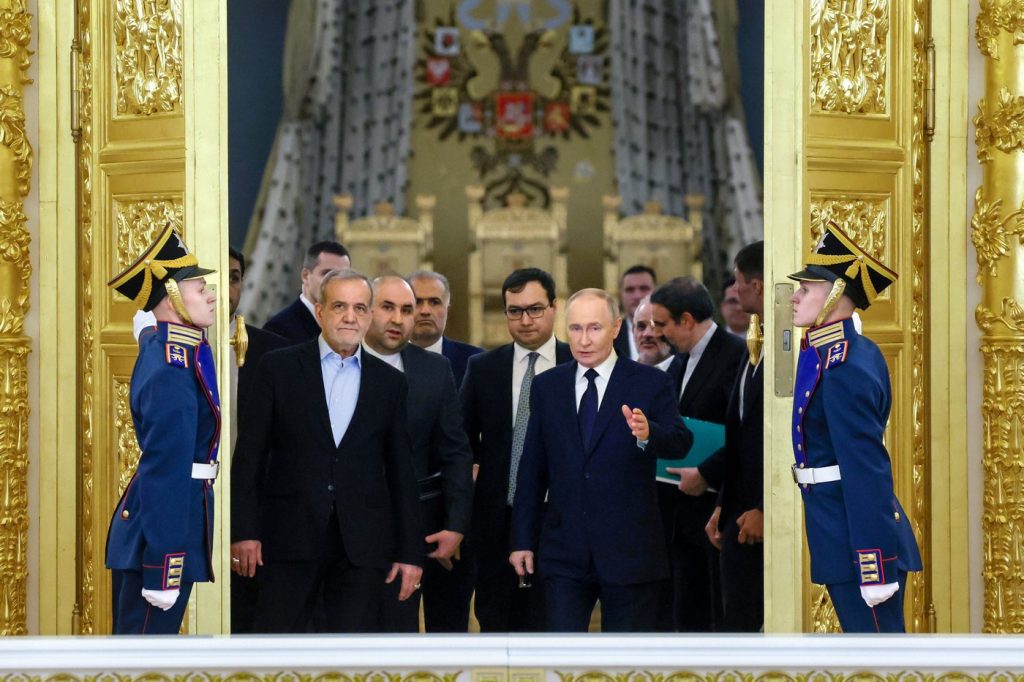
In a recent expression of solidarity, Putin conveyed his condolences to Iranian President Masoud Pezeshkian, describing the assassination of Iranian Supreme Leader Ayatollah Ali Khamenei as a "cynical violation of all norms of human morality and international law." However, Russia's apparent inaction reflects a broader strategy to manage its influence in a volatile geopolitical landscape.
The Kremlin sees the disruptions caused by the Iran conflict, particularly those affecting tanker traffic through the Strait of Hormuz and damage to energy infrastructure in Gulf nations, as a means to bolster its own economy. The surge in energy prices amid this upheaval could help fund military operations in Ukraine while simultaneously addressing the budget deficit.
Immediately following the outbreak of hostilities on February 28, Russia's Foreign Ministry criticized the actions of the U.S. and Israel, branding them as "a deliberate, premeditated, and unprovoked act of armed aggression against a sovereign and independent U.N. member state." Putin subsequently reached out to various Gulf leaders, seeking to strengthen partnerships with countries crucial to OPEC+ and to convey regional concerns about escalating violence.
Despite the establishment of a "comprehensive strategic partnership" with Iran in January 2025, tensions have persisted due to historical rivalries and mutual suspicions. Although both nations oppose Western dominance, their relationship has often appeared more pragmatic than deeply rooted in trust. Moscow has also maintained cordial ties with Israel, causing concerns among Iranian leaders regarding Russia's true intentions.
Complicated dynamics have underscored the Russia-Iran partnership, especially after the assassination of Khamenei, which prompted some analysts to question Russia’s capacity to safeguard its allies. However, despite the apparent fragility of this alliance, other analysts argue that the practical, rather than ideological, nature of their relationship means that any fallout may not significantly impact Putin's standing.
Consequently, while Russian officials have not ruled out providing military support, they have emphasized that no formal requests for such assistance from Iran have been made. Kremlin spokesman Dmitry Peskov reiterated that Russia is engaged in ongoing dialogue with Iranian leadership. Reports have emerged that Russia has been supplying Iran with intelligence to target U.S. military assets, though the extent of Moscow's involvement remains ambiguous.
Furthermore, the ongoing conflict is likely shifting global resources, raising concerns that the U.S. and its allies’ military capacity in support of Ukraine may diminish due to the demands of the situation in Iran. Observers note that the depletion of Western military arsenals may indirectly benefit Russia by diverting attention and resources away from the conflict in Ukraine.
In conclusion, the complex relationship between Russia and Iran, characterized by both collaboration and rivalry, will continue to evolve as the situation in the region develops. Despite challenges, Russia appears positioned to capitalize on the geopolitical turmoil to further its own interests.