On Friday evening, a significant disruption occurred at four major airports serving the Washington, D.C., Baltimore, and Richmond, Virginia areas, as all flights were halted for over an hour due to a strong chemical odor that compromised air traffic control operations. This incident was confirmed by the Federal Aviation Administration (FAA).
The affected airports included Ronald Reagan Washington National Airport, Washington Dulles International Airport, Baltimore-Washington International Airport, and Richmond International Airport. FAA Secretary Sean Duffy shared the news on social media, noting that the ground stop led to a surge in flight delays, with some flights experiencing delays of approximately two hours. The situation created a substantial impact on air travel, particularly in one of the busiest air traffic regions in the country.
Following the initial ground stop, flights began to resume around 7 p.m. ET, but the ground stop—which serves to prevent aircraft from landing—remained effective for a period afterward. The source of the unpleasant smell was identified as emanating from the Potomac TRACON, a terminal radar approach control facility responsible for managing air traffic in the Washington, D.C., Baltimore, Richmond, Virginia, and the Richmond-Charlottesville areas, as outlined on the FAA's website.
Despite the seriousness of the situation, a spokesperson for the FAA did not provide further clarification on how the abnormal odor was impacting the traffic controllers who work in the affected area on that evening. The disruption reportedly led to between 25% and one-third of all flights departing from the four affected airports being delayed after the ground stop had been initiated. This high percentage indicates a considerable level of disruption in flight schedules and operational efficiency at these critical transportation hubs.
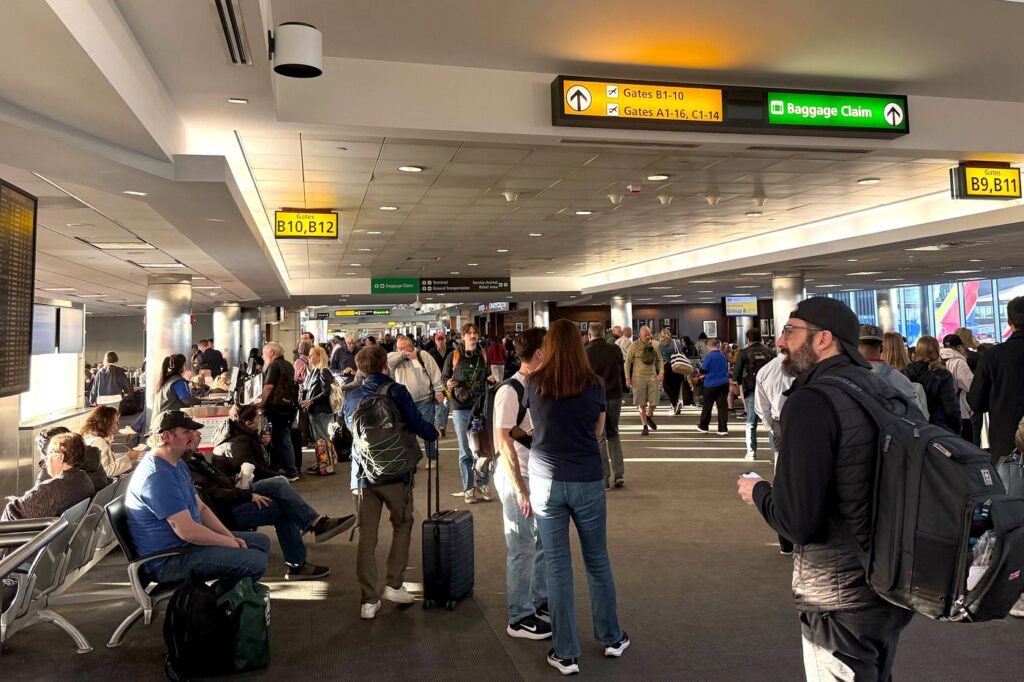
The scene at the airports, especially at Baltimore-Washington International Airport, reflected the chaos caused by the situation, leaving many travelers stranded and frustrated. Photos from the scene depicted crowded terminals where passengers were held up and left waiting, exacerbating the strain on the travel experience.
Throughout the evening, airlines worked to manage the backlog caused by the unexpected ground stop, aiming to reassure passengers while coordinating efforts to resume normal flight operations as efficiently as possible. The resolve to address the issue was evident, but the fallout from such incidents often results in lasting inconvenience for travelers.
Overall, this incident served as a poignant reminder of how external factors can severely disrupt air travel operations, affecting thousands of passengers relying on timely transportation. The precise cause of the chemical smell remains unclear, and further investigations are likely to follow to ensure the safety and efficiency of air traffic control services in the future.