OTTAWA – Canada has announced its plan to contribute a significant 23.6 million barrels of oil to an International Energy Agency (IEA) initiative aimed at stabilizing international energy markets amid ongoing conflicts in the Middle East, which have disrupted tanker shipments from the Persian Gulf.
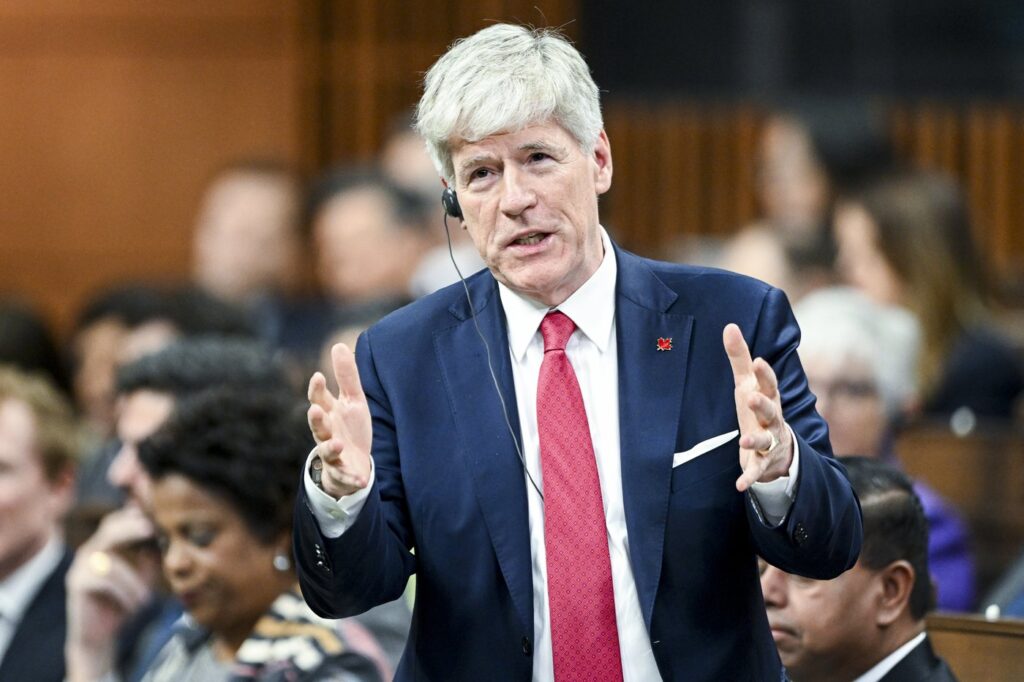
This announcement was made by Natural Resources Minister Tim Hodgson's office on a Friday, just two days after he stated that Canada would actively participate in efforts to lower global oil costs. The IEA, an organization based in Paris, declared earlier this week that it would release a total of 400 million barrels of oil into the world market, marking the largest release in its history. This figure significantly surpasses the nearly 183 million barrels the IEA released following Russia's invasion of Ukraine in 2022, which was a record at that time.
The IEA, composed of 32 member countries including Canada, has reserves established since 1974, following the Arab oil embargo. Currently, these member nations hold over 1.2 billion barrels of oil in public emergency stocks, alongside an additional 600 million barrels held by industry under government obligation.
In its statement, Hodgson’s office emphasized Canada’s role as a major oil producer and exporter, noting that the country ranks as the world's fourth-largest oil supplier and the largest within the IEA. The IEA mandates its members to maintain enough oil reserves to cover 90 days' worth of net imports; however, Canada, being a net exporter, primarily sends its oil to the United States and some to Asia via the Trans Mountain pipeline, is not bound to this requirement.
Notably, Canada is the only country in the G7 that does not maintain a strategic oil reserve, although certain industry players keep set quantities for emergencies. The United States has also announced its plan to withdraw 172 million barrels from its Strategic Petroleum Reserve over the next 120 days as part of this IEA initiative. Additionally, countries like Germany, Austria, and Japan have indicated they will also access their stockpiles.
The Canadian federal government has not yet clarified the logistics of how the additional oil will reach global markets, stating that the oil will be “produced by our industry and coordinated with the federal and provincial governments.” Previously, Hodgson mentioned that producers might be encouraged to postpone seasonal maintenance downtime to release oil supplies.
Currently, the Trans Mountain pipeline, which runs to the Vancouver area, is operating at roughly 90 percent capacity, suggesting that there may be potential for increased crude oil exports to Asia via tankers.
Amidst these developments, global crude oil prices have been highly volatile, particularly following military actions undertaken by the United States and Israel against Iran, which began nearly two weeks ago. This conflict has further escalated tensions in the already unstable region. The Strait of Hormuz, a vital passageway for oil transport located north of Iran, typically sees about 20 million barrels per day pass through, accounting for approximately one-fifth of the world's oil supply. However, due to fears of Iranian attacks, tanker traffic has significantly diminished.
As a result, crude prices have soared to levels not observed since Russia's intervention in Ukraine, with prices nearly hitting $120 per barrel this week. On the previous Friday, the April contract for West Texas Intermediate crude saw a rise of $2.98, settling at $98.71 per barrel, around 47 percent higher than prior to the onset of the recent conflict.
Furthermore, Hodgson’s office indicated that Canada’s natural gas exports are expected to expand in the coming months, although specific details were not disclosed. The country’s first liquefied natural gas export terminal, LNG Canada, located in Kitimat, British Columbia, commenced operations in the previous summer.