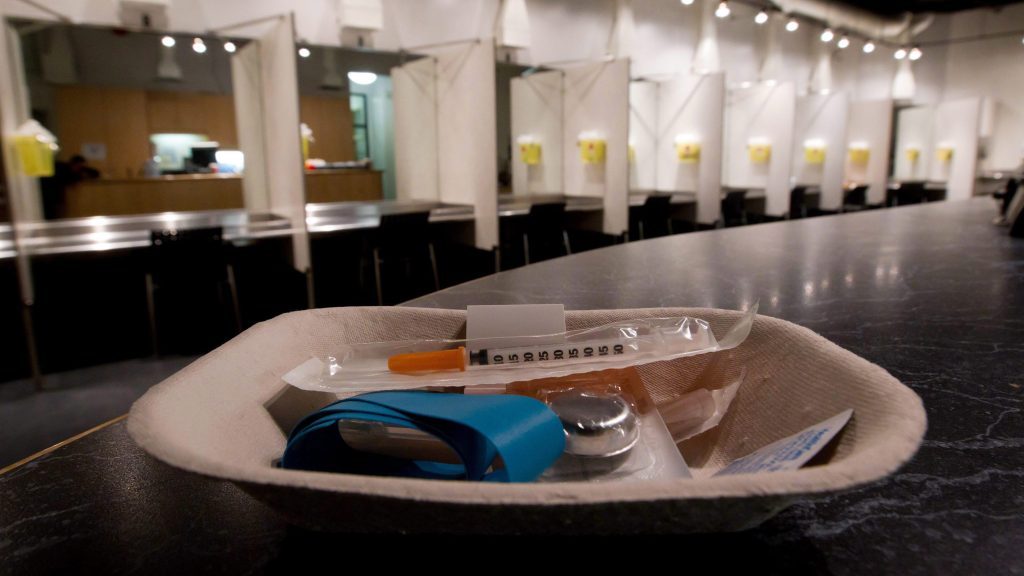
Harm reduction advocates have expressed strong objections to the Ford government's decision to terminate funding for all supervised consumption sites by June 13, 2023. They claim this move is "wrong" and "cowardly," predicting that it will result in a significant increase in overdose deaths across the province.
The Ontario Ministry of Health notified the Fred Victor Centre and the South Riverdale Community Health Centre—Toronto's last two provincially funded supervised consumption sites—of the funding cut on Friday. According to correspondence from the ministry, these sites are required to submit a wind-down plan by April 10, along with strategies to transition clients to alternative community-based treatment and recovery resources.
The letter outlines the government's commitment to prioritizing treatment, recovery, and support services meant to help individuals achieve long-term stability while safeguarding Ontario communities. However, the ministry has declined to comment further on the matter.
Staff and clients at the South Riverdale location, located at 134 Sherbourne Street, have reportedly been left "devastated" by the abrupt announcement. Keith Hambly, the CEO of the Fred Victor Centre, voiced deep disappointment, emphasizing that these services are vital for a compassionate, evidence-based approach to tackling the ongoing overdose crisis. He called on the government to reinvest the significant funds into community resources that are crucial for saving lives.
Janet Butler-McPhee, co-executive director of the HIV Legal Network in Toronto, warned that "people will die" if the sites are defunded, labeling the province's decision a “cowardly move.” She criticized the timing of the announcement, suggesting the government made the decision late on a Friday to avoid public scrutiny, and stressed that many lives depend on the services offered at these sites.
Zoe Dodd, co-organizer of the Toronto Overdose Prevention Society, described the government’s action as "absolutely appalling," pointing out that Toronto has already witnessed a doubling of overdose cases. She highlighted the changes in the toxic drug supply and how the removal of essential services increases the risk of fatalities among vulnerable populations.
The funding cuts will also impact other cities, including Ottawa, London, Kingston, St. Catharines, and Peterborough, where publicly funded consumption sites exist. In contrast, The Neighbourhood Group in Kensington Market and Casey House will remain unaffected, as their funding is private. Bill Sinclair from The Neighbourhood Group voiced concerns for street health in the east side of Toronto, noting that the past three months have been their busiest since several sites closed in 2025, describing the government's decision as "deadly" and "irresponsible."
The Canadian Civil Liberties Association has come out strongly against the decision, labeling it "misguided" and calling for the government to reverse its stance. According to the association, this moment necessitates the expansion of evidence-based support, rather than limiting access to critical, life-saving healthcare services.
In 2024, the Ford government enacted restrictions banning consumption sites within 200 meters of schools or daycare facilities, targeting ten sites for closure by March 2025. Many of these sites opted to transition to the province's new abstinence-based model for addiction recovery treatment, known as HART hubs, and subsequently closed their doors. The government has also prohibited the establishment of new consumption sites, moving away from harm reduction policies in favor of an abstinence-based framework. The recent letter from the ministry indicated plans to invest nearly $550 million into the creation of HART hubs across Ontario.
Sarah Evans from the Toronto Overdose Prevention Society has raised concerns regarding the operational viability of HART hubs, asserting that they do not currently exist and that the government’s promises remain unfulfilled. She accused the government of neglect, stating that the current direction essentially leaves vulnerable individuals without the necessary support systems, resulting in preventable deaths.