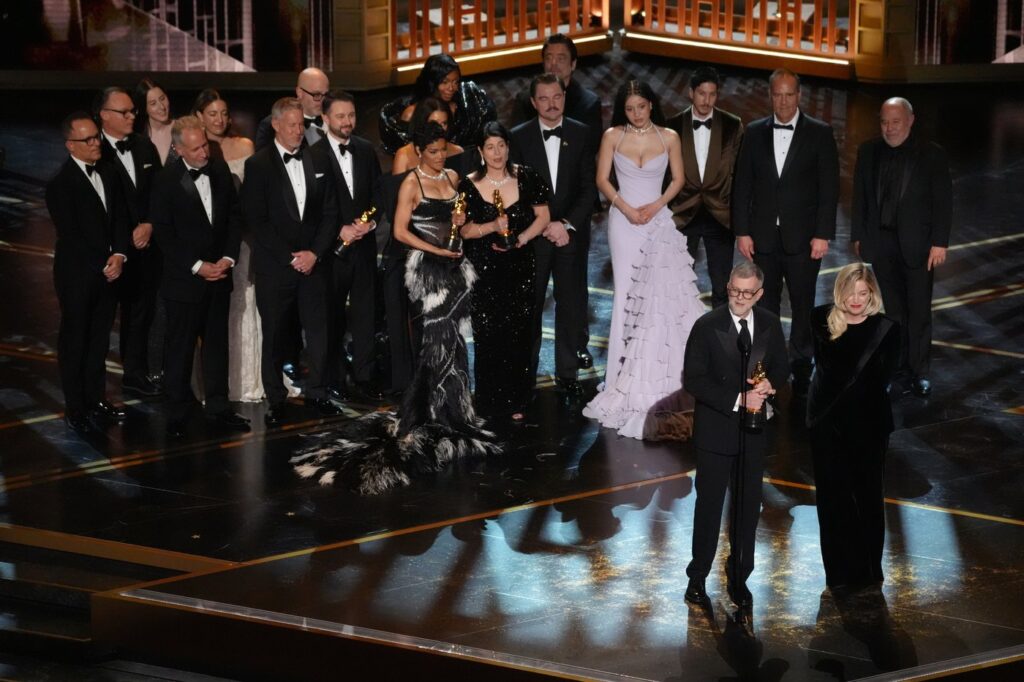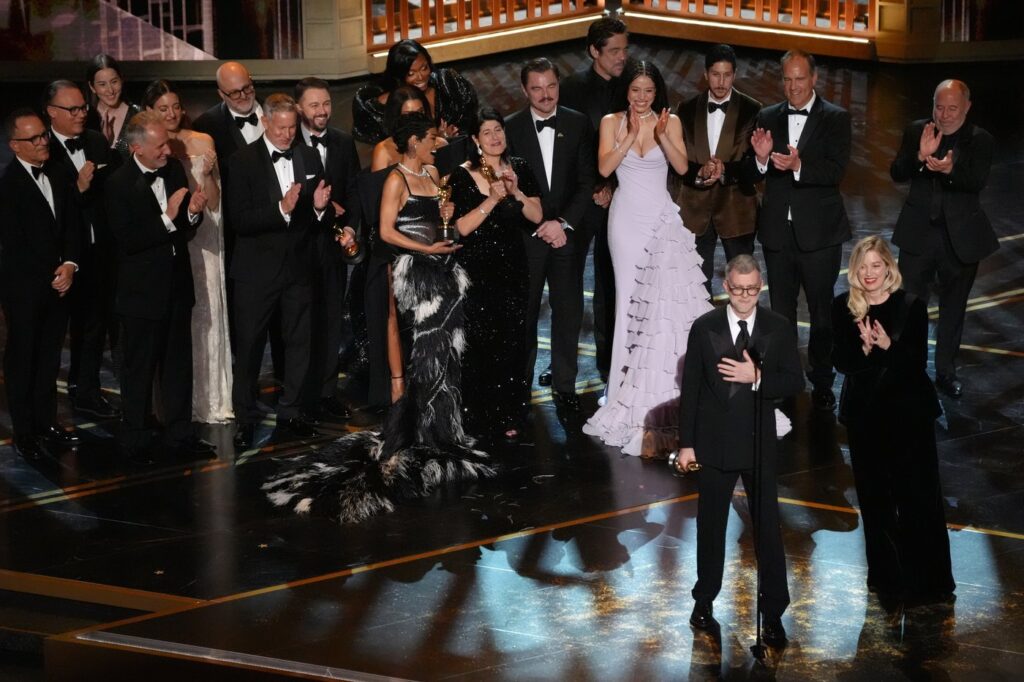
The 98th Academy Awards, hosted by Conan O’Brien, experienced a decline in viewership, reporting approximately 17.9 million viewers for the event held on Sunday, March 15, 2026. The awards were broadcast live on ABC and also streamed on Hulu, marking a 9% drop compared to last year's ratings of 19.7 million viewers. This past ceremony was notable for being O'Brien’s second year as host, during which the film "Anora" had dominated the awards the previous year.
This year’s Oscars featured a significant contest between two films from Warner Bros.: "One Battle After Another" and "Sinners." "One Battle After Another" won both the Best Picture and Best Director awards. Meanwhile, Michael B. Jordan received the Best Actor award for his role in "Sinners," a film that not only set a record with 16 nominations but also notably broke the tragic record for most losses in Oscars history, ending with 12 losses.
Despite the drop in traditional television viewership, the Oscars still secured its position as the top-rated primetime entertainment telecast of the 2025-2026 season. In comparison, the Golden Globes aired earlier in January on CBS and attracted 8.7 million viewers, reflecting a 7% decrease from the previous year’s numbers.
Interestingly, while fewer people tuned in to watch the Oscars live, other engagement metrics saw substantial growth. Social media impressions during prime time increased by over 42% this year, and the Academy’s social media platforms amassed more than 129 million video views throughout the night. These statistics suggest that while traditional television audiences may be declining, interest on digital platforms remains robust and vibrant.
The Oscars had reached an all-time low during the pandemic in 2021, with only 10.4 million viewers. However, in the 1990s, the event regularly attracted around 45 million viewers, peaking in 1998 when 57.2 million viewers watched "Titanic" win Best Picture. In a significant shift for the future, broadcast ratings will no longer serve as the primary metric for the Oscars' success starting in 2029, when the awards show is set to transition to YouTube for its 101st ceremony.
This year’s event once again highlighted the contrasting landscapes of viewer engagement in award shows and illustrated the ongoing evolution of how audiences consume media in a rapidly changing digital era.