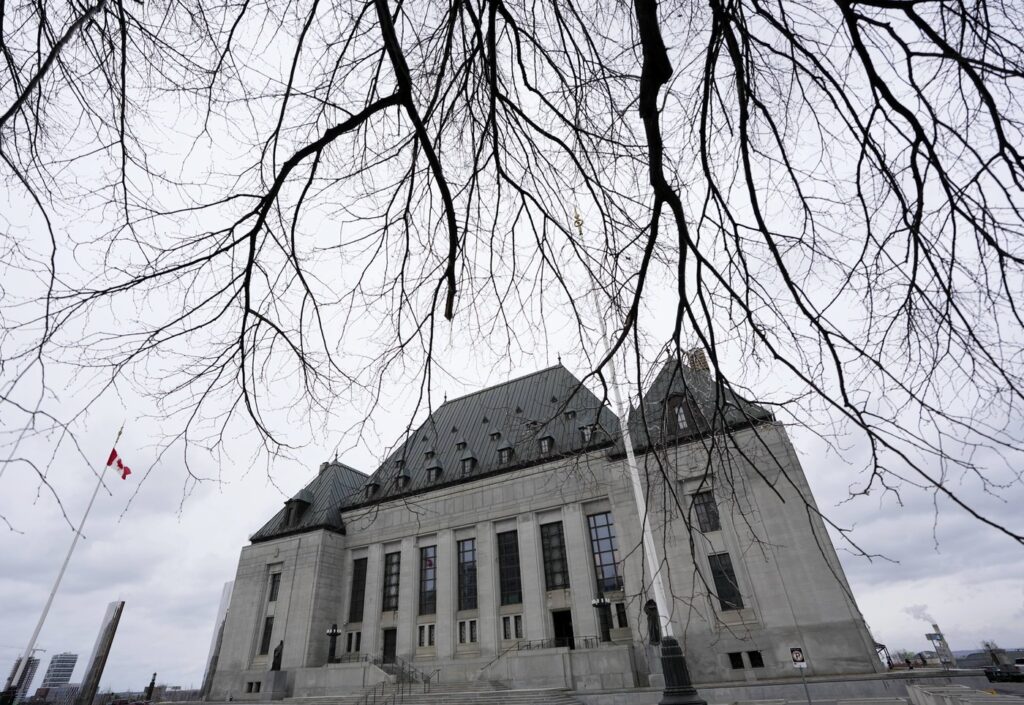
OTTAWA – The federal government of Canada is set to appeal to the Supreme Court regarding a lower court's ruling that deemed its invocation of the Emergencies Act, during the “Freedom Convoy” protests in early 2022, as unreasonable and a violation of constitutional rights. The protesters, largely made up of those opposing COVID-19 health restrictions, occupied downtown Ottawa and essential border crossings for approximately three weeks, causing significant disruptions.
Justice Minister Sean Fraser's spokesperson, Lola Dandybaeva, indicated that "Canada has sought leave to appeal to the Supreme Court of Canada to review the use of the Emergencies Act during the convoy protests and blockades that caused serious disruptions across the country." Dandybaeva emphasized the government's commitment to maintaining the necessary tools for safeguarding public order and national security. However, she refrained from providing further comments, citing the ongoing legal matter.
In a 2024 ruling, the Federal Court rejected the application of the Emergencies Act, stating that the legal criteria for declaring a national emergency were not met, thus infringing upon the Canadians' Charter rights. This decision was affirmed by the Federal Court of Appeal, which concluded that the government had not established reasonable grounds for declaring a threat to national security. The judges highlighted that the failure to meet the mandated conditions rendered the federal government's declaration "unreasonable" and beyond its legal authority.
Howard Sapers, the executive director of the Canadian Civil Liberties Association, addressed the situation by stating that if the Supreme Court chooses to hear the case, they would "proudly defend our historic victory for the rule of law and civil liberties." He noted that two courts have already ruled the government’s use of the Emergencies Act as unlawful, yet the Liberal government is still pursuing a contradiction of those findings.
During the protests that took place from January to February 2022, downtown Ottawa was filled with demonstrators, particularly those in large trucks that blocked vital streets near Parliament Hill. Many businesses temporarily shut down due to the protests, which were also marked by noise, pollution, and harassment of local residents. Although many participants protested against public health measures, the protest also attracted individuals with various grievances against then-Prime Minister Justin Trudeau and his government.
On February 14, 2022, in response to the protests, the federal government invoked the Emergencies Act for the first time since its enactment in 1988. This allowed them to implement temporary measures such as regulating and prohibiting public assemblies and freezing financial assets linked to the protests. The Emergencies Act defines a national emergency as an urgent and critical situation of a temporary nature that seriously endangers the lives, health, or safety of Canadians, requiring measures beyond the capacity or authority of provincial jurisdictions.
The Court of Appeal reiterated that the government lacked adequate justification to declare an emergency. It found that the steps taken exceeded the bounds of legal authority, concluding that the situation could have been managed through existing laws without invoking such extraordinary measures.
Marilyn Gladu, the Conservative Party's civil liberties critic, expressed her disapproval of the government’s decision to appeal, stating that it is "disappointing" to see taxpayer money used to defend what was determined to be an illegal suspension of Canadians' rights. Gladu argued that there are more pressing issues facing Canadians, including rising food insecurity and high inflation rates, and asserted that the government's actions during the protests were unjustified.
This appeal to the Supreme Court reflects the ongoing debate surrounding the intersection of public safety, civil liberties, and government authority in emergency situations in Canada.