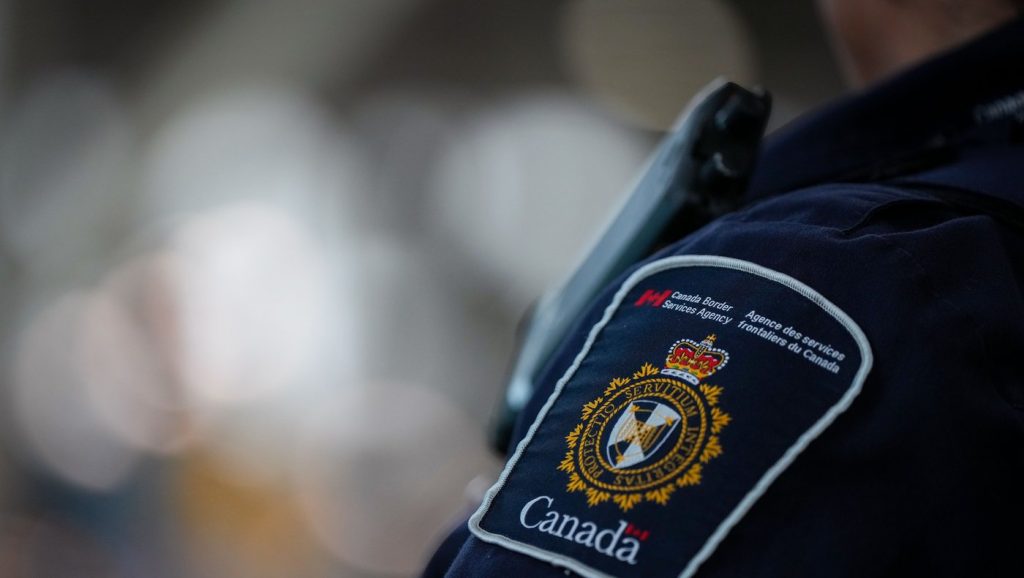
The Canada Border Services Agency (CBSA) has initiated 372 immigration investigations aimed at disrupting extortion networks throughout the country. This effort began in August 2025, focusing initially on the Pacific and Prairie regions, before expanding to the Greater Toronto Area in November.
As of March 12, 2026, the agency has issued a total of 70 removal orders based on various grounds of inadmissibility, with 35 of these orders already enforced. A significant concern regarding extortion has emerged in communities such as Surrey, British Columbia, where there were notably 133 reported cases of extortion in 2025. Currently, local police are actively investigating 64 cases related to extortion this year.
The CBSA has taken steps to investigate individuals suspected of engaging in extortion, establishing a tip line that encourages the public to share information regarding the whereabouts of people deemed inadmissible to Canada. The agency's commitment to addressing this issue is reflected in its collaborative efforts with local law enforcement.
According to a follow-up email from the CBSA, a total of 34 removal orders had been issued in the Pacific region by early March 2026, which encompasses British Columbia and the Yukon, with 25 individuals already having been removed from Canada. The first extortion-related immigration investigation in this region commenced on August 26, 2025, coinciding with the announcement of British Columbia’s Extortion Task Force in September.
In her statement, Michelle Rempel Garner, the Federal Conservative shadow minister for immigration, highlighted that there were over 13,000 reported incidents of extortion in Canada during 2024. She questioned the effectiveness of the CBSA's operations, noting that only 35 removal orders enforced suggests a lack of progress, even though not all extortion cases involve individuals eligible for deportation.
Erin O'Gorman, the president of the CBSA, emphasized the agency's dedication to tackling extortion, stating that it fosters organized crime, exploits vulnerable individuals, and causes lasting harm to Canadian communities. She iterated that the CBSA is committed to utilizing all available resources to combat this threat, asserting significant progress in increasing their removal capacity and strengthening partnerships with law enforcement.
The agency highlighted two significant deportation cases as examples of its efforts. One case involved Arshdeep Singh, who entered Canada on a study permit in 2022 but was arrested by border officers a year later. He faced allegations of membership in a criminal organization associated with extortion, arson, drug trafficking, and firearm offenses. The CBSA successfully removed him from Canada under escort in January 2026.
The second case pertained to Sukhnaaz Singh Sandhu, who arrived in Canada as a temporary resident in 2016. He was arrested and detained in 2025 for being inadmissible due to organized criminality. The agency reported that he was held in immigration detention as a public safety concern until his deportation under escort in February 2026.
This report underscores the ongoing efforts and challenges faced by the CBSA in addressing extortion and organized crime within Canadian borders, aiming to protect vulnerable populations and ensure community safety.