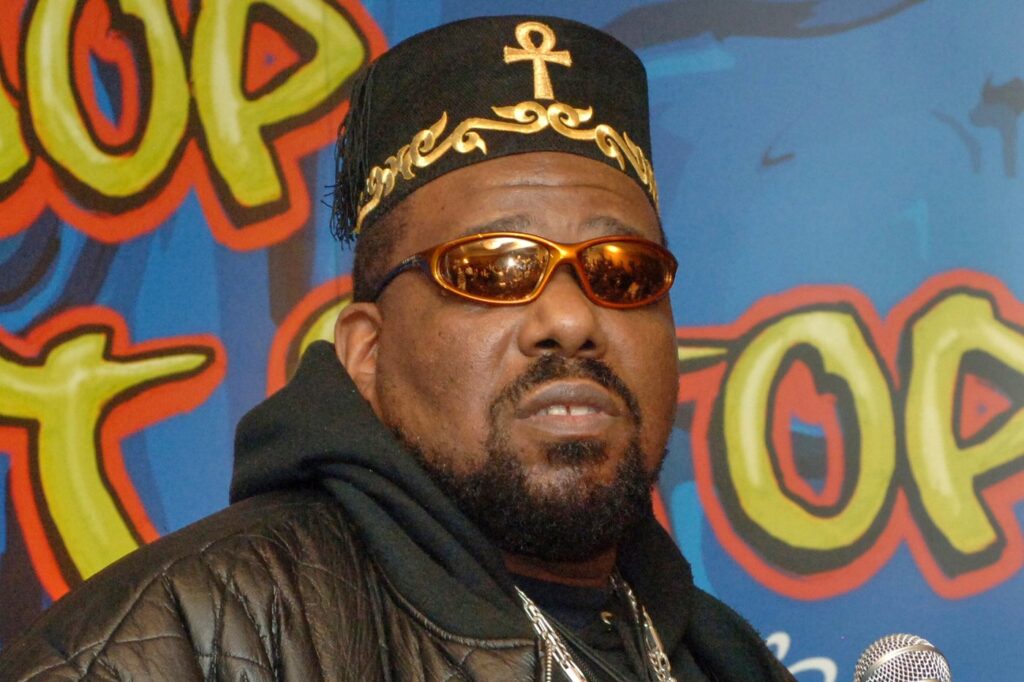
Afrika Bambaataa, a prominent figure in the hip-hop genre, passed away from prostate cancer in Pennsylvania on Thursday at the age of 68, as reported by his lawyer. Bambaataa's death prompted a wave of condolences from friends, family, and fans globally, celebrating his significant influence on hip-hop, which stands as one of the world's most popular and politically significant music genres. However, his legacy has been marred in recent years by multiple allegations of sexual abuse from men who accused him of wrongdoing during their youth.
Best known for his groundbreaking 1982 track "Planet Rock," Bambaataa founded the Universal Zulu Nation, a collective that promoted hip-hop culture and community involvement. The rapper and producer was often recognized alongside Kool Herc and Grandmaster Flash as one of the founding fathers of hip-hop. In 2023, rapper Fat Joe emphasized Bambaataa's crucial role in shaping the genre, stating, "When you talk about Afrika Bambaataa, Kool Herc, Grandmaster Flash, these are the three founding fathers of the whole culture."
Bambaataa, born Lance Taylor in the South Bronx in 1957, grew up in a challenging environment characterized by economic hardship and urban decay. During the late 1970s and early 1980s, the South Bronx suffered significant neglect, with landlords reportedly burning buildings for insurance payouts and leaving predominantly Black and Puerto Rican communities without opportunities. Raised in a public housing complex by his mother, who had Jamaican and Barbadian roots, Bambaataa was introduced to music early through her vinyl record collection.
His ability to mix and repurpose music became a hallmark of the parties he hosted in community centers starting in the early 1970s. He was notably influenced by Kool Herc's pioneering DJ techniques. As his parties gained popularity through the 1980s, Bambaataa released several electro tracks that shaped the emerging hip-hop and electro-funk scenes. He was among the first DJs to effectively utilize breakbeats, incorporating the iconic Roland TR-808 drum machine into his mixes.
Reflecting on his parties, Bambaataa explained his unique approach: "We was playin’ everything, everything that was funky.... other DJs would play they great records for fifteen, twenty minutes. We was changing ours every minute or two." Leveraging his association with the Black Spades gang, he established the Zulu Nation to promote peace and unity among rival gangs, later evolving the name to the Universal Zulu Nation to embrace diversity and inclusivity within the hip-hop community.
In 2016, Ronald Savage, a Bronx political activist and former music industry executive, publicly accused Bambaataa of abusing him when he was a young teenager. Savage described feeling intimidated, saying, "I was scared, but at the same time I was like, 'This is Afrika Bambaataa.'" Following Savage's revelations, additional individuals came forward with similar allegations against Bambaataa. In response to the growing number of accusations, the Universal Zulu Nation issued a public apology in June 2016, acknowledging the suffering of the victims and admitting that some members were aware of the abuse but chose to remain silent.
The organization's letter expressed deep regrets, stating, "We extend our deepest and most sincere apologies to the many people who have been hurt." The outpouring of grief and reflection following Bambaataa's death serves as a reminder of the complexities surrounding his legacy in hip-hop history, where his contributions to music coexist with serious allegations that call his character into question.