"The Christophers" initially presents itself as an art heist movie, with a premise that involves a duo of aspiring heirs, played by James Corden and Jessica Gunning. They enlist the expertise of a restoration specialist, portrayed by Michaela Coel, to complete a series of unfinished paintings by their renowned father, Julian Sklar, played by Ian McKellen. Sklar, however, has no interest in his children or the uncompleted artworks, which would likely fetch exorbitant prices in the art market.
The two heirs, characterized vividly by McKellen as "wrecks"—one being a "train wreck" and the other a "shipwreck"—believe they are entitled to an inheritance that they know won't come through any formal will or their own talent. Meanwhile, the specialist, Lori (Coel), is driven by more than just the need to pay her rent; she has her own personal vendetta against Julian. The film hints at a history between Lori and Julian, which slowly unfolds throughout the narrative as Lori has publicly critiqued Julian's later works.
However, "The Christophers" sidesteps the typical heist narrative reminiscent of films like "Ocean's Eleven" or "Logan Lucky." Instead, it teases the audience with the prospect of a heist but ultimately prioritizes deeper themes of art, legacy, and creativity. Directed by the prolific Steven Soderbergh, the film serves as a meditation on who has the right to critique art, infusing humor and intellect into its sharp script by Ed Solomon. The engaging performances by McKellen and Coel further elevate the film, allowing it to flow effortlessly.
As the story unfolds, there's a deeper exploration of Julian's disdain for unfinished works, particularly a series called "The Christophers," dedicated to a former boyfriend, which ultimately became his most famous collection. This conflict creates an engaging backdrop against which the characters navigate their personal challenges and broader existential questions regarding their roles in the art world.
Julian's assertion that "to judge art one must possess the skills to make said art" is a provocative statement that could spark extensive discourse among audiences. His character embodies both age and defiance, possessing a wealth of wisdom and a history riddled with burned bridges. This dichotomy makes Julian a compelling figure, even as his public persona has diminished to something akin to selling personalized video messages for around 149 pounds.
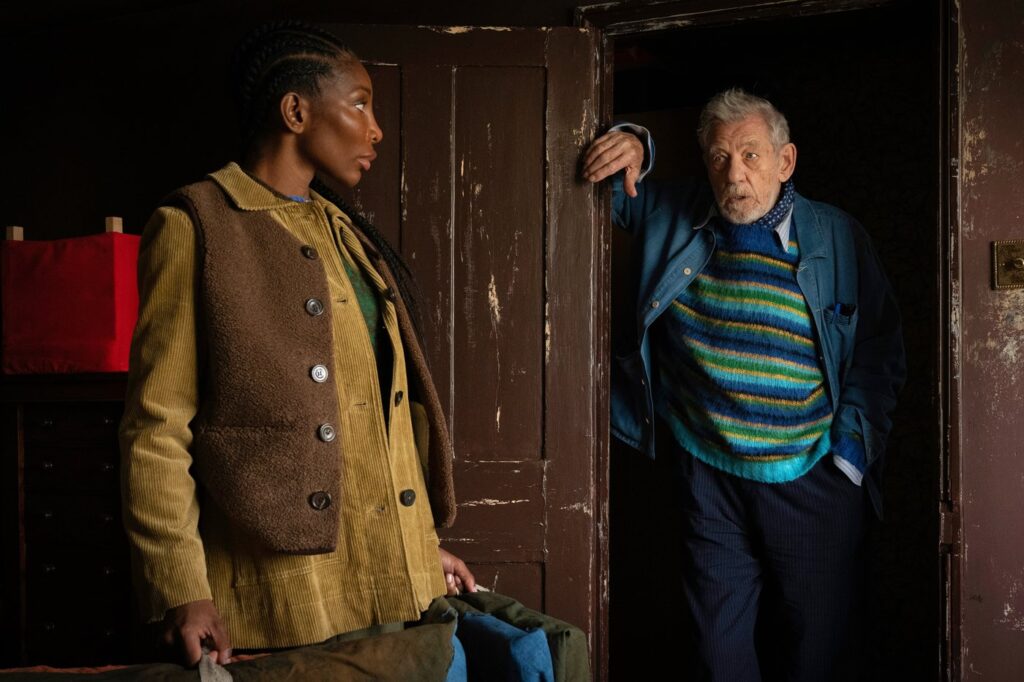
When Lori finally arrives to take on the restoration project, she becomes an audience for Julian's non-stop, theatrical monologues. This dynamic provides both entertainment for McKellen's character and the viewers, though Lori initially remains stoically indifferent to his theatrics until she seizes control of the situation. Their interaction highlights generational conflict without becoming a cliché. The screenplay presents various ideas that remain open for interpretation, particularly Julian's views on art criticism, suggesting that many of his remarks are simply the sharpest retorts he can muster in the moment.
Critiquing a film that extensively dialogues about critique itself presents an interesting challenge. Yet, Soderbergh's recent works, including "Presence" and "Black Bag," exhibit a consistent quality that makes such criticism easier. Even as his films may feel more intimate and scaled back, the creative energy underlying them remains vibrant. "The Christophers," released by Neon in New York and Los Angeles, is set for a nationwide rollout on April 17. The film, running a brisk 100 minutes, has received an R rating for language and has garnered three out of four stars from critics.