Oil prices experienced a significant increase in early market trading on Sunday following the announcement from the U.S. government regarding a blockade on Iranian ports set to begin on Monday. U.S. crude oil prices surged by 8%, reaching $104.24 per barrel, while Brent crude, the international benchmark, rose by 7% to $102.29.
The Brent crude oil market has been particularly volatile during the ongoing conflict in Iran, with prices fluctuating dramatically from approximately $70 per barrel before the hostilities erupted in late February to peaks above $119. Prior to the commencement of peace talks on Friday, Brent for June delivery saw a decline of 0.8%, closing at $95.20 per barrel.
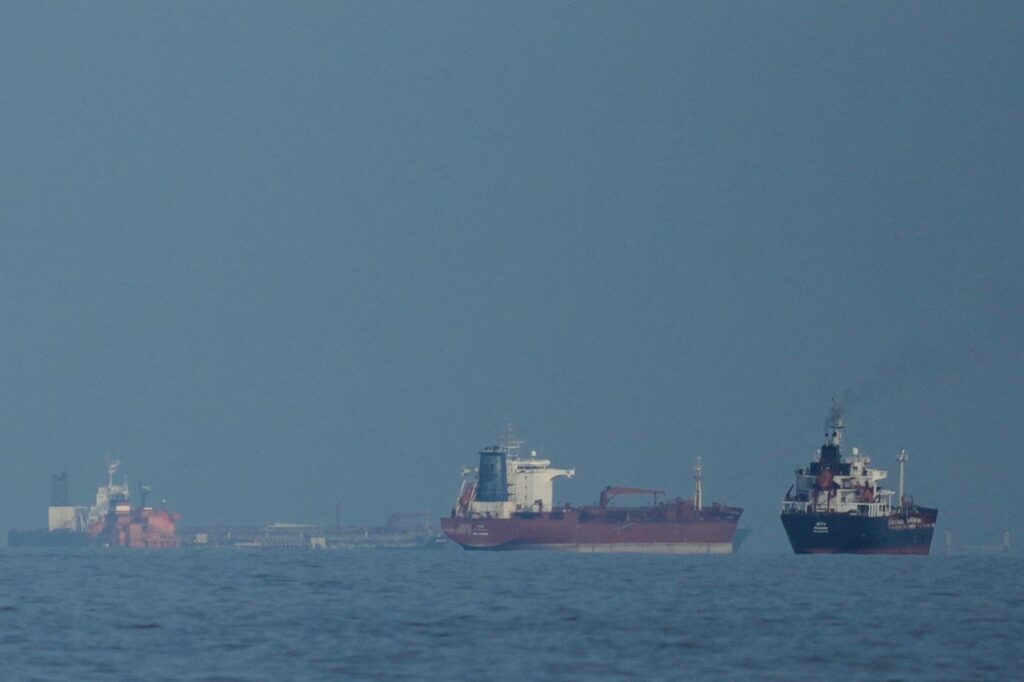
Iran has maintained effective control over the Strait of Hormuz, a crucial maritime route for global oil transport. The U.S. Central Command emphasized that the forthcoming blockade will be enforced “impartially against vessels of all nations” that are entering or departing Iranian ports and coastal areas, which includes all Iranian ports along the Persian Gulf and Gulf of Oman.
Despite the implementation of the blockade, U.S. Central Command indicated that ships traveling between non-Iranian ports would still be allowed to transit through the Strait of Hormuz. This strait is critical, as it typically facilitates the passage of around one-fifth of the world’s traded oil on a daily basis. Key oil-exporting countries such as Saudi Arabia, Iraq, the United Arab Emirates, Kuwait, and Iran are all significantly involved in this vital corridor.
Despite the recent ceasefire, traffic through the strait has been limited. Marine tracking data reveals that over 40 commercial ships have transited since the ceasefire took effect, indicating a cautious atmosphere in the region.
Claudio Galimberti, chief economist at Rystad Energy, provided insight into the ramifications of the blockade, stating that it will tighten oil markets further. He characterized the blockade as a potential negotiation tactic that could lead to a resolution and the eventual opening of the Strait of Hormuz. “More pain now, but more gain later,” he suggested, indicating that while prices may rise in the short term, there could be benefits in the long run.
Conversely, Jim Krane, an Energy Research Fellow at Rice University, voiced concerns regarding the blockade's short-term effectiveness as a negotiating tactic, especially amidst existing strains in the oil market. He warned that if there was another jump in oil market deficits, it would adversely affect everyone reliant on market oil prices worldwide. “The pain will be felt by every person on Earth that’s subject to market oil prices,” he cautioned.
The situation surrounding the blockade will likely have widespread implications, affecting not only oil prices but also geopolitical dynamics in the region. As the situation develops, the impact on global oil markets, consumer prices, and international relations will continue to be closely monitored.