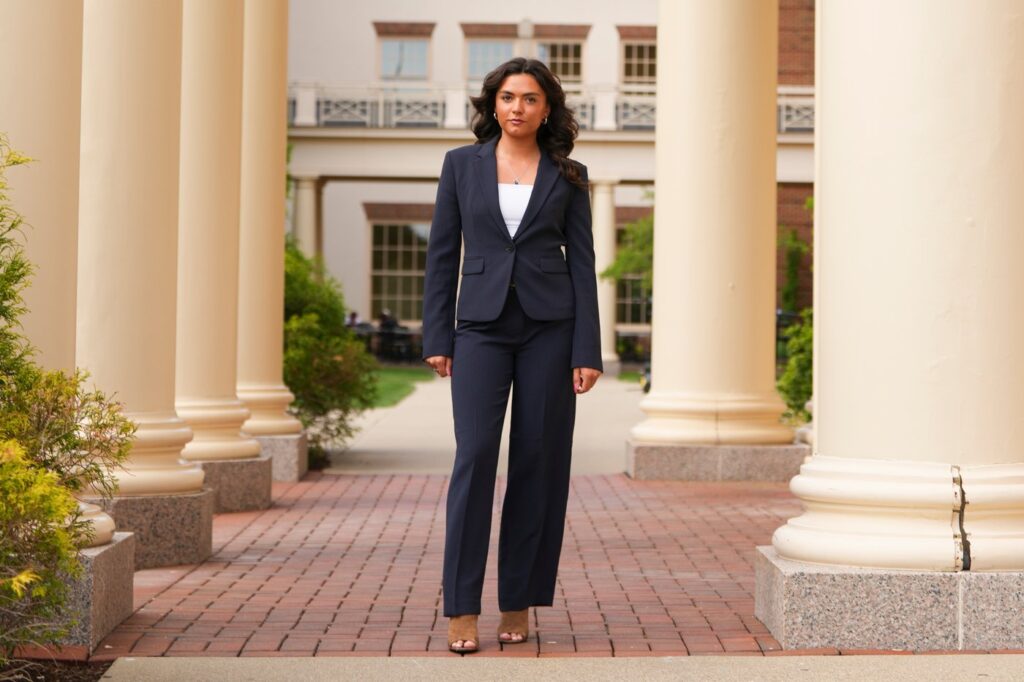
Two years ago, Josephine Timperman, a 20-year-old student at Miami University in Ohio, began her college journey by declaring a major in business analytics. She believed that this choice would provide her with unique skills that would enhance her resume and ultimately lead to a good job post-graduation. However, with the recent rise of artificial intelligence (AI), her plans have been disrupted. Timperman expressed her concerns, noting that the fundamental skills she was acquiring, such as statistical analysis and coding, could now be easily automated, raising fears among students that AI could take over entry-level jobs.
In response to these concerns, Timperman recently switched her major to marketing. Her new approach focuses on developing critical thinking and interpersonal skills, which she believes remain unique to humans. “You don’t just want to be able to code. You want to be able to have a conversation, form relationships, and think critically because at the end of the day, that’s the thing that AI can’t replace,” she stated. Moreover, she plans to keep analytics as a minor and intends to pursue a master's program in the subject afterward.
This shift in academic focus among college students reflects a broader trend where many are struggling to choose majors that could be considered “AI-proof.” A recent poll conducted by the Institute of Politics at the Harvard Kennedy School revealed that approximately 70% of college students view AI as a threat to their job prospects. Concurrently, a Gallup poll indicated that U.S. workers are growing increasingly anxious about the potential replacement of their roles by emerging technologies.
Students pursuing degrees in technology and vocational studies appear particularly affected by this uncertainty. While many feel the necessity to grasp AI technology, they also harbor fears of being supplanted by it. A Quinnipiac poll indicated that a significant majority of Americans believe it is crucial for students in higher education to learn how to use AI. In contrast, students in fields like healthcare and natural sciences may feel less impacted by AI innovations, as determined by Gallup polling data.
The trend of changing majors, while not unprecedented, has raised eyebrows among educators and institutions. Courtney Brown, a vice president at Lumina, an education nonprofit organization, noted, “The fact that so many students say it’s because of AI—that is startling.” Furthermore, a Gallup poll focused on Generation Z, covering individuals between the ages of 14 and 29, showcased rising skepticism and concern surrounding AI. Approximately 48% of Gen Z workers feel that the risks posed by AI in the workforce surpass its potential benefits.
The uncertainty in career pathways has been compounded by the fact that traditional advisers, professors, and parents may not have the requisite answers to this new landscape. “Students are having to navigate this on their own, without a GPS,” Brown remarked. This issue was also highlighted during a panel discussion at Stanford University, where educational leaders gathered to address the evolving demands of higher education, accentuating the need to evaluate what students must learn to succeed in a future job market reshaped by AI technologies.
Amidst this uncertainty, anxiety has also reached computer science majors. For instance, Ben Aybar, a 22-year-old graduate from the University of Chicago, found himself applying to approximately 50 software engineering jobs without receiving a single interview. Consequently, he shifted towards pursuing a master’s degree in computer science while securing part-time work in AI consulting. Aybar emphasized that individuals who can utilize AI effectively will be in demand, especially those who can convey complex information in simple terms. He explained, “Being able to talk to people and interact with people in a very human way is more valuable than ever.”
Another case is that of Ava Lawless, a data science major at the University of Virginia, who is grappling with doubts about the viability of her chosen field. She has received mixed feedback from advisers about her prospects and is discouraged by reports indicating potential job shortages in her area. Lawless commented, “It makes me feel a bit hopeless for the future. What if by the time I graduate there’s not even a job market for this anymore?” This contemplation has led her to consider switching her major to studio art instead.
In summary, the rapid advancement of AI technology has forced students to reevaluate their educational paths and career strategies. While some are seeking majors focused on developing distinctly human skills, others are struggling to find clarity in a constantly changing job market shaped by AI innovations.