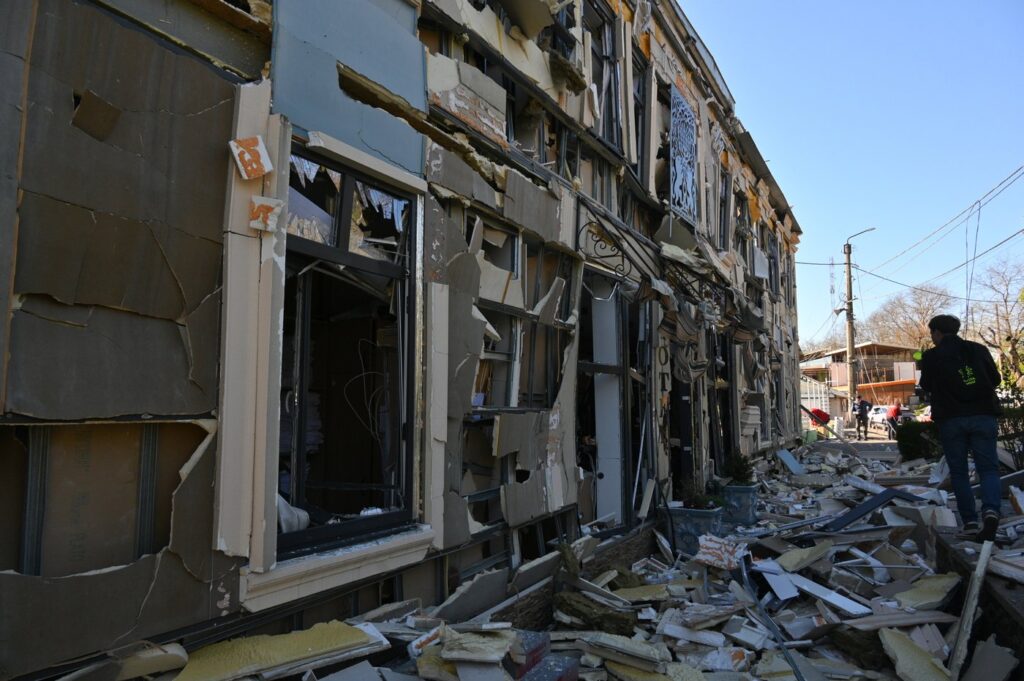
KYIV, Ukraine (AP) – A recent Russian drone attack targeted the southern city of Odesa before dawn, injuring 14 individuals, including two children, as confirmed by local authorities on Monday. This assault is part of a broader pattern of strikes on civilian areas that have characterized Moscow's full-scale invasion of Ukraine. The city of Odesa has endured repeated assaults since the invasion began over four years ago on February 24, 2022.
Serhii Lysak, the head of Odesa's administration, reported that drones struck residential neighborhoods and civilian infrastructure. Among the injured, five have been hospitalized with shrapnel wounds, according to Oleh Kiper, head of the regional military administration. Ukrainian President Volodymyr Zelenskyy indicated that Russia has unleashed approximately 1,900 attack drones, almost 1,400 powerful guided aerial bombs, and around 60 missiles on Ukraine in just the past week.
Despite these aggressive offensives, Zelenskyy stated that Ukraine's advancements in military technology have allowed it to intercept more than 90% of the drones launched by Russia. Nevertheless, he emphasized the need for additional American-made Patriot air defense missiles capable of destroying Russia's ballistic missiles. Furthermore, Ukraine has been providing assistance to countries in the Middle East and the Gulf region to counter attacks from Iranian drones.
In a related development, Norway has entered into a joint drone manufacturing agreement with Ukraine, marking a growing recognition of the importance of drone technology in modern warfare. Additionally, Polish Prime Minister Donald Tusk announced plans for his government to collaborate with Ukraine in building a “drone armada” to bolster defense capabilities for both nations and the broader European region.
In an effort to enhance its warfare capabilities, Zelenskyy also revealed that Ukraine is significantly increasing the production of ground robots designed for various military applications, including supply delivery, evacuation of injured soldiers, and firing automatic weapons. The Ukrainian military has placed an order for 25,000 ground robots in 2025, which is double the amount planned for this year, with further increases anticipated in the future.
Zelenskyy highlighted several recent developments that signify good news for Ukraine's defense strategy. NATO partners, excluding the United States, have contributed to a financial arrangement for the purchase of American weaponry. The European Union has approved a substantial loan of 90 billion euros (approximately $106 billion) to support Ukraine and has plans for increasing sanctions on Russia.
In retaliatory measures, Ukraine has been targeting oil terminals and refineries deep within Russia using long-range drones and missiles, with the goal of disrupting Moscow's economy. The Institute for the Study of War, a Washington-based think tank, noted that evidence shows Ukrainian forces conducted at least 10 strikes against Russian oil and gas infrastructure in the past two weeks, indicating a strategic shift in Ukraine’s offensive capabilities.
The conflict remains dynamic, with both sides employing advanced technology and strategies that are transforming the nature of warfare in the region as the effects of the ongoing war continue to unfold.