In recent developments surrounding the Iran conflict, the Trump administration's messaging has been notably inconsistent, oscillating between claims of a ceasefire and hints of renewed military aggression. Within a span of just 24 hours, high-ranking officials have made statements that highlight the chaotic strategy being employed by the administration.
On Tuesday, Defense Secretary Pete Hegseth indicated that the U.S. military was engaged in operations aimed at protecting stranded vessels attempting to navigate the critical Strait of Hormuz. He emphasized that these actions were defensive and that a tenuous ceasefire was still in place, despite Iran's launch of missiles and drones against U.S. forces, resulting in the sinking of several small Iranian attack boats.
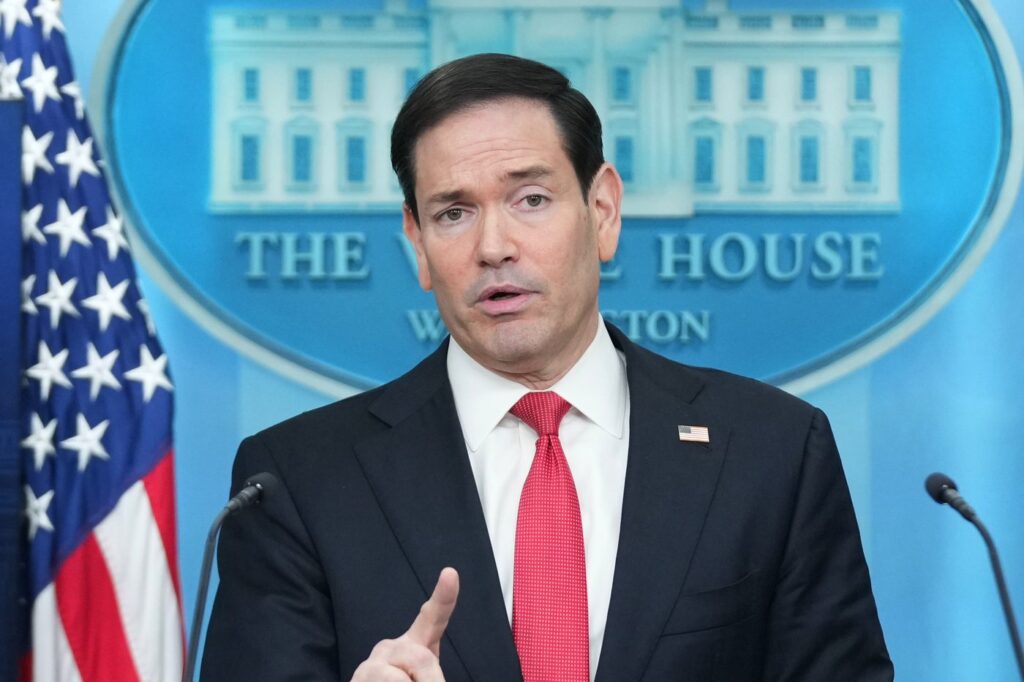
However, later that day, Secretary of State Marco Rubio declared that military operations were effectively "concluded" and that the U.S. had achieved its objectives. Yet, he simultaneously conveyed that President Donald Trump was pursuing a diplomatic solution, with the expectation that Iran would negotiate a deal to reinstate secure passage through the vital oil shipping corridor. This dual messaging left many observers confused about the administration's true stance on the issue.
By the evening of Tuesday, Trump announced a pause in efforts to escort ships through the strait, subsequently warning on Wednesday morning that bombing operations would resume if Iran did not comply with the U.S. demands. The administration's contradictory communications have only intensified the uncertainties regarding their overall strategy in resolving tensions in the Strait of Hormuz, where a significant portion of the world’s oil is transported.
As the week progressed, it became evident that the administration was struggling to maintain a clear narrative amid the escalating tension. Experts noted that the rapid initiation of military actions was not well-publicized or prepared, leading to public unease regarding the war. Elizabeth Dent, a senior fellow at the Washington Institute for Near East Policy, suggested that the administration's lack of a coherent plan contributed to the current chaos. She indicated that Trump appears to be attempting to minimize hostilities due to the unpopularity of the ongoing conflict.
Throughout this period, Trump has exhibited a tendency to modify his priorities and definitions of success in the war. He has articulated an ambiguous version of what a ceasefire entails, interpreting legislative mandates regarding military engagements to suit his narrative. This confusion has been further exacerbated by Trump's off-the-cuff remarks, which often require aides like Rubio and Hegseth to clarify or defend the president's statements to the public.
Moreover, challenges have arisen from Trump’s decision-making process, which is characterized by impulsivity rather than established policy frameworks. This has led to increasing concerns among allies and strategic partners. Saudi Arabia, for instance, expressed skepticism about the feasibility of Trump’s initiative to secure the strait and restore confidence among commercial shipping operators.
By the early part of the week, indications suggested that Trump was increasingly wary of continuing military operations without solid diplomatic results. His threat of intensified bombing operations reflected the urgent need to find an alternative solution to escalating tensions with Iran. Amid calls for international cooperation to secure the Strait of Hormuz, many countries remained reluctant to provide military assistance, further complicating the situation.
The inconsistent messaging and ongoing diplomatic efforts seem to highlight the administration's struggles to balance military operations with the necessity for diplomatic dialogue. Allies like the United Kingdom and France have shown unwillingness to involve themselves militarily, although they have been actively working towards forming a coalition for maritime security in the strait, contingent on the reduction of threats to shipping.
Lastly, the administration’s message has been clouded further by logistical realities, as Trump's upcoming trip to Beijing underscores the urgency of resolving these tensions. Failure to secure stability in the Strait of Hormuz ahead of this trip may undermine U.S. credibility and position in negotiations with China and other global powers as the conflict persists.