MONTREAL - Prime Minister Mark Carney has announced plans to consult with an independent advisory board established under former Prime Minister Justin Trudeau before appointing new senators to address an increasing number of vacancies in the Canadian Senate. Currently, nine Senate seats are vacant, with six more senators expected to retire later this year, raising concerns among some senators about the growing list of empty positions in the upper chamber.
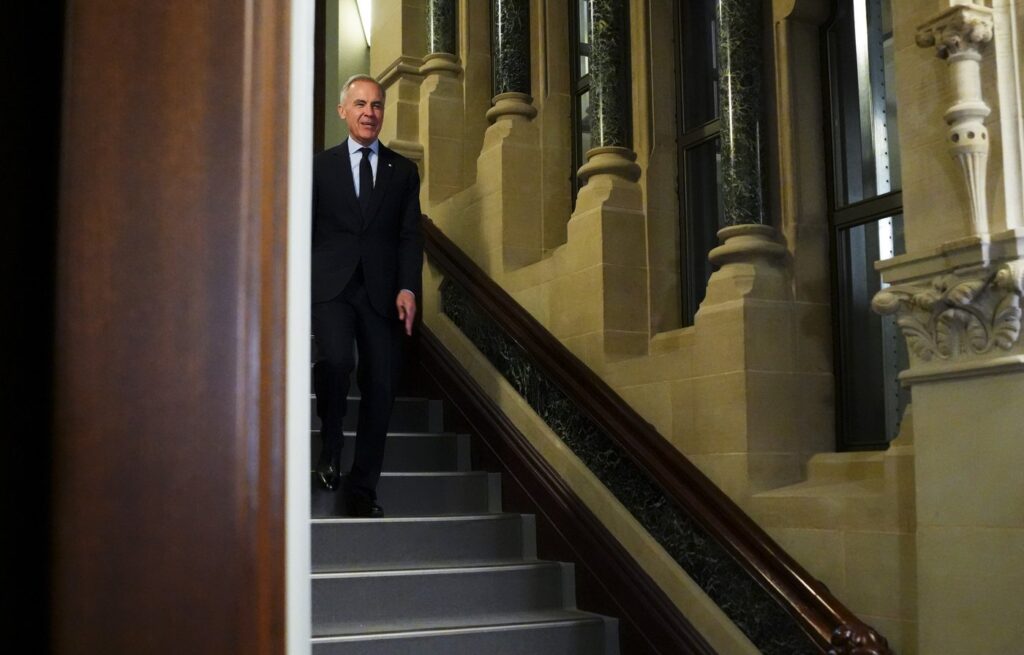
Since taking office, Carney has kept his plans for Senate appointments relatively under wraps, having yet to make any appointments to the upper chamber. When questioned by The Canadian Press regarding his upcoming strategy on these appointments, Carney confirmed that filling these Senate vacancies is indeed part of his agenda. "We will be appointing senators in due course, and I will take into account advice from the independent advisory committee that was established by my predecessor," Carney said during a press conference in the Montreal suburb of Mirabel. His brief statement indicated that he is not yet prepared to disclose more details regarding his decision-making process.
Over the past year, the federal government has been reticent about answering inquiries about how future Senate appointments will be handled. The Senate experienced significant changes under the last Liberal administration, which saw Trudeau expel senators from his caucus in 2014 following a Senate expense scandal. He pledged to eliminate patronage appointments and subsequently created an independent advisory board designed to make non-partisan recommendations for Senate appointments.
Recently, Non-affiliated Senator Marilou McPhedran expressed her apprehension, stating that the increasing number of vacancies could signify the potential end to a selection process that is "largely community-driven" and distanced from prime ministerial patronage. Meanwhile, Conservative Leader Pierre Poilievre echoed concerns that the current Senate does not accurately reflect the makeup of Canadian society, advocating for Carney to appoint more Conservative senators. "The Senate is not currently a reflection of the Canadian people," Poilievre articulated during a news conference on April 23.
Carney's predecessor, Stephen Harper, ceased making Senate appointments in 2013 after the courts blocked his attempts to impose term limits on senators, leaving several vacancies for Trudeau to fill upon taking office. Over the course of his ten-year tenure, Trudeau appointed 100 individuals to the Senate, with more than three-quarters of current members having been appointed during his administration. However, Trudeau's later appointments drew scrutiny for being partisan, with several individuals linked to the Liberal Party receiving positions, including former Liberal MPs and key party donors.
The advisory board, which was intended to facilitate impartial Senate appointments, currently has three core federal members, but has diminished capability due to unfilled positions. It is meant to include two additional members from the province or territory for each vacancy; however, many of these seats are also empty. The board's website notes the acceptance of new applications or nominations for Senate appointments is currently paused, listing a total of 24 vacancies, five sitting members, and representation from only Nova Scotia, leaving Quebec—home to five Senate vacancies—unrepresented.
McPhedran characterized the advisory board as being effectively "dismantled" due to its significant vacancy rates, suggesting that the independence intended by its establishment is currently compromised. As Carney prepares to undertake the Senate appointment process, many will be closely watching the implications of his decisions on the future composition of the Senate.