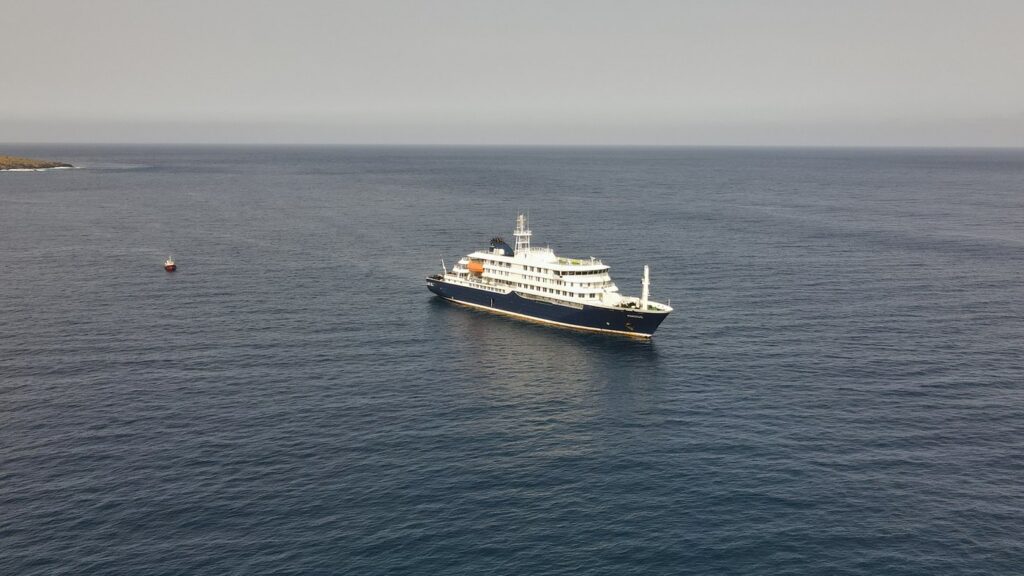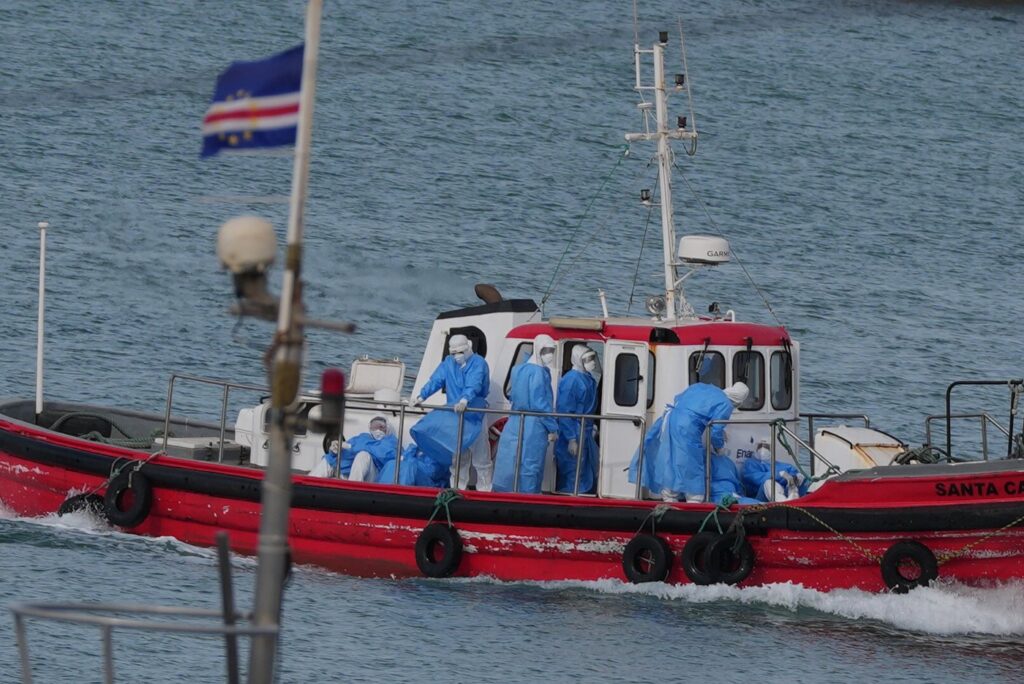
PRAIA, Cape Verde (AP) — A serious hantavirus outbreak has emerged aboard the cruise ship MV Hondius, prompting urgent health responses from international agencies. As of Wednesday, two confirmed hantavirus patients and one suspected case were evacuated from the ship at the Cape Verde port. The ship, carrying nearly 150 travelers isolated in their cabins, then set sail for Spain’s Canary Islands.
Health officials in protective gear were seen evacuating patients, with footage showing them handling the critical situation. Two of the evacuated individuals, a 41-year-old Dutch national and a 56-year-old British national, were transported to separate hospitals in Amsterdam. The World Health Organization (WHO) reported that three individuals have died from the virus, with one deceased body remaining on board the ship. Out of the recorded eight cases, laboratory testing confirmed five as positive for hantavirus.
The hantavirus typically spreads via inhalation of contaminated rodent droppings and, though rare, can also be transmitted between people. Despite some concerns, WHO officials contend that the public risk remains low. Health authorities in both Europe and Africa are working diligently to trace contacts of those who had previously left the ship, which embarked on its journey on April 1 from South America, stopping at various remote Atlantic islands.
Investigators from Argentina have suggested that a Dutch couple may have contracted the virus while bird-watching in Ushuaia prior to boarding the cruise. They had visited a landfill during their tour, potentially exposing them to rodents. The investigation continues, and officials are proceeding with caution as they assess the situation.
Among the three individuals evacuated, one was a 65-year-old German national who displayed no symptoms but had close association with a German passenger who recently died on the ship. The WHO confirmed that two of the evacuees were infected. Dutch ship operator Oceanwide Expeditions reported that two evacuees were in serious condition, while health officials noted that the majority of passengers still on the MV Hondius are without symptoms.
The journey to the Canary Islands is expected to take three or four days, and Spain’s health ministry emphasized that this transit does not pose a public health risk. Despite reassurances from the ministry, regional president Fernando Clavijo expressed concerns regarding the potential public health implications and has called for a meeting with Spanish Prime Minister Pedro Sánchez.
According to WHO specialists, the hantavirus outbreak aboard the ship is specifically tied to the Andes virus, which is commonly found in South America, particularly Argentina and Chile. The disease has not been previously recorded aboard a ship. Maria Van Kerkhove, WHO’s top epidemic expert, clarified that while the situation is serious, it should not be compared to the COVID-19 pandemic, stating, “Most people will never be exposed to this.”
Clinical access is crucial for infected individuals, as severe acute respiratory distress may develop, sometimes necessitating oxygen or mechanical ventilation. The incubation period for hantavirus ranges between one to six weeks. The cruise ship’s itinerary included stops in diverse locations across the South Atlantic, extending to Antarctica and several isolated islands.
As health authorities scramble to track individuals who may have come into contact with confirmed cases, some have already tested positive. For instance, a former passenger in Switzerland and two passengers treated in South Africa were confirmed positive for hantavirus. The infected patient in Switzerland had left the ship during the St. Helena stop. Additionally, the South African authorities confirmed tracing 42 individuals who were in contact with two infected passengers, with all tested negative for hantavirus.
British health officials indicated that some passengers who returned home earlier in the cruise are self-isolating as a precaution, although they currently do not exhibit symptoms. The situation remains fluid as health agencies work tirelessly to monitor and contain the outbreak, highlighting the importance of swift action in potential contagion scenarios.