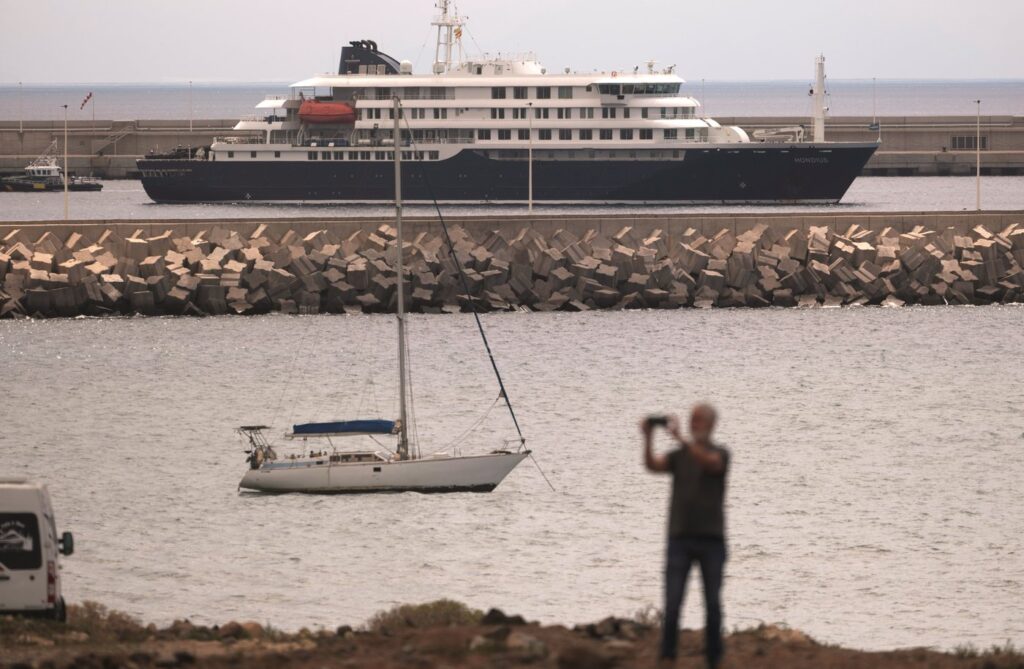
The operator of the cruise ship at the center of a hantavirus outbreak announced on Wednesday that it expects to determine by the end of the week whether the vessel, the Dutch-flagged MV Hondius, will adhere to its planned schedule for upcoming months.
Despite previously mentioning that there would be no alterations to the cruise schedule, Oceanwide Expeditions is now awaiting clarification on the ship's future sailings. The MV Hondius is scheduled for a voyage to the Arctic, departing in May, after three passengers died from a hantavirus outbreak confirmed earlier this month while the ship was located in the Atlantic Ocean. So far, there are nine confirmed cases and two suspected cases associated with this outbreak.
On Sunday and Monday, more than 120 individuals, including passengers and crew members, were evacuated from the Hondius in Spain’s Canary Islands and are currently in isolation across multiple countries. When questioned about possible adjustments to their cruising schedule, Oceanwide Expeditions initially stated they did not anticipate changes but later acknowledged they expect to have further information by the end of the week regarding the vessel's operational plans.
In a separate situation on Wednesday, over 1,700 passengers and crew members aboard a British cruise ship were instructed to remain on board due to an outbreak of gastrointestinal illness, which authorities confirmed is not linked to the hantavirus outbreak on the Hondius. The U.S. Centers for Disease Control and Prevention (CDC) reported 16 gastrointestinal outbreaks on cruise ships earlier in 2024, predominantly caused by norovirus, a foodborne virus known for causing vomiting and diarrhea.
Despite extensive research on hantavirus, much remains unclear regarding its transmission and epidemiological characteristics. Although there is no specific treatment or cure, early medical intervention can enhance survival rates. The Andes virus involved in the cruise ship outbreak can have an incubation period of up to eight weeks and carries a mortality rate of up to 50%. Hantavirus typically spreads through rodent droppings and is not easily transmitted between humans, although rare instances of human-to-human transmission of the Andes virus may occur.
The genome of the hantavirus has been completely sequenced, and experts from the European Centre for Disease Prevention and Control stated that there is no evidence to suggest the virus is behaving differently in terms of transmissibility or severity compared to known variants circulating globally. Andreas Hoefer, responsible for the operational coordination of the EU's public health reference laboratories, indicated that there is currently no reason to believe that this virus presents new challenges.
As the MV Hondius proceeds to the port of Rotterdam, it is scheduled to arrive on May 17 or 18. The ship currently carries 25 crew members, two healthcare workers, and the body of one of the deceased passengers. Once docked, the vessel will undergo an extensive cleaning and disinfection process, with protocols being finalized in collaboration with health authorities in the Netherlands.
Oceanwide Expeditions acknowledged that the disinfection process may affect the cruising schedule, emphasizing that no ships can sail without official authorization. The company reported no indications of rodents on board and operates under strict hygiene protocols. Expert opinions suggest that with appropriate disinfection methods, it should be possible for the Hondius to resume operations relatively soon, although the specific time frame remains uncertain due to various factors.
According to Erik Hill, a virus expert, normal disinfectants and ultraviolet light are effective in neutralizing hantavirus, making it less of a concern compared to other more contagious pathogens, such as norovirus or measles. Dr. Max Brito of the Infectious Diseases Society of America believes that proper cleaning and sterilization practices could lead to a safe return to operations within a reasonable time frame. Ultimately, experts assert that the risk to future passengers should be considered low, given the hypothesis that the initial cases were contracted on land rather than aboard the ship.