An Alberta judge dismissed a separatist referendum petition on Wednesday, stating that Premier Danielle Smith's government had an obligation to engage in consultations with First Nations. Justice Shaina Leonard expressed that Alberta's chief electoral officer erred in issuing the petition.
Responding to the ruling, Smith characterized the decision as "incorrect" and "anti-democratic," revealing her intention to appeal. She stated, "Although our government does support Alberta remaining in Canada, we think that today’s decision by the court will deny opportunity to over 300,000 Albertans to have their petition verified." Smith indicated that her cabinet and caucus would convene in the following days to discuss the matter further and to formulate a strategy.
Last month, legal representatives for several First Nations contended that the provincial referendum process, particularly as it pertains to separatists, is unconstitutional due to the lack of required Indigenous consultations. They argued that any move toward separation would contravene treaty rights. Meanwhile, government lawyers defended the referendum process and advocated for the continuation of the separatist petition.
Justice Leonard sided with the First Nations, stating, "As a matter of logic and common sense, there can be no doubt that Alberta's secession from Canada will have an impact on Treaties 7 and 8." She highlighted that a bill passed by Smith's government in December, which altered the citizen-initiated referendum process, created a series of obligations requiring consultation that were not fulfilled. Leonard declared, "No consultation occurred. Alberta breached its duty to consult with the applicants."
The December bill eliminated the requirement for proposed referendum questions to be constitutional and removed the chief electoral officer's ability to refer proposals for judicial review. It also allowed applicants to reapply. When Stay Free Alberta first submitted its petition last summer, the question was referred to a judge and subsequently ruled unconstitutional. Following a reapplication, the petition was approved in January.
Leonard argued that the separatists should not have been permitted to reapply, stating that the chief electoral officer had rejected their initial proposal on December 8, just three days before the new amendments took effect. "The first proposal was not pending when the amendments came into force. It had been rejected and had come to an end," she explained.
Stay Free Alberta Plans to Appeal
In response to the ruling, Jeff Rath, a lawyer for Stay Free Alberta, announced that the group intends to appeal. "We disagree fundamentally with the decision which appears on its face to violate the principles of natural justice and contain numerous errors of law," Rath stated. He pointed out that Smith could simply call for a referendum on separation, a move he believes aligns with the expectations of the over 301,620 Albertans who supported the petition.
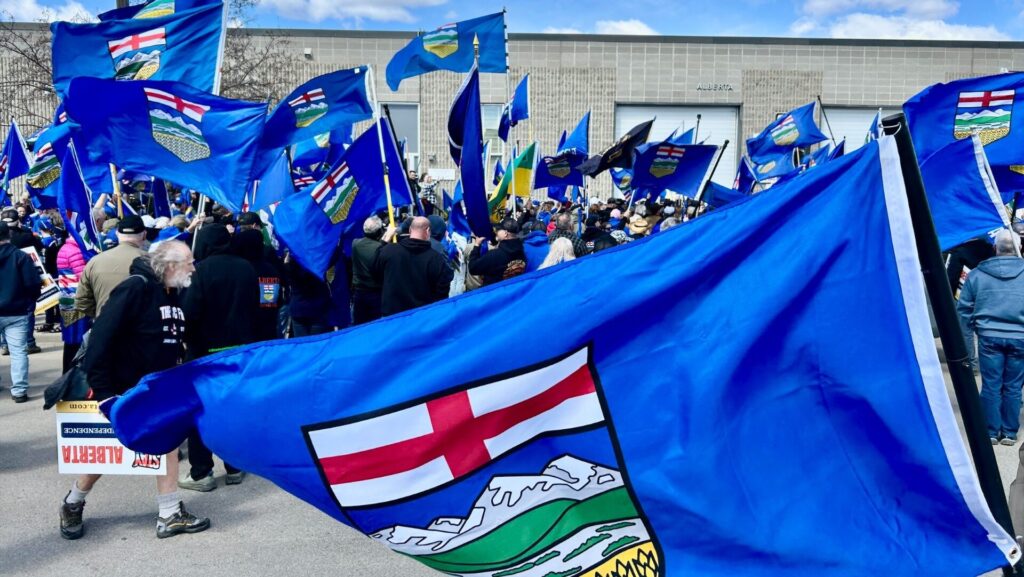
Stay Free Alberta had submitted its petition last week, claiming to have gathered nearly 302,000 signatures, well beyond the 178,000 required. Smith had previously asserted that if enough signatures were secured, the group's question would be included on a ballot scheduled for this fall.
‘This Petition is Dead. This Referendum is Dead’
Following Smith's comments on the court's ruling, Alberta NDP Leader Naheed Nenshi urged the premier to move past the issue. "The Premier says that she’s exploring other ideas. Here’s an idea, Premier: call off the referendum and put this to bed," Nenshi remarked. He declared the petition and referendum to be "dead" and criticized any continued pursuit by the premier as a waste of taxpayer resources.
Prior to the ruling, Leonard had temporarily halted the signature verification process for the petition while she deliberated on the legal challenge. The Athabasca Chipewyan First Nation and the Blackfoot Confederacy, representing the Siksika, Kainai, and Piikani First Nations, were the parties behind the case. In court, Neil Dobson, a government attorney, argued it was premature to consult Indigenous leaders since the government had not yet initiated any action concerning Alberta's potential separation from Canada. He suggested that the gathering of signatures was merely the start of a political dialogue.
The judge questioned why consultations had not occurred earlier, given that First Nations had expressed concerns over separation for over a year. Dobson maintained that the government was entitled to wait, describing it as a policy decision. Premier Smith and certain cabinet members have publicly endorsed the notion of a sovereign Alberta within a united Canada while also upholding the importance of direct democracy.
Smith previously outlined nine questions relating to immigration and constitutional issues for a planned referendum on October 19, though the inclusion of a separation question remained uncertain. A pro-federalist petition had successfully garnered over 400,000 verified signatures back in December, showcasing a different public sentiment on the matter.