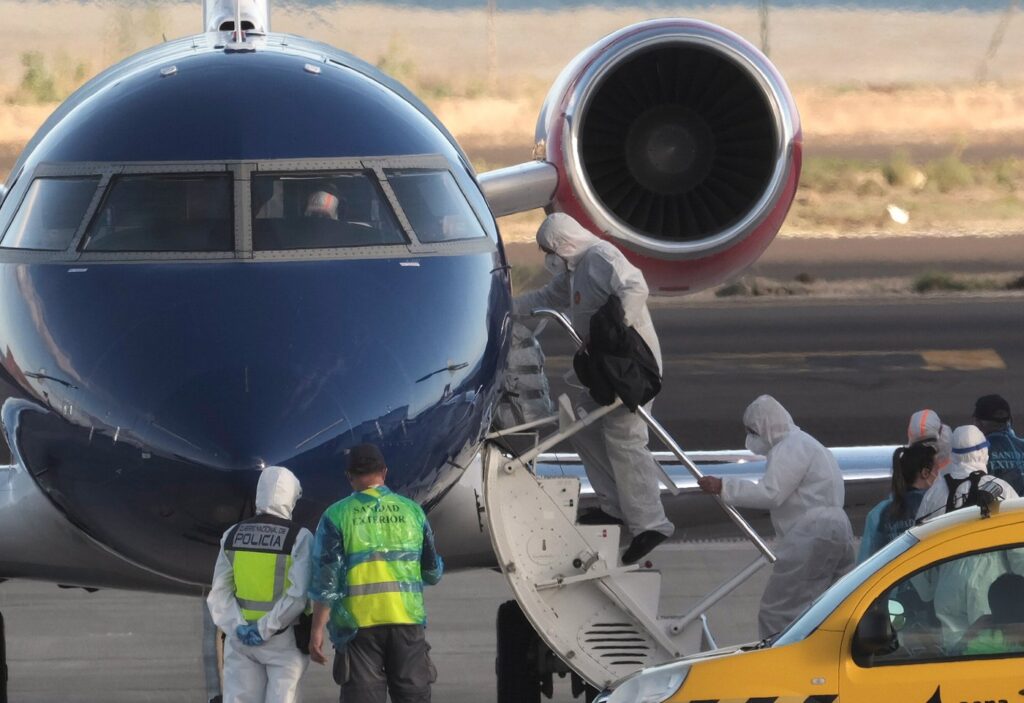
NEW YORK (AP) — The ongoing repercussions of COVID-19 continue to shape how we live, even years after the pandemic was officially declared over. The changes are evident in work-from-home jobs, a shift toward mask-wearing for some, and the ongoing presence of hand sanitizer dispensers. However, some impacts are less visible, including the internal struggles with grief, chronic health issues, and the feeling that lives have been abruptly altered. A recent hantavirus outbreak aboard a cruise ship has reignited fears of disease spread, despite health officials' reassurances.
This resurgence of fear may signal a deeper issue: the erosion of trust in key institutions, specifically in the realms of science, government, and media. Elisa Jayne Bienenstock, a research professor and sociologist at Arizona State University, notes that the pandemic has fundamentally changed how individuals perceive and trust these institutions. “COVID undermined our trust in what most of us used to trust,” she explained. As trust declines, individuals grapple with uncertainty and seek clarity amid widespread cynicism.
Prior to 2020, outbreaks of diseases typically raised concerns only in the areas directly affected. The widespread travel that characterizes modern life played a role in COVID-19's rapid global spread. Historical outbreaks, such as the 1997 hantavirus case in Chile and various epidemics worldwide, rarely incited national panic. However, in the aftermath of COVID-19, immediate concerns arose following reports of deaths and cases related to a hantavirus outbreak on a cruise ship. The World Health Organization confirmed 11 cases associated with the cruise, leading to heightened anxiety among passengers and local residents, despite health experts declaring the risk of general public spread to be low.
Bienenstock identifies three institutions that have notably suffered from public mistrust: government, media, and science. Tensions existed prior to the pandemic, but COVID-19 amplified skepticism towards science, not due to scientific failings but because the public often misunderstands the scientific process. Many perceive science as a collection of facts rather than a method of inquiry. “A lot of people in crisis, when they fear things, don’t care what the answer is, as long as there’s a definitive answer,” Bienenstock asserted. The evolving nature of scientific understanding during the pandemic challenged these perceptions, leading to a decline in confidence in scientific institutions.
The ramifications extend beyond immediate health concerns. Michele Gelfand, a professor of organizational behavior at the Stanford Graduate School of Business, notes that the pandemic heightened public sensitivity to health threats, often inconsistently and disconnected from actual risk. As trust in institutions wanes, individuals increasingly rely on rumors and emotions rather than accurate information, which can distort their perceptions of risk.
Karlynn Morgan, a 76-year-old retired nurse-anesthetist in Winston-Salem, North Carolina, has observed a concerning trend: more individuals lacking medical or scientific training are engaging in discussions about health issues. This shift is exemplified by a decline in vaccination rates and the resurgence of preventable diseases. Morgan remarked, “When I was a kid, there was no question you were going to go get your shot,” highlighting a stark contrast to current public attitudes toward vaccinations.
Rebuilding trust necessitates active involvement from leaders, according to Gelfand. She explains that leaders influence public perception and the dissemination of accurate information regarding health risks. “When leaders manipulate threat for their own purposes, norms erode and trust collapses,” Gelfand stated. Historically, strong institutions have provided society with the ability to collectively navigate uncertainty, playing a crucial role in human survival.
In the wake of the ongoing public health dialogue, it is clear that addressing and restoring trust in these institutions is paramount for fostering social cohesion and collective action in facing future health threats.