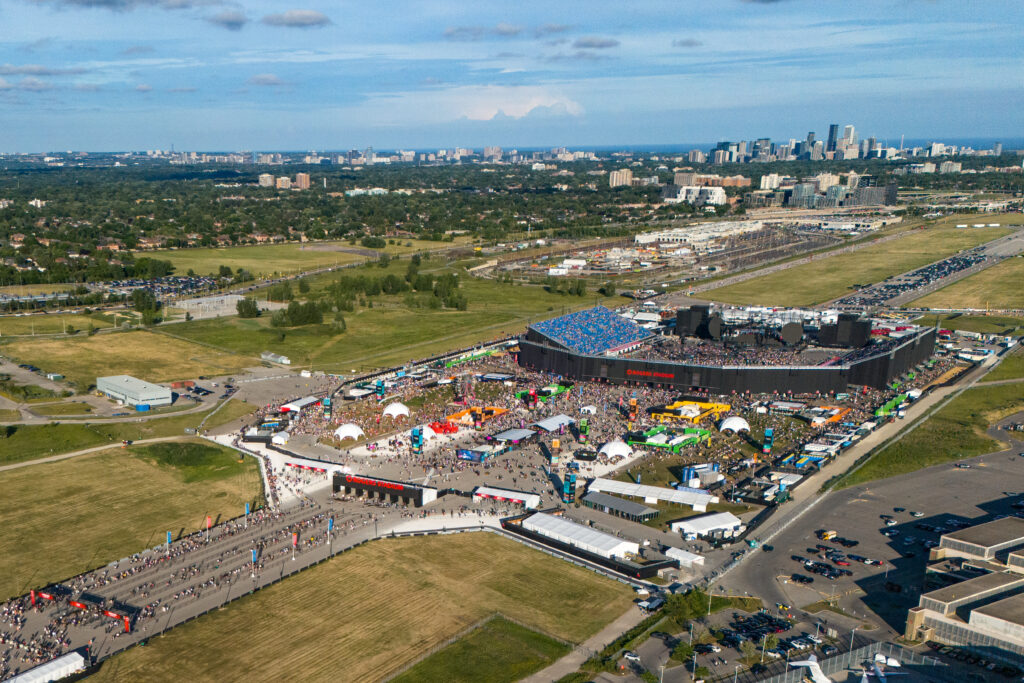
Residents in the northern part of the Greater Toronto Area (GTA) are voicing concerns over noise pollution following the opening of the summer concert season at Rogers Stadium, which featured Bruno Mars as the headliner. Reports indicate that the heavy bass from the concert could be heard as far as 11 kilometers away in Vaughan, prompting frustration among nearby residents.
One resident, Heather Cohn, residing near Bathurst Street and Highway 7, initially mistook the noise for music from a neighbor's loud car. After pacing her home in disbelief and searching online for any local concerts, she discovered that the sound was indeed coming from the concert in Downsview Park. Cohn expressed her shock at the loudness of the concert, especially considering the distance.
Social media was abuzz with similar complaints from other residents, who reported hearing the concert from various locations, including Yonge Street and Steeles Avenue, as well as Major Mackenzie Drive and Dufferin Street. The widespread reach of the sound has raised alarms about noise pollution and its impact on local communities.
Local councillor James Pasternak acknowledged the issue, noting that upgrades made to the stadium since last year, such as new vinyl cladding, were intended to mitigate noise but did not alleviate residents’ concerns. Pasternak attributed the persistent noise issues to potential design flaws in the stadium's construction. "Clearly some of the things we’ve worked on over the past year are not bearing fruit," he remarked, highlighting the need for ongoing discussions about noise management.
A spokesperson for Rogers Stadium provided insight into how weather conditions played a role in the sound disturbances. The statement indicated that factors such as temperature, humidity, and cloud cover can affect how sound travels. Specifically, this past Sunday night experienced stable and humid conditions, with 97 percent humidity, which experts suggest created a perfect environment for sound diffusion. Tanzina Mohsin, an associate professor of climatology at the University of Toronto, explained that a temperature inversion and favorable wind direction during the concert allowed low-frequency sounds to travel further than usual.
Councillor Pasternak confirmed that while the concert went smoothly for the majority of the audience, with over 50,000 attendees enjoying the event, engagement with residents regarding their noise complaints will continue. He noted that the concert’s success was underscored by effective traffic mitigation strategies, but emphasized that the council is committed to addressing the concerns of affected residents. “We are not going to abandon the residents who are upset by it. There are others who enjoyed the concert, but we have to find a balance,” he stated.
As attention shifts to forthcoming concerts, Rogers Stadium has announced that it is reviewing all aspects of the sound management situation ahead of the next show scheduled for Wednesday. The situation reflects a growing need for local venues to balance entertainment with community standards and the well-being of residents, particularly concerning noise pollution.