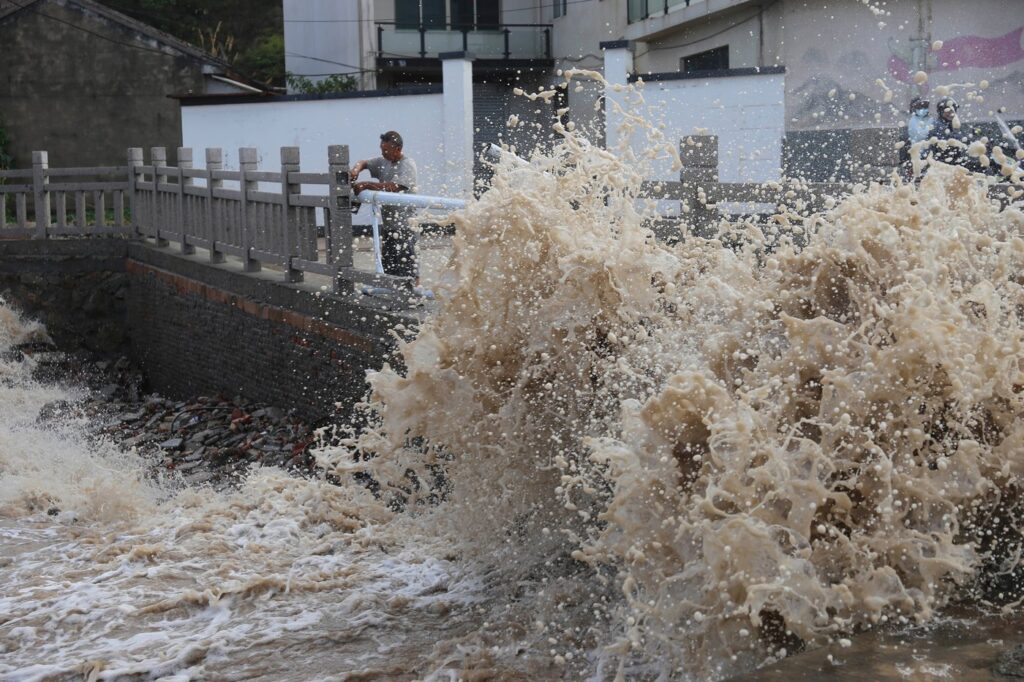
BEIJING (AP) – Typhoon Bavi made landfall in China’s eastern province of Zhejiang late on Saturday night, with expectations from the national weather center that it would gradually weaken. The typhoon previously impacted Japan’s southern islands and Taiwan, being the second typhoon to affect China within a span of just over a week, following Typhoon Maysak, which made landfall in southern China on July 3.
Chinese authorities reported that over 1.7 million people were evacuated as of Saturday morning, as high alerts were issued across eastern China in preparation for Bavi. The typhoon possessed maximum sustained winds of 144 kph (89 mph) near its center. After passing north of Taiwan, Bavi made landfall in the coastal city of Yuhuan in Zhejiang and is expected to move northwestward inland, according to the National Meteorological Center.
In the Philippines, the effects of Bavi were deadly, with at least 17 people reported killed, primarily due to landslides triggered by intensified seasonal monsoon rains. Reports indicate that a landslide in the coastal town of Malapatan in Sarangani province resulted in the deaths of at least 10 villagers, with three others reported missing. Additionally, a separate landslide in Calanogas town, Lanao del Sur province, claimed five lives and left six others missing.
By Saturday, authorities in Zhejiang had evacuated more than 1.7 million individuals, as reported by the official Xinhua News Agency. In Shanghai, around 34,000 residents were relocated from high-risk areas. Cities along the southeastern coast of China prepared for the typhoon’s impact, with Ningde in Fujian province relocating over 3,700 people from onshore high-risk areas by Friday evening. In anticipation, more than 17,000 emergency rescue workers across Fujian province were placed on standby.
The national weather center issued an orange typhoon alert, the second-highest in a four-tier warning system. In response to Bavi, numerous schools and ferry services were suspended, hundreds of flights were canceled, and some high-speed railway services were halted. Additionally, the first red alert for rainstorms of the year was issued by the weather center.
In a bid to assist the affected regions, the Chinese authorities allocated 40 million yuan (approximately $5.9 million) in natural disaster relief funds, focusing on typhoon prevention, emergency rescue, and relief efforts in Zhejiang and Fujian provinces.
In Taiwan, authorities reported at least 113 injuries related to Typhoon Bavi, with some casualties occurring as individuals attempted to ride motorcycles on slippery roads. Over 14,200 people were evacuated from various parts of Taiwan, including Hualien County and Taichung City. In reaction to the storm, most schools and offices in Taiwan were suspended on Saturday.
Japan’s southern islands—particularly in Okinawa prefecture—were warned of high waves, strong winds, and storm surges, culminating in the cancellation of over 200 flights throughout the region. Local authorities notified residents that strong winds and rain had already begun affecting islands, including Ishigaki.
Overall, Typhoon Bavi has not only caused significant disruption in China but also continued to have ramifications throughout the region, particularly in the Philippines, where tragic loss of life has been reported. The response efforts of local authorities in the affected areas showcase the ongoing battle against the negative impacts of such natural disasters.