DUBAI, United Arab Emirates (AP) — Iran has announced that the Strait of Hormuz has been closed once again following a warning shot fired by its military, which struck a vessel navigating an unauthorized route within the strategic waterway. This incident further complicates the fragile ceasefire agreement between Iran and the United States.
Shortly after Iran's declaration, U.S. Central Command reported that its forces initiated a third round of strikes against Iran, causing explosions in the Iranian cities of Bandar Abbas and Sirik, as confirmed by state media. The U.S. military stated, “The United States is imposing a heavy cost by continuing to degrade Iran's ability to attack civilian mariners and commercial ships freely transiting the strait.”
A Cyprus-flagged container ship was reportedly struck by Iran, sustaining significant damage to its engine room and leaving one civilian crew member missing. Prior discussions among senior U.S. officials indicated that negotiations aimed at solidifying last month's ceasefire deal would be hindered if security in the strait was not assured. There were calls for Iran to make public statements on maintaining safe navigation routes.
The Islamic Revolutionary Guard Corps stated that several vessels ignored their warnings to alter their course and follow approved navigational routes. One vessel was halted by a warning shot, prompting Iran to declare that the strait would remain closed “until further notice.” The Revolutionary Guards warned that they would consider targeting additional “enemy bases in the region” should the attacks continue.
Following these declarations, the U.S. announced another round of strikes, with Defense Secretary Pete Hegseth tweeting, “Iran made a poor choice. Now they pay.” These military actions followed diplomatic discussions between Iran and Oman aimed at addressing the security of the strait.
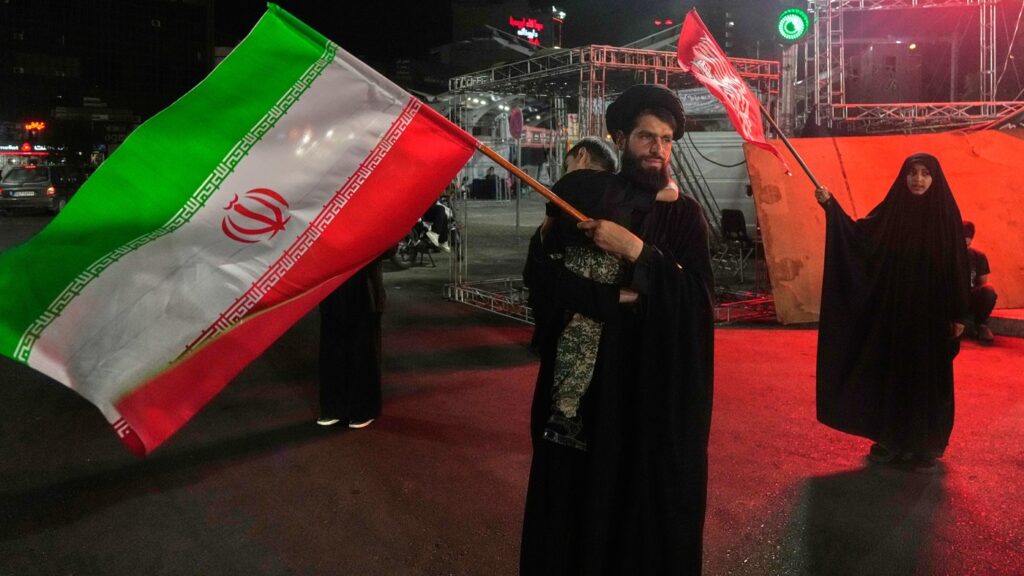
The heightened tension coincided with talks between Iranian and Omani foreign ministers regarding the Strait of Hormuz, which has seen a series of Iranian attacks on shipping and U.S. retaliatory actions that jeopardized the interim peace agreement. Iran's new Supreme Leader, Mojtaba Khamenei, issued his first public statement since the funeral of his father, Ayatollah Ali Khamenei, vowing that Iranians would seek vengeance for the killing of his father in the initial strikes of the ongoing conflict.
Oman expressed its commitment to continued dialogue with Iran about the Strait of Hormuz, where navigation has been a contentious issue. Iran has now asserted control over the waterway following the conflict, with intentions to impose fees on passing ships, while the U.S. has recommended a southern passage through Omani waters for mariners.
Prior to the latest military actions, Iranian Foreign Minister Abbas Araghchi revealed his meeting with Oman’s counterpart to form “appropriate mechanisms for ensuring the safe passage of ships.” Historically recognized as an international waterway, the Strait of Hormuz has seen about one-fifth of the world’s traded oil and natural gas transit through it before the outbreak of the current conflict. Iran’s control over this critical route has contributed to a global energy crisis, despite the recent drop in oil prices from wartime highs.
In a strong accusation, Iran's chief diplomat claimed that the U.S. was violating the ceasefire deal by revoking waivers that allowed for Iranian crude oil sales in U.S. dollars, a decision taken in response to the recent maritime attacks. Araghchi emphasized the necessity of mutual compliance in any agreements moving forward on social media.
U.S. President Donald Trump also claimed he was targeted by an Iranian plot, contending that the military would respond automatically to any threats against him. In a post on social media, he threatened, “1000 Missiles are Locked and Loaded,” warning Iran against any actions that could lead to a direct confrontation.
Despite recent escalations, Trump declared the ceasefire over while expressing a willingness to continue discussions. U.S. officials claimed that the renewed strikes were a result of actions from a rogue faction of Iranian hard-liners attempting to undermine the peace process. Amid this ongoing conflict, speculation arose regarding possible attacks on Iran from neighboring Gulf states, which could indicate a broader regional tension.
In recent days alone, U.S. strikes against Iran led to casualties, including at least 17 fatalities and over 115 injuries, as reported by the Iranian Health Ministry. The ongoing violence signals a concerning trajectory for both diplomatic efforts and the stability of the region amidst heightened military engagement.