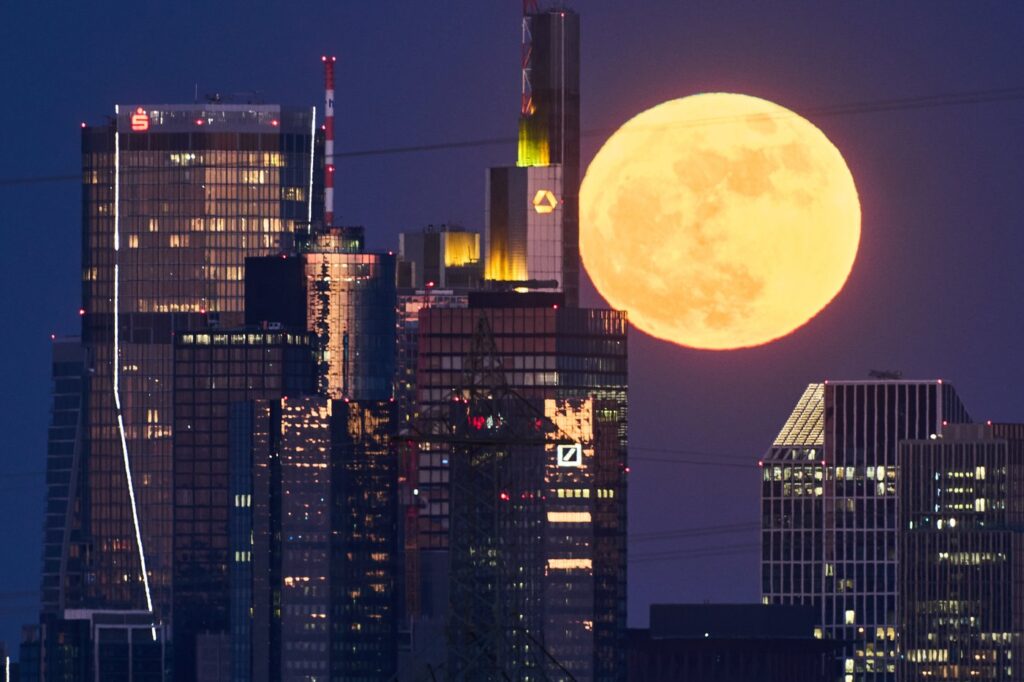
CAPE CANAVERAL, Fla. – This weekend, skywatchers are in for a rare treat as a blue micromoon graces the night sky. This phenomenon marks a blue moon—the second full moon occurring within a single month—and it is noteworthy for being the most distant and smallest-looking full moon of the year.
The excitement doesn’t end there; the brilliant red supergiant star Antares will also make an appearance, creating a mesmerizing celestial display for stargazers on Sunday.
A blue moon typically occurs every two to three years and is defined by the occurrence of a second full moon within a single month. The first full moon of May took place on May 1, setting the stage for the upcoming event.
Because the moon follows an elliptical orbit, this weekend's full moon will be at a distance of 252,360 miles (406,135 kilometers) from Earth. As a result, it will appear smaller and dimmer than usual, contrasting with the more common supermoon, which occurs when the full moon is closer to Earth. For comparison, the last supermoon was approximately 225,130 miles (362,312 kilometers) away.
Gianluca Masi from the Virtual Telescope Project, who will host a live webcast from Italy, notes that the blue micromoon will appear about 6% smaller and 10% dimmer than an average full moon. However, these differences are subtle enough that most observers might not notice them.
The spectacle promises to be particularly thrilling for viewers located south of the equator, especially in regions across the Pacific, including Argentina, Chile, New Zealand, eastern parts of Australia, and certain parts of Antarctica. In these areas, Antares will temporarily disappear as the blue micromoon passes in front of it. This event ties in with Antares's reputation as the "heart of the scorpion" in the constellation Scorpius, as the star lies 550 light-years away from Earth—a distance that equates to nearly 6 trillion miles (9.7 trillion kilometers).
For viewers outside these select regions, Antares will remain continuously visible alongside the full moon throughout the event, making the phenomenon accessible to a broader audience.
Despite the name "blue moon," those looking skyward this weekend should not expect to see a moon tinted in turquoise, sapphire, or any other color. The term simply refers to the rarity of having two full moons within a single calendar month.
In conclusion, this weekend’s blue micromoon presents a unique opportunity for sky enthusiasts. The combination of the moon and the Antares star creates an enchanting celestial event that is not to be missed.