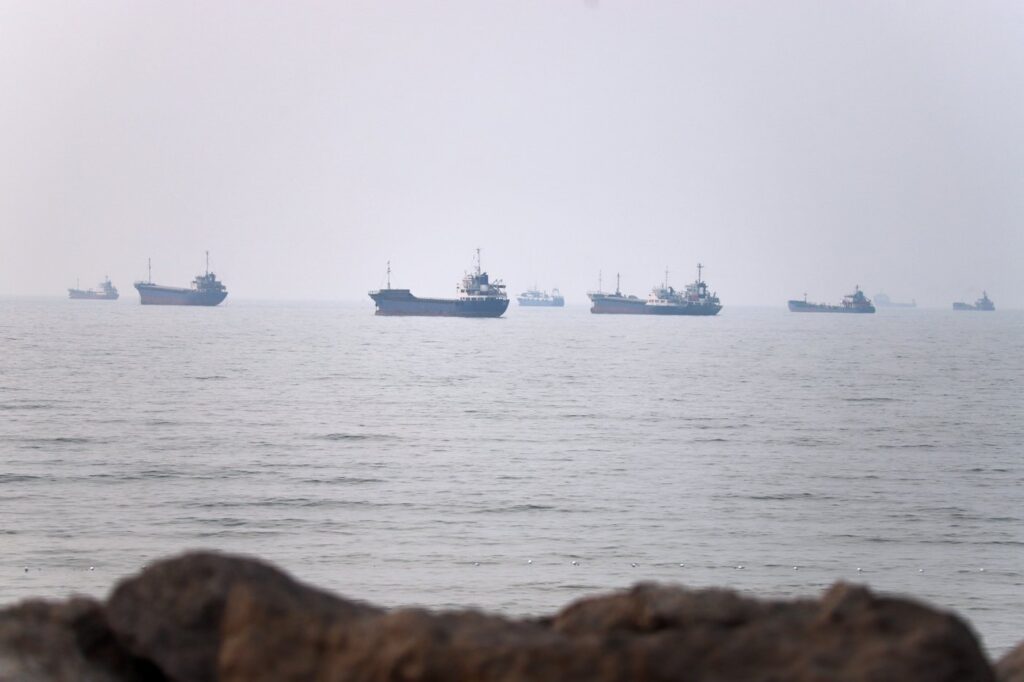
DUBAI, United Arab Emirates – The United States initiated multiple waves of airstrikes against Iran early Monday in response to an Iranian attack on a container ship in the Strait of Hormuz over the weekend, which resulted in significant damage and the disappearance of one crew member. In retaliation, Iran launched attacks on several countries across the Middle East, escalating tensions in the region.
Missile alert sirens were triggered at dawn on Monday in Bahrain, which is home to the U.S. Navy's 5th Fleet. Initial reports did not indicate any damage from these alerts. Iranian state media confirmed early Monday that attacks occurred on their soil, citing explosions in multiple locations, with at least one reported fatality.
The Iranian aggression on Sunday extended to nations such as Bahrain, Kuwait, Qatar, Jordan, and even Oman, whose territorial waters are adjacent to Iran. The strain regarding the Strait of Hormuz represents a central issue complicating an interim deal between the United States and Iran. This strait is critical as it formerly saw about 20% of the world’s oil and natural gas transit through it.
Currently, the U.S. and Iran are nearing the midpoint of a 60-day diplomatic period intended to pave the way for talks to end ongoing hostilities. Unfortunately, this period has unfolded into a series of military engagements, raising concerns among global leaders about a potential return to full-scale war. United Nations Secretary-General António Guterres warned in a statement that a resumption of hostilities could have catastrophic consequences.
On Sunday, the U.S. military disclosed it had targeted approximately 140 sites associated with Iran, including missile and drone launch installations, weapon stockpiles, and communication facilities, marking a significant intensification in operations compared to previous strikes within the last week. President Donald Trump, in an interview with NBC’s “Meet the Press,” asserted, “We bombed the hell out of them last night.”
In response to the U.S. military actions, Iran conducted strikes on countries hosting American military forces while asserting its claim to oversee the Strait of Hormuz, suggesting it could impose fees on vessels traversing this vital maritime route. Iran’s paramilitary Revolutionary Guard confirmed in a statement that it had initiated a new offensive targeting regionally aligned nations.
Iran has controversially characterized the strait as "closed," despite stark claims from the U.S. military and President Trump affirming its openness. Since the onset of the conflict on February 28, following the assassination of former Supreme Leader Ayatollah Ali Khamenei, Iran has engaged in aggressive actions against commercial vessels in the area to deter maritime traffic.
Although Iran has maintained a strong grip on the strait, U.S. military assistance has allowed some vessels to navigate a new southern route near Oman’s coastline, provoking further aggressive actions against those ships by Iran. This ongoing tension has contributed to a worldwide energy crisis, though oil prices have notably declined from wartime highs of $120 per barrel.
As military confrontations escalated, diplomatic efforts to stabilize the ceasefire have continued. Trump suggested last week that the interim war agreement may be “over,” but mediators from Pakistan, Qatar, and Egypt have persisted in seeking a final resolution to the fighting. An anonymous regional official involved in the talks noted that communication between Pakistan's foreign minister and Iran's top diplomat took place on Sunday, emphasizing de-escalation from both parties.
In another significant development, Iran’s new Supreme Leader, Ayatollah Mojtaba Khamenei, issued a statement on Saturday following the funeral of his father, reiterating the vow for vengeance against those responsible for his predecessor's death.