BEIRUT (AP) — President Donald Trump recently admitted to criticizing Israeli Prime Minister Benjamin Netanyahu as "crazy" during a phone call that included expletives. He expressed being "a little bit perturbed" that the ongoing conflict between Israel and Hezbollah militants in Lebanon was hindering peace negotiations with Iran. Despite his remarks, Trump emphasized in an interview that his relationship with Netanyahu remains strong, and they connect as "wartime" leaders.
In an interview with the business-news channel CNBC, Netanyahu acknowledged that while he and Trump may have "tactical disagreements," they share "common goals" and agree on fundamental issues. He noted, "He respects me. I respect him. We always find a way to work out our differences."
Trump's public admission of criticizing Netanyahu highlights growing pressure to resolve the ongoing Iran conflict, especially as rising energy prices and economic uncertainty threaten Republican prospects in upcoming midterm elections. Talks on the matter have stalled for weeks, affected by the ongoing escalation of Israel's military actions against Hezbollah, which is supported by Iran. Tehran has insisted that any ceasefire discussions must address the fighting in Lebanon.
On Wednesday, Israel and Lebanon announced an agreement to renew their fragile ceasefire. The agreement, which follows U.S.-mediated talks at the State Department, creates designated "pilot" security zones in Lebanon that Hezbollah militants will be barred from entering. This ceasefire is conditional upon a complete halt to Hezbollah's attacks and the removal of its operatives from areas south of the Litani River, situated about 30 kilometers (20 miles) north of the Israel-Lebanon border.
The joint statement acknowledged that a comprehensive peace agreement must be determined by both national governments and condemned any attempts by external actors to manipulate Lebanon's future. Notably, Hezbollah was not involved in the ceasefire discussions, which have been taking place at the ambassadorial level in Washington since the start of the previous month.
Meanwhile, President Trump has been noncommittal regarding a timeline for concluding the Iran conflict. He indicated that the Strait of Hormuz may remain blocked until the Labor Day holiday on September 7. Trump continues to demand that Iran ceases any actions that could lead to nuclear proliferation and that shipping through the strait be resumed.
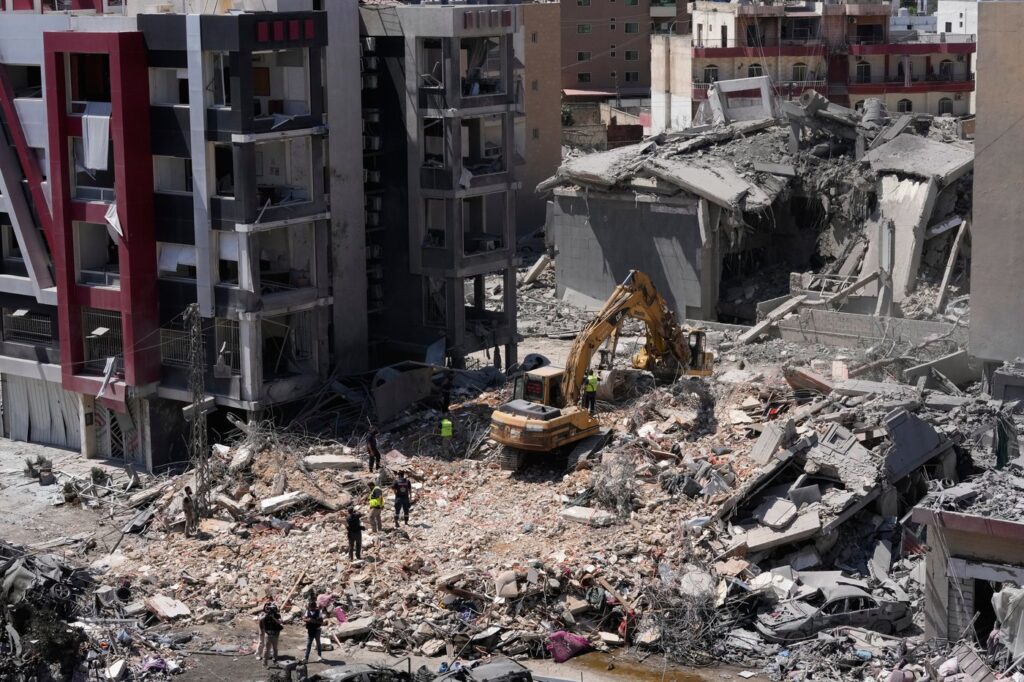
Additionally, recent military strikes have raised concerns about the sustainability of ceasefire efforts. An Israeli strike in Khaldeh targeted a vehicle on a busy highway, indicating ongoing tensions. Despite a previous agreement to refrain from attacking each other's territories, hostilities persist, particularly from both sides, as the Israeli military continues its operations in Lebanon.
An Israeli airstrike on a family home in Southern Lebanon resulted in the deaths of several family members, exemplifying the ongoing tragic toll of the conflict. Reports indicate that the fighting since March 2, triggered by Hezbollah's attacks aligned with Iran, has claimed over 3,468 lives in Lebanon, resulting in the displacement of approximately 1.2 million people.
Despite the announced ceasefire, Israeli military actions, including strikes within Southern Lebanon, continue to exacerbate the situation. The Israel-Lebanon conflict escalates in complexity as parties navigate their interests while facing local and regional pressures. The ambiguity surrounding the future interactions between Israel, Lebanon, and Hezbollah underscores the challenges in achieving lasting peace in the region amid ongoing violence.