The U.S. military launched attacks on Iran early Wednesday after accusing Tehran of targeting three ships in the Strait of Hormuz. This military response is part of a broader American initiative that included revoking Iran's ability to sell crude oil in the global market. The conflict has escalated tensions in the region, with Iran immediately warning the U.S. that it would take "whatever measures it deems necessary," raising fears of potential breakdowns in ongoing negotiations intended to curb hostilities in the Middle East.
These events coincided with the funeral of Iran's Supreme Leader Ayatollah Ali Khamenei, who was killed on February 28, at age 86, during the initial stages of the conflict. Mourners have been vocal, calling for the killings of U.S. President Donald Trump and Israeli Prime Minister Benjamin Netanyahu, despite the expectation that Khamenei’s funeral would offer a period of reduced tensions. Negotiations for a final agreement were scheduled to start following the burial and were to focus on critical issues such as reopening the strait and addressing Iran's contentious nuclear program. However, the recent military actions have put such talks into doubt.
Iran's Parliament Speaker Mohammad Bagher Qalibaf stated on X that "the era of bullying and extortion is over" and emphasized the unyielding stance of Iran against U.S. actions. The U.S. Central Command justified its strikes by asserting that they aimed to impose severe costs on Iran for attacking civilian vessels in international waters. The military engaged Iranian targets, including air defense systems, radars, and over 60 small boats utilized by Iran's paramilitary Revolutionary Guard, which have been implicated in harassing trade vessels in the Strait of Hormuz.
Following the U.S. attacks, Iranian state media confirmed that explosions were heard in key port cities such as Bandar Abbas, Qeshm, and Sirik, but provided no details on possible casualties. Iran's military command vowed to respond decisively to what it termed an act of aggression and terrorism. The command emphasized that it would not allow foreign interference in managing the Strait of Hormuz.
This latest escalation follows a pattern of Iranian attacks on shipping that has previously led to U.S. retaliations. The renewed turmoil occurred while President Trump was participating in a NATO summit in Turkey. In addition to the military engagement, the U.S. revoked a license that had previously allowed Iran to sell oil openly on the international market, a significant setback for the nation that had been selling sanctioned crude at below-market rates, especially to China. A U.S. official commented that the license revocation was a response to Iran's aggressive actions in the strait.
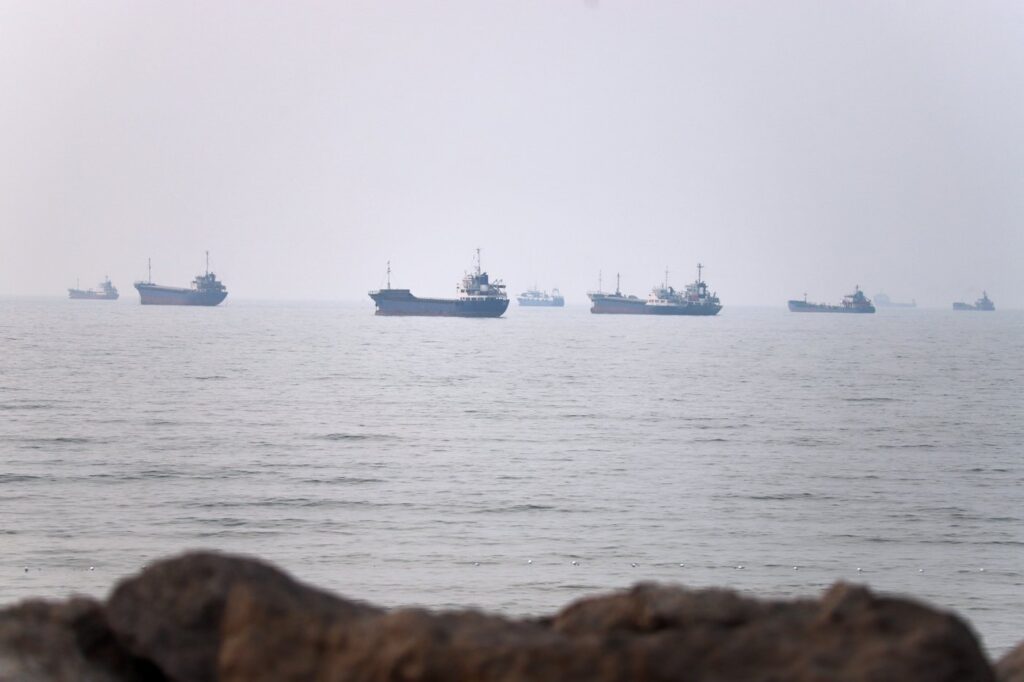
On the day of the attack, one tanker was reportedly struck while navigating near Oman, igniting a fire, with Iranian state television suggesting that the vessel ignored warnings. Although two other ships sustained damage from the attacks, no injuries were reported, and they continued their passage through the strait. The situation in the Strait of Hormuz has immense implications for global energy markets, as approximately one-fifth of all traded oil passes through this crucial channel under normal conditions. Iran has previously indicated that it only recognizes routes it controls as safe, leveraging this to justify military actions against vessels perceived to defy its authority.
In a statement, Qatari Foreign Ministry spokesperson Majed al-Ansari condemned the Iranian attacks as an "unacceptable" threat to international navigation and global energy security, holding Iran "fully legally responsible" for the incidents. A mutual agreement between Iran and the United States as part of the interim deal allowed for free passage of ships through the strait without charges for 60 days, yet Iran's insistence on controlling vessel routes and imposing fees for passage has become a point of contention, opposed by the U.S. and several Gulf Arab nations.
As the turmoil unfolded, Khamenei's body was brought to the Shiite holy city of Qom, where thousands of mourners participated in the funeral processions. His son, Ayatollah Mojtaba Khamenei, has not yet appeared in public and is believed to be in hiding following his father's assassination. The body of Khamenei is expected to receive ceremonial honors in both Najaf and Karbala in Iraq before being returned to Iran for burial at the Imam Reza shrine in Mashhad on Thursday.