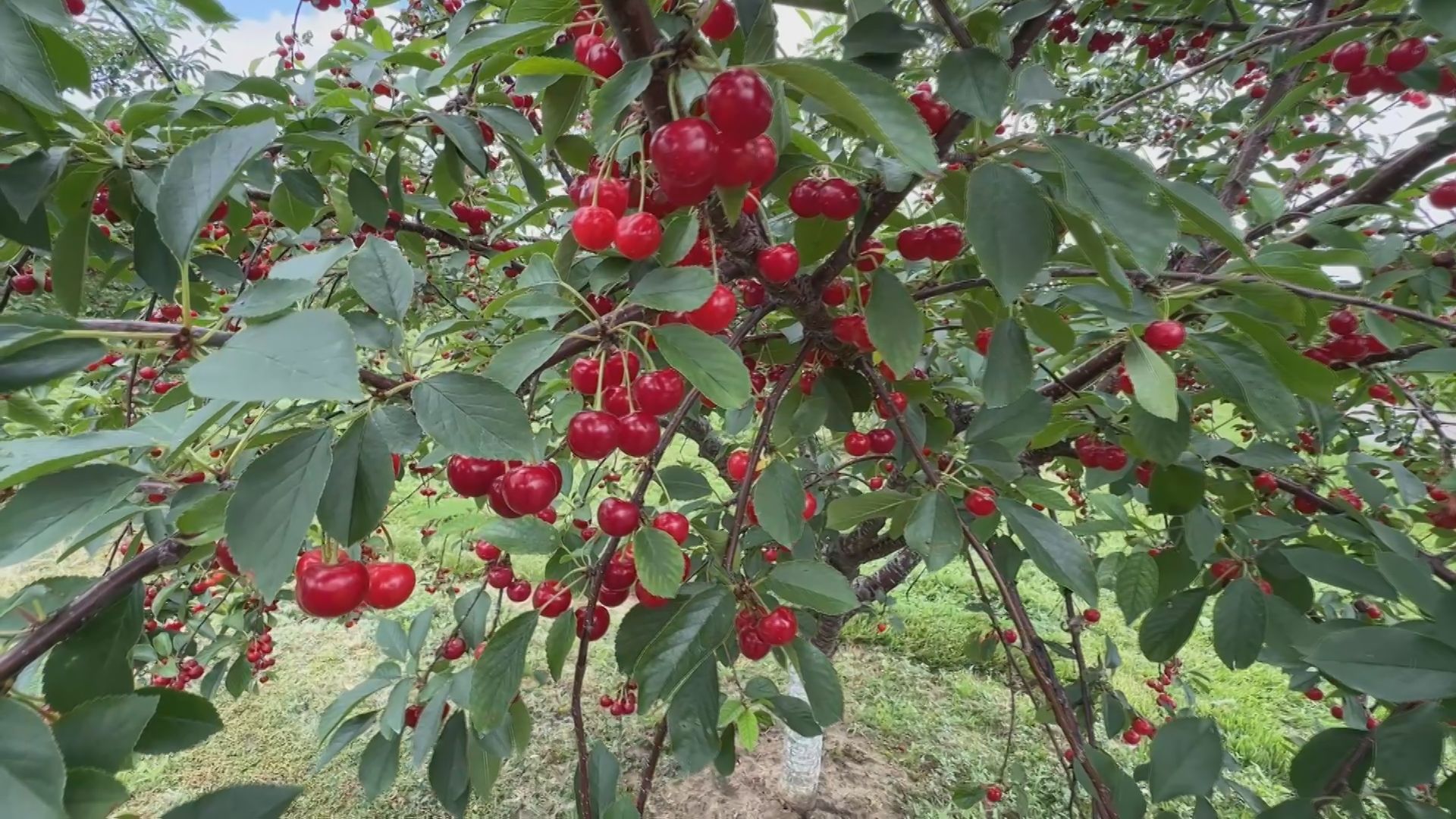
Fans of sour cherries in Ontario are facing a challenging season as some farms report significant shortages of this beloved fruit. Sour cherries, particularly Montmorency cherries, are well-known for their tart flavor and are popular for baking and making preserves. Typically, July and August are the peak times for cherry production in Ontario.
This year, however, the Ontario Tender Fruit Growers, which represents nearly 200 growers of tender and stone fruits, released a crop update indicating a dire situation. They stated that “Mother Nature hasn’t been kind to Ontario red tart cherries this season,” resulting in a devastating crop failure throughout the province. The announcement further revealed that consumers should not expect to find tart cherries in pails at grocery stores this season.
Cherry Lane, located in Vineland in the Niagara region, is a farm that specializes in concentrated tart cherry juice, jams, and sparkling beverages. Michelle Smith, the general manager of the century-old farm, shared the impact of the shortage during a recent tour. She pointed out distinct rows of cherry trees: some were laden with fruit, while others just a few feet away were nearly empty. Smith noted they are producing only about 40 to 50 percent of their usual crop this year.
Due to the fruit shortage, Cherry Lane is reserving its remaining cherries for juice concentrate, their signature product, which will lead to increased prices for consumers. Smith explained that it takes approximately 75 to 100 cherries to make just one tablespoon of juice, emphasizing the rising costs are not a result of price gouging but a necessity to adapt to the lower supply. “We are, fingers crossed, praying here that next year we have a bountiful crop,” she added, also expressing hope to lower prices when supply improves.
The cause of the cherry shortage can be attributed to several factors. According to Smith, the cooler and wetter spring weather, an early frost, and insufficient pollination all contributed to the poor yield this season. The last major crop failure reported at Cherry Lane occurred in 2012. The varying environmental conditions across the Niagara region mean that not all farms are facing the same levels of difficulty. For example, Romagnoli Farms, located about 10 kilometers from Cherry Lane, has been largely unaffected due to its proximity to the lake.
Owner Jack Romagnoli explained that each year presents new challenges and that they strive to mitigate the effects of weather on their crops. He noted their farm produces both sweet and tart cherry varieties and highlighted that due to the fruit's vulnerability, they have invested in a canopy system to protect their cherry trees from adverse weather conditions.
On a broader scale, the Ontario Federation of Agriculture (OFA) reported that 2026 has brought some relief to farmers who have been suffering from recent hotter and drier conditions. OFA vice president Sara Wood mentioned that winter wheat growers are particularly benefiting from the current weather patterns. However, some fruit growers in regions like Norfolk and southwestern Ontario are still struggling compared to those in eastern Ontario.
“Farmers are definitely positive creatures,” Wood reflected. “Every year we plant a crop and never really know what the weather is going to do.” She encouraged consumers to support local farmers by visiting farmers' markets, as there is still a variety of fresh Ontario produce available.
As Cherry Lane navigates this challenging season, Smith expressed gratitude for the understanding of their customers as they work to protect their remaining crop. “We appreciate everyone who is understanding... we ask for your patience and hope for a better crop next year,” she concluded.