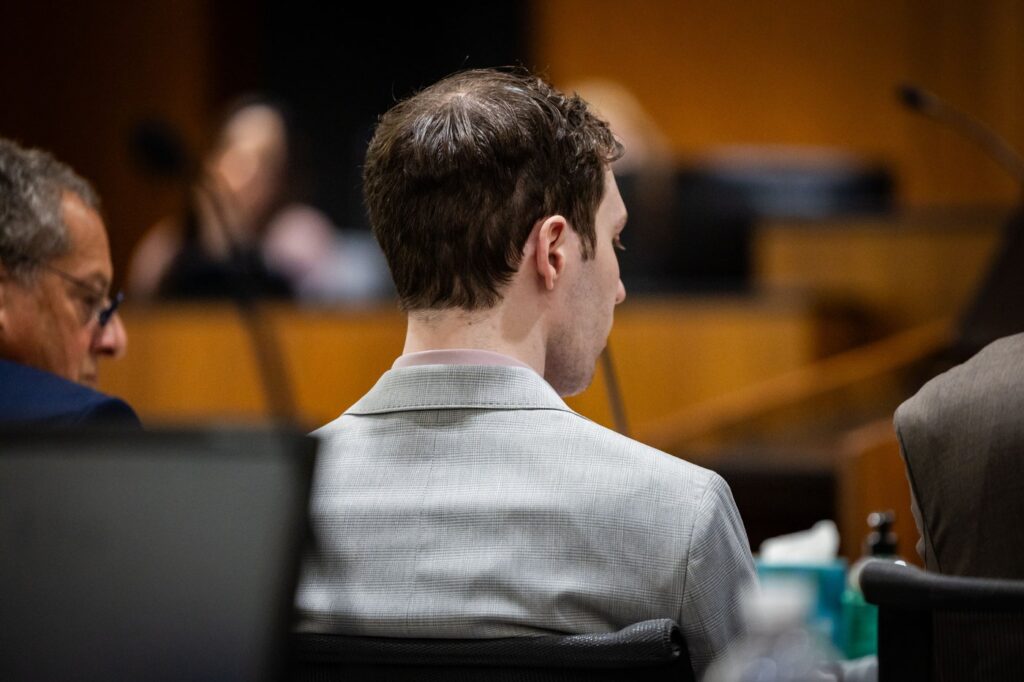
Utah prosecutors revealed a significant piece of evidence during a preliminary hearing for Tyler Robinson, who is accused of killing conservative activist Charlie Kirk. On Wednesday, a video clip was presented that captured Robinson at the Washington County Sheriff's Office shortly after he turned himself in. The footage showed him wearing a T-shirt and baseball cap, while investigators noted there was no audio during the short clip.
The hearing, presided over by State District Judge Tony Graf, aimed to keep proceedings on schedule while both sides prepared their arguments. However, the session became dominated by debates surrounding the admissibility of recorded statements made by Robinson's roommate and romantic partner, Lance Twiggs. Judge Graf indicated he would allow the prosecutors to present redacted audio of Twiggs' statements in the following session.
Robinson, who has yet to enter a plea, is facing an aggravated murder charge related to the shooting of Kirk, which occurred on September 10 at Utah Valley University. His defense team has not publicly commented on his guilt or innocence but has requested that the possibility of the death penalty be removed from the case, a motion which has not yet been successful.
The defense expressed concern regarding the potential impact of Twiggs' statements being aired in court. They argued that such exposure could compromise Robinson’s right to a fair trial and lead to bias among potential jurors. Meanwhile, attorneys representing Kirk's family emphasized the necessity of transparency in the judicial process, arguing that the public has the right to know the details surrounding the case.
Prosecutors have maintained that Robinson communicated via text with Twiggs expressing disdain for Kirk's political beliefs, saying he had “had enough of his hatred.” Following this, Twiggs was interviewed twice by investigators and was granted immunity, protecting his statements from being used against him in any future criminal prosecution.
During the preliminary hearing, the reliability of DNA evidence linking Robinson to the suspected murder weapon was scrutinized. The defense challenged the conclusions drawn by an FBI DNA analyst, alleging that she could not definitively match Robinson's DNA to the samples collected at the crime scene. In contrast, forensic expert Lawrence Quarino defended the DNA testing methods as “the gold standard” in forensic science, substantiating the accuracy of the testing used by law enforcement agencies.
Evidence presented indicated that a towel, which was wrapped around a rifle connected to the shooting, contained both Twiggs' DNA and a significant likelihood of Robinson's DNA. The rifle and a spent round were found in a wooded area near where Kirk was shot during an event attended by thousands. Prosecutors assert that Robinson left a note for Twiggs stating, “I had the opportunity to take out Charlie Kirk and I’m going to take it,” which they argue constitutes a confession to the crime.
The allegations suggest that Robinson shot Kirk from a rooftop as the activist was engaged with the audience. Because the shooting endangered other individuals present at the event, prosecutors are positioning this as an aggravating circumstance that could result in a death sentence under Utah law. Additionally, prosecutors are pursuing enhanced sentencing based on the claim that Robinson specifically targeted Kirk due to his political views.
On the other side, Robinson's attorneys are contesting the assertion that he held animosity toward Kirk's political stance and worked to block evidence that involves the traditional Christian values of Turning Point USA, the organization Kirk was associated with. The courtroom dynamics reflect a high-stakes legal battle that encapsulates larger societal issues regarding political discourse, activist rhetoric, and the intersection of justice and public perception.