NEW YORK (AP) – Concerns about rising fuel prices have resurfaced following the potential collapse of a fragile truce between Iran and the United States. The announcement came in response to Iranian attacks on commercial vessels in the Strait of Hormuz and on American military sites in neighboring Gulf nations. As a result, oil prices have soared to their highest levels in weeks, igniting worries of increased gasoline prices for consumers, particularly in regions that had previously benefited from a temporary reduction in costs.
President Donald Trump’s declaration that the U.S. ceasefire with Iran had ended triggered an immediate reaction in oil markets. According to Jorge Leon, head of geopolitical analysis at Rystad Energy, a significant indicator of the situation is the nearly halted tanker traffic through the Strait of Hormuz, a vital transit route for global oil flows. He emphasized the heightened sensitivity of oil prices to geopolitical risks associated with the region.
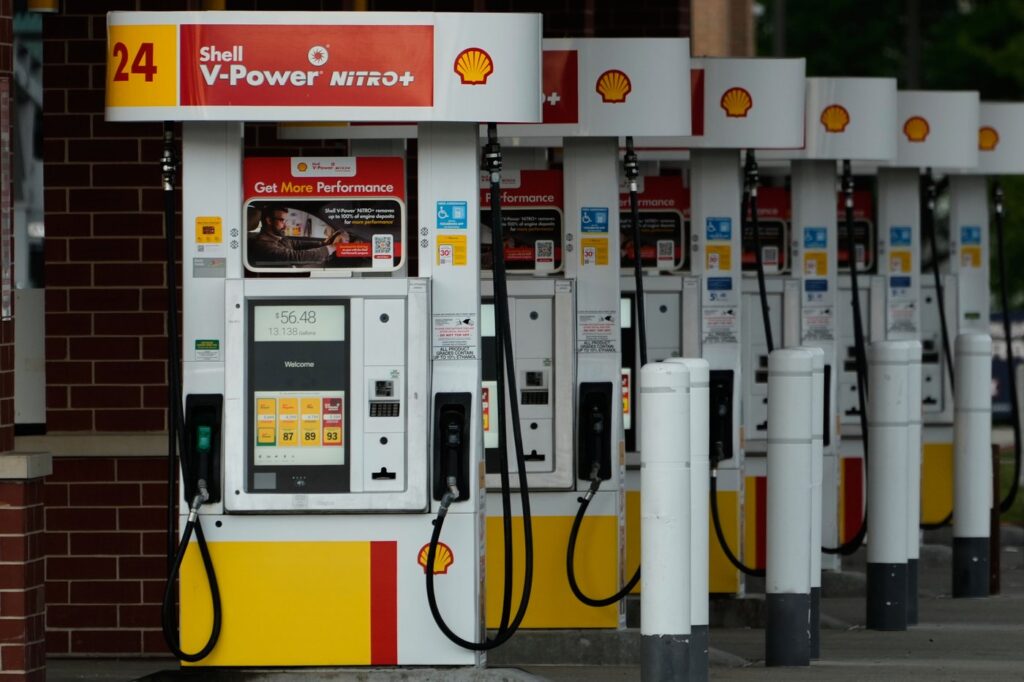
On Wednesday, U.S. gasoline prices saw a slight uptick, averaging $3.80 per gallon for regular fuel, compared to $3.79 the previous day. Although this figure remains significantly lower than the month-ago average of $4.16, analysts caution that as crude oil prices rise, it will eventually affect gasoline prices at the pump. The lag in price reflection is due to the nature of oil procurement, where refiners buy oil in advance and the distribution system often delays the impact on consumers.
In an effort to stabilize rising oil prices amid the ongoing conflict, the U.S. and several other countries began releasing oil from their emergency stockpiles starting in March. However, the reserves are not infinite, with the U.S. Strategic Petroleum Reserve reported to hold 319.5 million barrels as of July 3—marking the lowest inventory level since 1983 when the reserve was first established.
On Wednesday, a barrel of U.S. benchmark crude oil was priced at $75.80, the highest in over two weeks, while Brent crude reached nearly $79 per barrel, its peak since June 19. The ongoing market reaction underscores the fragility of the situation in the Strait of Hormuz and its critical role in global oil supply chains.
Following the Iranian attacks on three commercial vessels, shipping experts recommended that maritime companies consider the safety of navigating through the Strait of Hormuz. International Maritime Organization Secretary-General Arsenio Dominguez condemned the attacks and urged stakeholders in the shipping industry to avoid exposing crews to unnecessary risks in the volatile region.
Despite the heightened tensions, some vessels still opted to traverse the strait, with data revealing 41 crossings on Tuesday, compared to 36 on Monday. However, it remains uncertain whether these crossings occurred before or after the attacks, as some vessels have begun to operate without broadcasting their locations—a tactic that complicates tracking.
With conventional routes through the strait deemed unsafe due to mines, ships have turned to alternative navigational paths, including a northern route through Iranian waters and a southern route through Omani waters. The vessels hit on Tuesday appeared to be utilizing the Omani route.
Economists are optimistic that despite the recent flare-ups, the ceasefire may still be reinstated, with Washington and Tehran potentially de-escalating tensions rather than plunging into full-scale conflict. Ben May, director of global macroeconomic research at Oxford Economics, remarked that while Trump has expressed skepticism towards negotiations with Iran, he has also left open the possibility for continued dialogue, indicating that the situation is not entirely hopeless.
Adding to the complexity of the maritime situation, two significant shipping companies, Maersk and Hapag-Lloyd, recently announced plans to gradually resume services in the Suez Canal, which had been interrupted due to prior attacks in the Red Sea. However, the recent surge in geopolitical tensions could jeopardize these plans once again, according to Judah Levine, head of research at the freight booking platform Freightos. Hapag-Lloyd reaffirmed its commitment to reassessing security conditions in response to any further developments in the region.