Two weeks after being sued over plans for a border wall through the Big Bend region of West Texas, the Trump administration responded by waiving a federal law that the plaintiffs claimed was being violated. The lawsuit was initiated by the Presidio Municipal Development District (PMDD), which argues that the border wall project poses a significant flooding risk and threatens local property and initiatives. The PMDD is seeking an injunction to halt construction while the case is processed through the courts.
The lawsuit highlights concerns regarding the lack of required interagency coordination with federal border agencies in potentially altering a local levee to accommodate the wall. The PMDD asserts that this change could lead to "deadly flooding" in the area, emphasizing that the levees protect the entire City of Presidio and its residents from flooding, which would jeopardize lives, homes, businesses, and crucial infrastructure.
Central to the lawsuit is the Rivers and Harbors Act of 1899, a federal law requiring engineering approval from the U.S. Army Corps of Engineers for significant alterations to levee systems. The Department of Homeland Security (DHS) previously waived numerous environmental and cultural resource protection laws but initially overlooked the Rivers and Harbors Act. On July 2, following the lawsuit, the DHS updated its waiver to include this law as well.
Skye Perryman, president and CEO of the Democracy Forward Foundation, which represents the PMDD, criticized the government's decision to waive essential legal requirements in response to the lawsuit. She stated that the government rushed to eliminate the legal protections intended to ensure safety in the face of raised concerns.
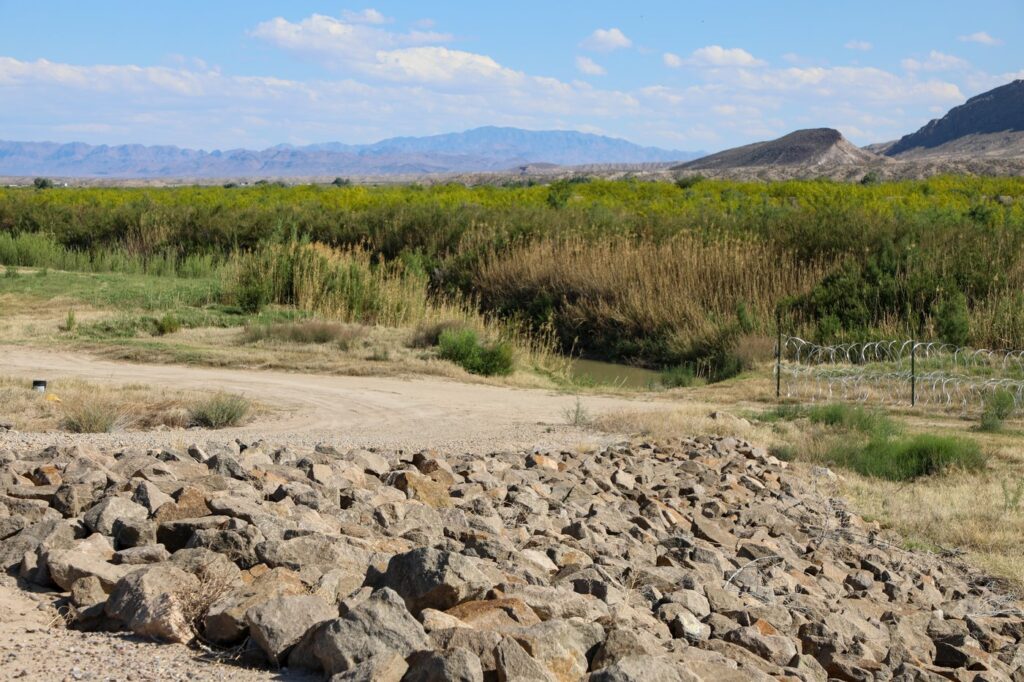
The Presidio Flood Control Project levee, owned by the International Boundary and Water Commission, provides flood protection across approximately 52 square miles of urban and agricultural land in Presidio. After a catastrophic flood in 2008, millions of dollars were invested in upgrading this levee. The PMDD argues that proper interagency coordination has not yet taken place, even as construction on the wall moves forward rapidly.
John Kennedy, executive director of the PMDD, emphasized that the new waiver from DHS does not adequately address their flood safety concerns. He argued that no construction affecting the levee or floodplain should proceed until the legally required safety assessments are completed.
The Trump administration's court documents assert that the plans for the border wall in Presidio are still not finalized, despite a construction timeline that initially set a start date for August. DHS noted that Customs and Border Protection (CBP) is in regular contact with the Army Corps of Engineers and the International Boundary and Water Commission, and intends to further coordinate with these entities once a wall design is established.
Currently, multiple designs for the border wall in the Presidio area are under consideration, including a reinforced concrete levee wall that would align with the height of the levee and incorporate 30-foot steel bollard panels on top. The legal fight has developed after months of local officials seeking detailed information about the border wall project from federal agencies.
Correspondence between federal border agencies obtained through a Freedom of Information Act request indicates that significant discussions about the construction plan were lacking, even after contracts for construction had been awarded. Kennedy previously pressed both the IBWC and CBP for answers about the wall's impact on the levee, but the detailed communications regarding answers or coordination efforts appear to have been scarce.
DHS has requested that if an injunction is granted, it should only apply to the levee expanse of approximately 12.75 miles rather than the entire 175-mile Big Bend area wall construction project. Despite this, the government is urging the court to deny the plaintiffs' request for an injunction, asserting that halting construction could lead to financial liabilities for delays incurred due to the necessary demobilization and remobilization of contractors.
The DHS has noted its past successful use of waivers under the Illegal Immigration Reform and Immigrant Responsibility Act of 1996, citing that previous judicial challenges to such waivers have consistently failed. While the Big Bend Sector encompasses the largest geographical area along the border, it is also one of the least trafficked.
Perryman remains resolute in her advocacy for the PMDD and the safety of the community in Presidio, stating confidence in the merits of their case while preparing to follow up with a court brief later this week.