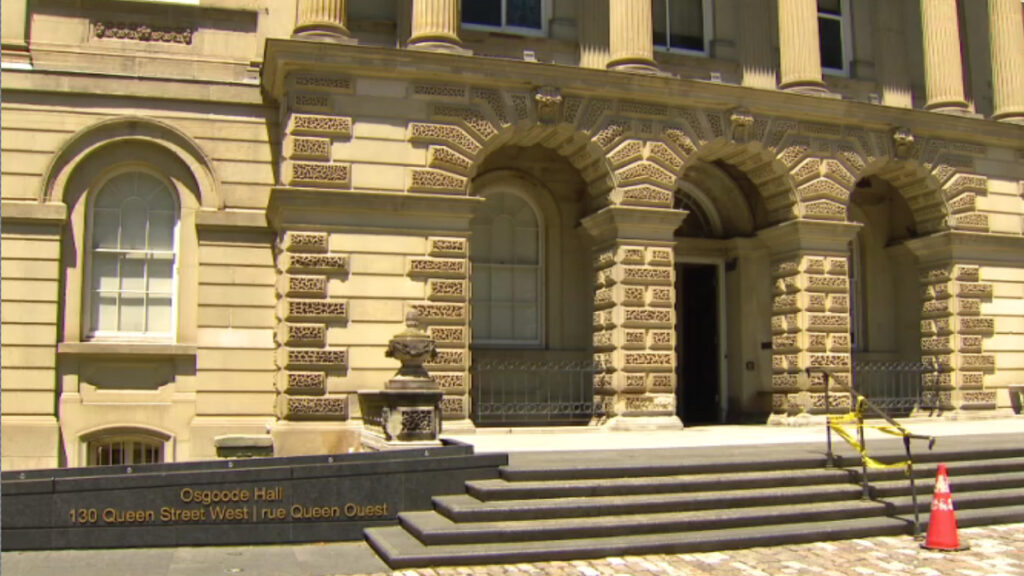
On Wednesday, Shobitjeet Singh, an applicant for the Ontario Immigrant Nominee Program (OINP), shared his sentiments outside Osgoode Hall. For months, these applicants faced uncertainty, ongoing protests, and a lack of clear communication regarding their applications. Singh expressed relief, stating, "For the first time since our applications were returned, somebody has actually paid attention to our voices."
Singh is among approximately 2,600 individuals whose OINP applications were rejected or returned in late 2025. The province of Ontario cited concerns of fraudulent activity and systemic misrepresentation as reasons for this mass rejection. Currently, around 300 of these affected applicants have initiated a court challenge against the Government of Ontario. After years of dedication to studying, working, and contributing to Ontario’s economy, many are still in search of specific answers as to why their applications were impacted.
Kuljinder, another applicant involved in the judicial review, expressed the group's frustration with the lack of accountability from the Government of Ontario and the Minister of Labour, Immigration, Training, and Skills Development regarding their application processes. "From day one, we have been fighting for accountability... It feels like bringing this matter before the courts is finally giving us an opportunity to be heard," he stated.
This week's hearing at Ontario’s Divisional Court marked a significant moment in the ongoing legal battle, which has attracted widespread attention, particularly within Ontario's South Asian communities. Many affected applicants trace their roots to India, raising the stakes for individuals seeking a fair resolution.
The core issue of the legal challenge revolves around the principle of fairness. The applicants argue that while the province cited fraudulent activity as the basis for application rejections, individuals were not provided with specific evidence related to their cases. The group is now requesting that the court assess whether the government acted in accordance with principles of procedural fairness during their application processes.
Lawyers representing the affected applicants argued that the Ontario government had available methods to investigate concerns on a case-by-case basis. Instead, they opted for a broad approach that resulted in sweeping consequences for thousands of applicants. "In Canada, we have principles of natural justice and procedural fairness," stated Andres Pelemur, counsel for the applicants.
The controversy traces back to November 2025, when a wave of protests erupted outside Queen’s Park and the OINP office in Toronto. Demonstrators sought answers from the government and demanded greater transparency regarding the handling of their applications. At that time, Ontario attributed the situation to modifications in immigration allocations from the federal government and broader pressures on the provincial nominee program.
Since the onset of this issue, Ontario has been actively reshaping its immigration policies, including introducing the Ontario Workforce Priority Stream in June 2026. Immigration experts have indicated that the ongoing case may set a significant precedent, affecting policy for countless individuals within the immigration system.
As explained by immigration expert Kanwar Sierah, "The larger issue is whether governments can make significant policy changes that affect thousands of people already in the system, and what obligations they have to those applicants when the said changes occur." He noted that the outcome could provide clarity on how future immigration reforms should be implemented and the level of protection applicants waiting in the system should receive during such changes.
Lawyers representing the Ontario government also provided their arguments during the hearing and defended the decisions made within the OINP. By the end of the session, no ruling was issued, and the court plans to continue reviewing the matter, with the next hearing date still to be determined.