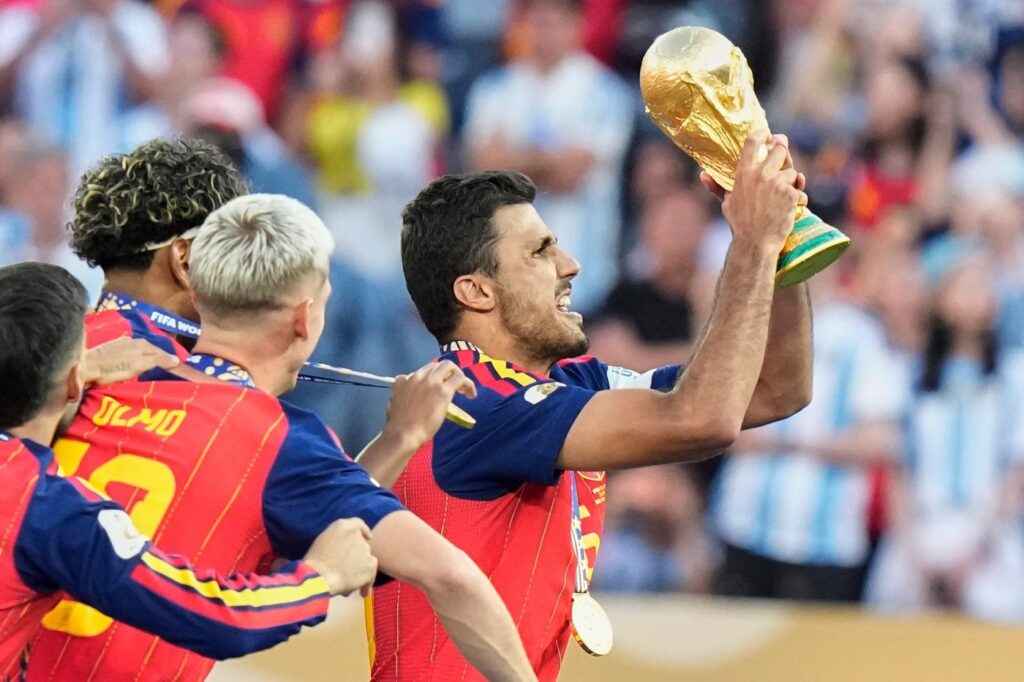
EAST RUTHERFORD, N.J. (AP) — Spain has reclaimed its position at the pinnacle of soccer, emerging victorious at the World Cup for the second time, defeating Argentina 1-0 in the final on Sunday. The decisive moment came from Ferran Torres, who scored the goal of his life in the 106th minute, a moment that Torres described as being scored for the 47 million people of Spain.
The match saw Argentina, the reigning champions, finish with only ten players after Enzo Fernandez received a red card following a reckless tackle late in regulation. Tensions escalated post-match, with coaches and players from both teams engaging in pushing and shoving, reflecting the passionate rivalry between the teams.
Despite Argentina's strong showing throughout the tournament and Lionel Messi's illustrious career, they were unable to equalize. The victory for Spain means they have now surpassed their remarkable previous title win in 2010. Coach Luis de la Fuente expressed immense pride, stating, “Accompanying them on this journey is an honor.” At 65 years old, de la Fuente became the oldest coach to lead a team to a World Cup title.
This achievement is significant, as Spain is now the first nation to simultaneously hold both the Men’s and Women’s World Cup titles, following the Women's World Cup victory in 2023. The Spanish capital, Madrid, erupted in celebration, with crowds pouring into the streets following the triumphant win.
The match statistics tell a story of dominance, with Spain taking the first 20 shots on goal and securing nine of the first ten corner kicks. Argentina’s goalkeeper, Emiliano Martinez, made a record 12 saves in a World Cup final, which offered some hope for the 2022 champions. Coach de la Fuente praised Martinez, referring to him by his nickname, “Dibu,” as “nothing short of exceptional.”
Spain's victory continues their unbeaten streak, now standing at 38 matches with 29 wins and nine draws, marking the longest unbeaten stretch for any European men's team. Italy previously held this record with 37 matches. In the span of two years, Spain had not faced defeat, showcasing their defensive strength and tactical approach as they allowed only one goal throughout the tournament.
Argentina, on the other hand, was left to grapple with their loss. Coach Lionel Scaloni acknowledged their performance, stating, “We played our hearts out,” while praising the unwavering support from their fans. The match ended with Messi unable to extend his legacy with a second consecutive title, as he hinted this could be his final World Cup match.
In the dying moments of the match, Messi took a corner that led to a missed opportunity from substitute Giuliano Simeone, who failed to convert an equalizer, leading to further frustration for the Argentine team. Torres reflected on the pressure of playing against such an iconic player, emphasizing the team's resilience and commitment to their style of play throughout the tournament.
As the match concluded, Spain's players made a point to honor the Argentinian team, forming an honor guard as the runners-up walked past to receive their medals from President Donald Trump and FIFA President Gianni Infantino.
The Grand Final was not solely about soccer; it featured high-profile performances from global stars including Madonna, Justin Bieber, and Shakira during a halftime show that captivated the audience both in the stadium and around the world.
Totaling 104 matches, this World Cup broke records for the number of goals scored, exceeding 300, except during Spain's encounters, as their strategy focused on ball possession and solid defense. Messi, who is now 39, faced the reality of his declining career, having experienced both triumph and heartbreak in his tenure with the national team.
In conclusion, the dramatic and historic victory for Spain solidified their place in soccer history while leaving Argentina with a challenging defeat to process as they look to the future.