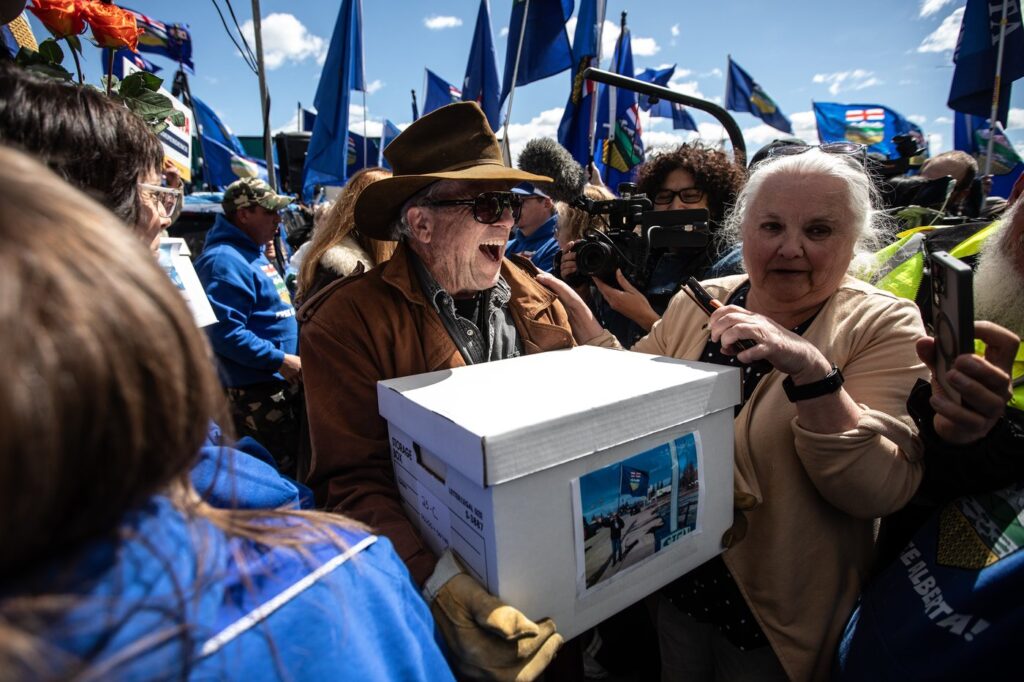
EDMONTON – A citizen-led petition aiming to force a vote on Alberta's independence from Canada has officially succeeded. Elections Alberta announced on Friday that nearly 223,000 signatures were verified out of a total of almost 280,000 valid names counted, surpassing the required threshold of approximately 178,000 signatures needed for the petition to be successful.
However, despite this milestone, the petition is considered largely moot. A court ruling in May quashed the petition, although the decision is currently being appealed by both the petition organizers and the government of Premier Danielle Smith. Smith has pointed to the separatist petition, alongside a competing pro-Canada petition with over 400,000 verified signatures, as the basis for including a separation question in the province's upcoming referendum on October 19.
The referendum question will ask Albertans whether they want to remain within Canada or would prefer to hold a second, binding referendum on independence. According to Premier Smith, the earlier court decision invalidating the separatist petition prevented her from facilitating a binding vote on the issue for the fall.
Jeff Rath, a lawyer representing the group behind the petition, expressed satisfaction with the verification of signatures. He stated, “We knew from the outset that we had to be too big to rig,” emphasizing the significance of the verification in reinforcing the group's agenda. Rath further called on Smith to include their specific question about Alberta's separation from Canada on the October ballot, rather than allowing the current wording that leads to another referendum.
The petition posed a straightforward question: “Do you agree that the province of Alberta should cease to be part of Canada to become an independent state?” Rath highlighted that Premier Smith had promised several times that if they gathered enough signatures, their question would be included on the ballot. He insisted that any failure to honor this promise would mark her as untrustworthy and would necessitate her resignation.
A spokesperson for Justice Minister Mickey Amery stated that the government appreciated the confirmation that hundreds of thousands of Albertans had signed petitions related to the separation debate; nonetheless, they reaffirmed their intent to proceed with the current referendum question. Elections Alberta began verifying signatures after a judge ruled last month that counting the names should continue in case the appeal is favorably resolved.
The judge expressed concern that delayed verification could threaten the petition's integrity, as individuals who signed might move or pass away. A group of First Nations has challenged the validity of the petition, asserting that they were not adequately consulted about its implications for treaty rights and the potential damage a vote could inflict on the treaty relationship.
According to Elections Alberta, the 223,000 verified signatures represent around 7.5 percent of all eligible voters in the province. The agency noted that common reasons for disqualifying signatures included incomplete addresses, improper signing protocols, and individuals being unwilling to confirm their information when contacted. Additionally, 292 duplicate signatures were rejected, and there were no fraudulent names found in the verification process, which was a concern during an earlier voter information breach linked to a different separatist group.
Rath criticized Elections Alberta, alleging political bias for disqualifying about 50,000 signatures, which he argued disenfranchised many supporters. He stated, “We succeeded in spite of them,” reiterating that they amassed significantly more signatures than necessary to counteract expected disqualifications.
Alberta's petition laws have provoked ongoing political debate since Premier Smith’s government made significant changes to reduce the signature threshold for citizen-led referendum petitions in the spring of 2025, shortly after Prime Minister Mark Carney's Liberal government took office. Had the threshold not been lowered, the separatist petition would have fallen short, as the former requirement was approximately 294,000 signatures.