Career colleges and their students are facing significant challenges following the government's recent decision to pause student financial aid payments through the Ontario Student Assistance Program (OSAP). This decision was made in light of concerns raised by the Minister of Colleges and Universities, Nolan Quinn, regarding possible criminal activity and misuse of public funds at certain schools.
The association representing career colleges, Career Colleges Ontario (CCO), is urging the provincial government to reinstate OSAP loans for students who are already approved and currently attending in-person classes. Spokesperson Taylor Buck emphasized the importance of protecting the integrity of the student assistance system while also advocating for students who enrolled in good faith in legitimate programs.
Minister Quinn announced that the provincial police have been asked to investigate serious concerns identified by auditors, who noted “egregious” use of public funds. Following this, the Ontario Provincial Police (OPP) stated they are reviewing the information. The government had previously commissioned KPMG in August to conduct an audit, prompting the decision to halt OSAP payments for all career college students until further notice.
CCO is seeking clarification on when the pause may be lifted and what criteria schools must meet to regain OSAP eligibility. Buck articulated that while it is vital to protect public funds, the approach taken should not disrupt the education of students who have complied with the rules and relied on previously approved funding.
A spokesperson for Quinn indicated that there is evidence suggesting the issues are systemic rather than limited to a few institutions. Bianca Giacoboni stated, “At this time, we do not have assurances from the audit team that the issues are not more widespread,” leading to a system-wide approach in pausing OSAP funding during the ongoing investigations.
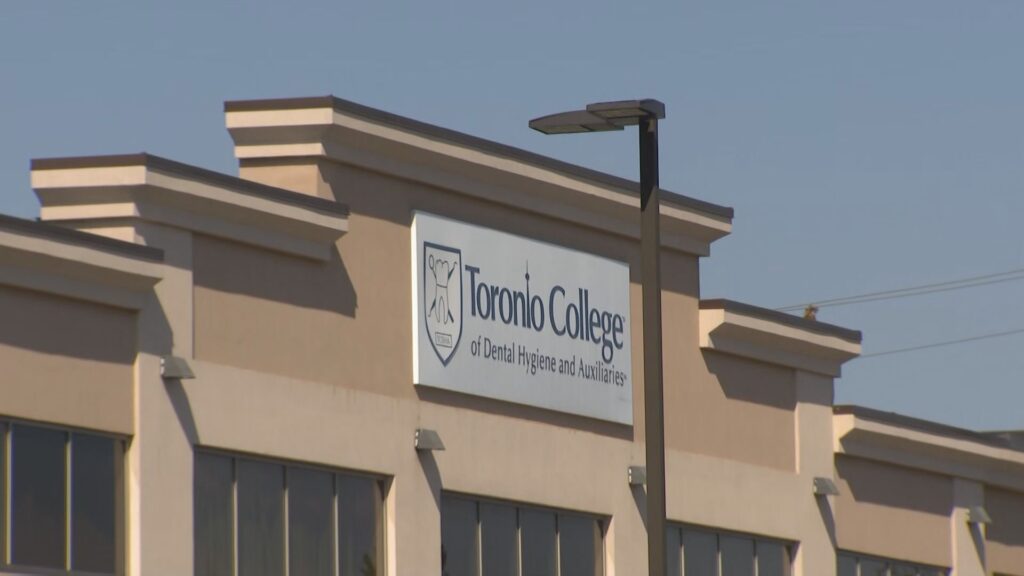
Daliah Gardoque, a dental hygienist student at the Toronto College of Dental Hygiene and Auxiliaries, expressed concerns about the financial strain caused by the funding pause, stating she might have to borrow money from family members, a backup plan not available to all students. Gardoque criticized the government for not conducting these audits sooner, suggesting they could have continued to support legitimate private colleges during the review process.
Quinn revealed that a significant number of concerns seemed to focus on online-only programs, which were made OSAP-eligible during the COVID-19 pandemic. This fall, the government plans to introduce legislation that will bar online-only programs at private career colleges from receiving OSAP funding again.
Caitlin Parker, a health information management student at triOS College enrolled in an online-only program, advocated for a distinction between asynchronous and synchronous online learning formats. Parker's program requires live attendance, and as a mother of six, she fears the impact of losing OSAP funding on her ability to continue her education.
Michele Lupa, executive director of Mothercraft, an early childhood education career college, highlighted that their synchronous online programs should not be penalized by the pending legislation. She expressed concern for the anxiety and uncertainty faced by both students and staff regarding the implications of Quinn’s announcements.
This year, Quinn made substantial reductions to the amount of OSAP grants available to students at universities and publicly funded colleges while limiting career college students to OSAP loans, citing "unsustainable" costs. However, data obtained through a freedom-of-information request indicated that the majority of year-over-year growth in OSAP funding was related to career colleges, with a disproportionate amount concentrated in just seven institutions that received around $385 million in OSAP grants for 2024-25.
Career Colleges Ontario has been alerting the province about potential "suspicious" OSAP activities for several years, starting in January 2023. As the investigations progress, the future of career colleges remains uncertain, alongside the financial security of students reliant on public funding to pursue their educational goals.