Social media and other companies must face accountability for failing to report discussions that could lead to harm, as highlighted by a recent FBI complaint regarding the Tumbler Ridge shooter. NDP Leader David Eby stated this during an address on Wednesday, emphasizing the need for tech companies to take responsibility in such cases.
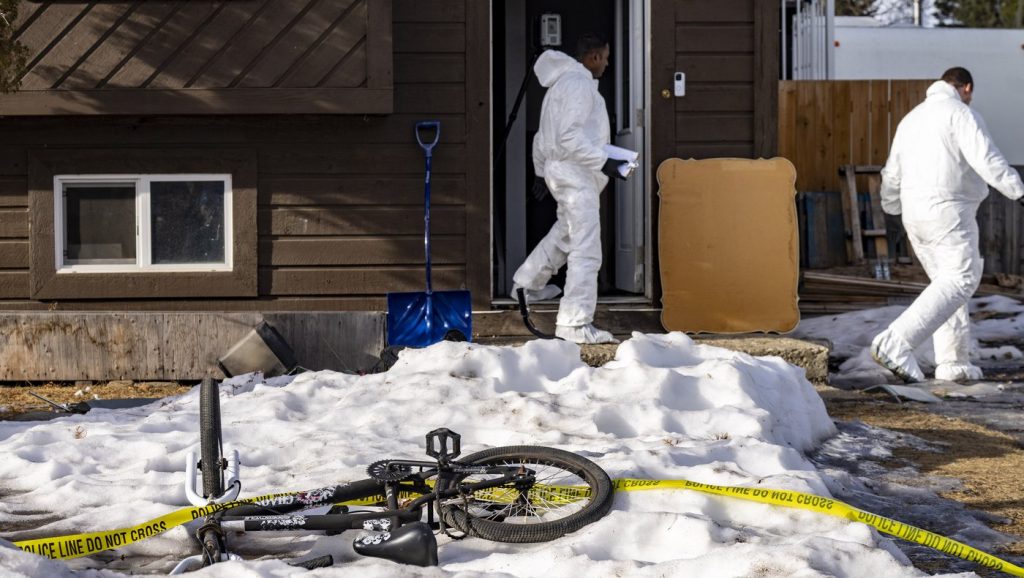
The complaint targets James Bryant, a Bellingham, Washington resident, alleging conspiracy to commit murder alongside shooter Jesse Van Rootselaar. The two reportedly engaged in discussions over several months on the Discord messaging platform, planning the specifics of their attack, including tactics, locations, and weaponry. They also attempted to livestream the murders on Twitch.
The FBI's investigation has revealed that Van Rootselaar shared details of her preparations, even sending photos of her attire ahead of the attack. Heidi Tworek, a professor at the University of British Columbia, remarked that these developments underscore a broader issue of how online platforms are used for organizing violent acts.
Emily Laidlaw, a Canada Research Chair in cybersecurity law at the University of Calgary, pointed out that while some platforms have obligations related to reporting child exploitation material, there are no mandatory reporting requirements for scenarios like the one in Tumbler Ridge. Laidlaw opined that there was evidently a failure in this case, suggesting that online conversations indicating potential harm should be reported to authorities.
According to Mike Harrington, special agent in charge with the FBI in Seattle, Van Rootselaar and Bryant first connected randomly on the now-defunct Omegle messaging app three years prior. At the time, Van Rootselaar was only 15 while Bryant was 27. Omegle ceased operations shortly after due to lawsuits concerning child safety.
In light of the FBI findings, Megan Kay, Twitch's senior communications manager, confirmed that the platform is cooperating with law enforcement but did not disclose further information. Meanwhile, Eby stated that government lawyers would examine the complaint against Bryant, emphasizing the necessity for tech companies to report wrongdoing as a legal obligation. He argued that tech firms have consistently failed to "do the right thing."
The British Columbia government is currently involved in a lawsuit against artificial intelligence firm OpenAI, alleging that the company played a role in facilitating Van Rootselaar's planning of the February 10 attack, which tragically claimed eight lives, including those of six children.
Eby reiterated the need for the federal government to introduce minimum regulations on social media and AI companies, expressing that companies should be mandated to report any conversations that suggest violence or harm to police—similar to how an individual would report such discussions to authorities in person.
Tworek highlighted the absence of a universal reporting requirement for social media platforms regarding various types of harmful content. She noted the complexities surrounding issues of overreporting and the potential stigmatization of vulnerable communities. Often, statements that imply violence may be rhetorical rather than literal, necessitating careful consideration by platforms regarding community safety.
Twitch has faced scrutiny in the past as it was notably used to livestream a mass shooting in Buffalo in May 2022, resulting in significant casualties. David Tindall, a sociology professor at UBC, observed that advancing technology enables individuals with shared interests to communicate while simultaneously allowing malicious actors to coordinate privately, a phenomenon referred to in sociology as "dark networks."
On Tuesday, acting U.S. Attorney Neil Floyd confirmed in Seattle that Discord provided the FBI with the messages exchanged between Van Rootselaar and Bryant after law enforcement obtained subpoenas and search warrants. Despite this, Discord had not yet responded to inquiries from the press.
Tworek noted that Discord serves as a hybrid platform for different kinds of communities, originally designed for gamers but now widely used for various purposes, including academics. According to Discord’s website, the platform collects specific information from users but generally does not retain the contents of voice or video calls.
Federal Public Safety Minister Gary Anandasangaree described the details emerging from the FBI complaint as "outrageous and seriously worrisome." He indicated that the case underscores broader issues surrounding collaboration and coordination online via social media, which the Canadian government aims to address through proposed online safety legislation, referred to as Bill C34. In response to questions about whether Discord should fall under this legislation, Anandasangaree stated that the proposed law would create an independent body to make such determinations.