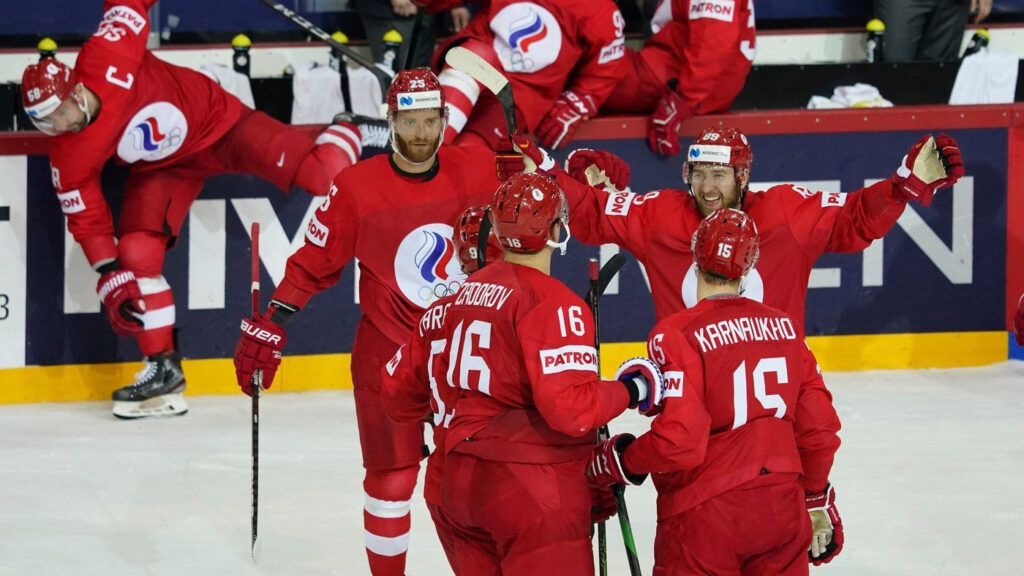
The Court of Arbitration for Sport (CAS) ruled on Friday that Russia must be allowed to return to international ice hockey tournaments, revoking an exclusion that has been in place since the country's full-scale invasion of Ukraine in 2022. This decision marks a significant victory for Russia amid ongoing efforts to prohibit its participation in international sports due to the war.
Russian President Vladimir Putin, a well-known hockey enthusiast, has participated in exhibition games with former stars in the past. CAS's ruling specifically overturned decisions made by the International Ice Hockey Federation (IIHF) that barred Russia from events scheduled for the 2026-27 season, which includes both the men’s and women’s world championships and the world juniors. As a result of these decisions, Russia also missed out on participating in the Olympic tournaments this year.
With Russia's reinstatement, uncertainty looms over the logistics of the upcoming men’s world championship scheduled to take place next year in Germany, particularly since Ukraine has also qualified for the event. The CAS ruling cited a lack of evidence to substantiate the IIHF's security concerns regarding Russia's participation in international tournaments.
While the CAS ruling does not address whether Russia should compete as neutral athletes or require restrictions on national symbols, the IIHF expressed disappointment over the decision, stating that its previous actions were necessary to ensure the safety and security of all participants while preserving the integrity of its competitions. The IIHF underscored its commitment to assess the situation further in light of the ruling.
Russian Sports Minister Mikhail Degtyaryov commented on the ruling, stating that CAS acknowledged the Russian Hockey Federation's demands on critical points as justified. This ruling poses immediate challenges for the newly elected IIHF President Franz Reindl, especially given the complexities of implementing the decision just weeks prior to various championships.
The German hockey federation’s chairman, Frank H. Lutz, reiterated Germany's opposition to allowing Russia’s participation, citing significant security, political, and financial ramifications for the host country. The current tournament structure poses additional challenges, as the draw for the championship has already been established. Adding Russia would result in uneven groups and necessitate more scheduling adjustments.
Furthermore, expelling a qualified team, potentially Ukraine, to accommodate Russia would likely provoke backlash, particularly as Ukraine made a significant return to the championship after a 20-year absence and currently holds the lowest ranking among the participating teams. The Ukrainian Hockey Federation has expressed disagreement with the ruling, asserting that security concerns have only heightened since the conflict began in 2022.
The IIHF announced that practical arrangements regarding Russia's participation would be decided after a thorough evaluation of the CAS ruling. National hockey federations from Sweden, Finland, and the Czech Republic have all expressed disappointment, although Swedish Ice Hockey Association chairman Anders Larsson indicated that a boycott is not currently under consideration. Finland suggested that individual players might choose to avoid tournaments where Russia is involved.
The first tournament where Russia could potentially return is the men's world junior championship, set to be hosted by Canada in Edmonton and Red Deer on December 26. Other scheduled events impacted by the ruling include the women’s world championship in Canada in November 2027, the men’s under-18 world championship in Minnesota starting in April, and the women's under-18 world championship in the Czech Republic in January.
However, Russian participation in these tournaments could have political implications, particularly concerning its national flag display in the Czech Republic, where the president has established a stance against the involvement of athletes under Russian or Belarusian flags due to ongoing aggression. It is worth noting that the women’s worlds in Denmark next week remain unaffected by this ruling, as they fall under the 2025-26 season.
Historically, Russia, and the Soviet Union, have secured 27 titles in men’s world hockey, placing second only to Canada’s 28. Russia last achieved gold in 2014, while its highest finish in the women's tournament has been a bronze medal. Since the onset of the war, Russia has primarily engaged in exhibition matches using developmental rosters, mostly against neighboring Belarus and Kazakhstan, which remains under similar exclusion from the IIHF.
The CAS ruling does not influence the NHL, but league officials are considering international opinions regarding Russian participation. The NHL is organizing the 2028 World Cup of Hockey independently of the IIHF and national federations. In light of the current developments, the Russian track and field federation has expressed renewed confidence in its case against World Athletics, the last major Olympic sport maintaining a comprehensive ban on Russian athletes.
As Russia seeks to re-enter international competitions across various sports, including potential returns in soccer and track, it highlights a broader trend within the Olympic movement regarding the reintegration of Russian athletes, echoing similar sentiments from swimming and volleyball organizations this year.