

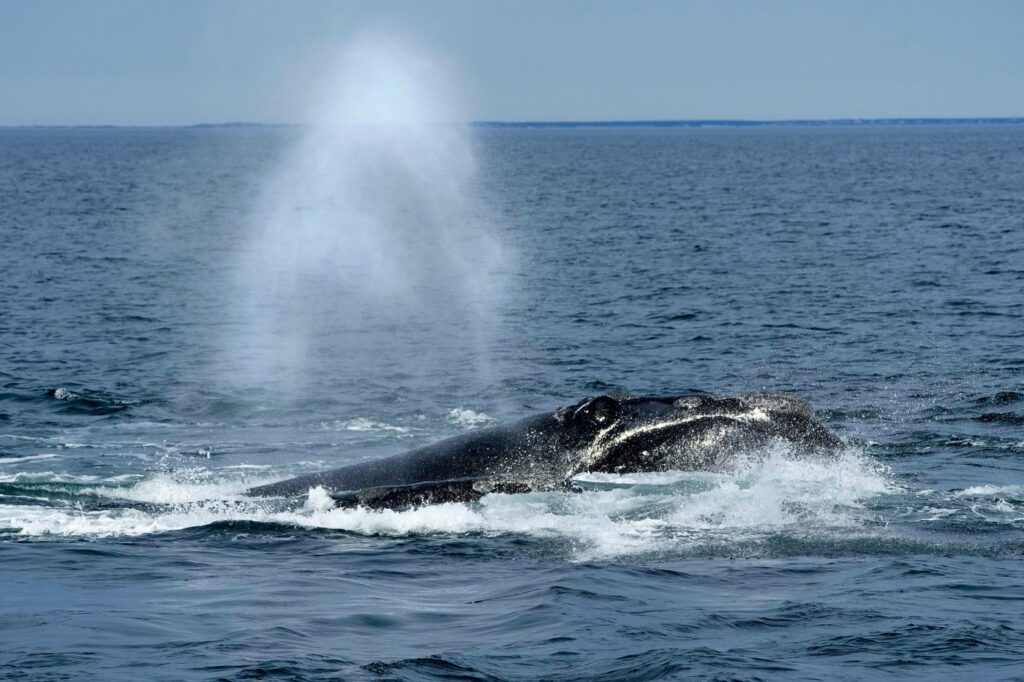
SHIPPAGAN – Federal officials have reported the presence of a critically endangered North Atlantic right whale that has become entangled in fishing gear within the Gulf of St. Lawrence. This announcement follows a surveillance flight conducted by Fisheries and Oceans Canada.
The whale was spotted on October 21, 2026, in a region situated between New Brunswick's Acadian Peninsula, Prince Edward Island, and Quebec's Îles-de-la-Madeleine. It was only after a thorough review of footage that scientists and experts were able to confirm the entanglement in the Bradelle Bank area.
In response to this critical situation, officials have outlined a plan to locate the whale again. If they are successful in relocating the animal, they aim to tag the entangled gear with a satellite tracker. This would facilitate efforts to disentangle the whale safely from the fishing equipment. Currently, the Fisheries and Oceans Canada has yet to identify either the whale or the specific type of gear it is caught in, adding to the urgency of the situation.
The entire population of North Atlantic right whales is alarmingly low, estimated to consist of just 384 individuals. This dire statistic underscores the importance of immediate action to protect this species, which is classified as critically endangered. The entanglement of any single whale poses a significant threat to the survival of the species as a whole. The ongoing efforts to assess and manage the risks faced by these whales are critical in ensuring their conservation.
This incident reflects broader concerns regarding the impact of fishing practices on marine life, particularly for vulnerable species. The entanglement of marine animals in fishing gear remains a pressing issue, posing significant challenges for wildlife conservation authorities. Continued surveillance and research are essential in understanding and mitigating these risks to ensure the safety of the North Atlantic right whale population.
With concerted efforts from federal officials, researchers, and conservationists, there is hope that the whale's situation can be addressed effectively and that measures can be implemented to prevent such incidents in the future. The urgency of the situation calls for a collaborative approach to marine conservation, aiming to safeguard the future of the North Atlantic right whale before it is too late.







