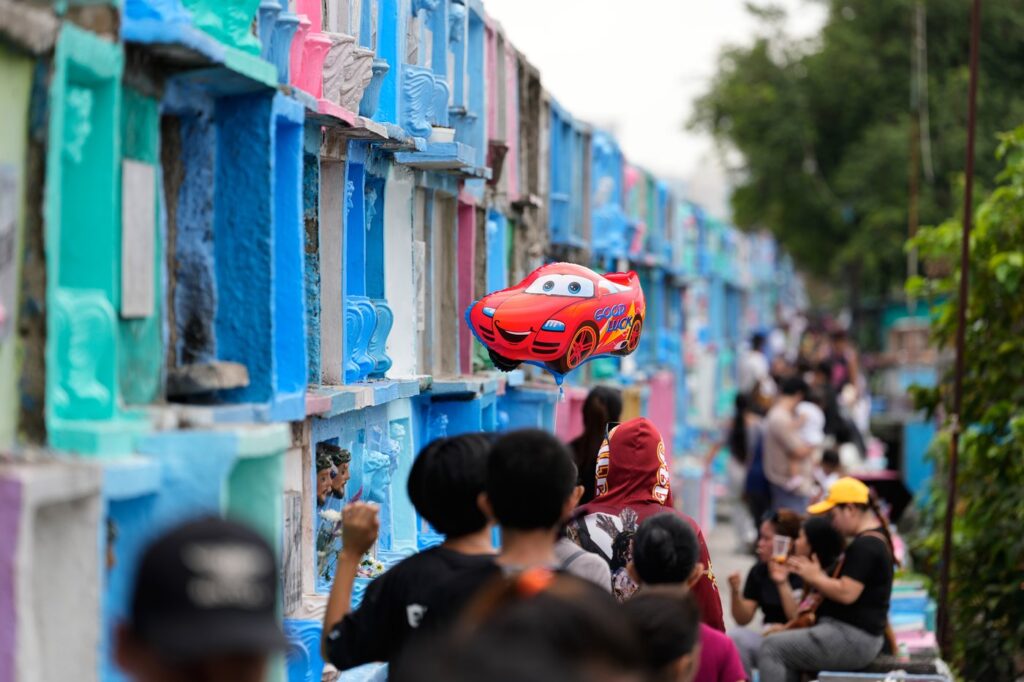
MANILA, Philippines (AP) – In a heartfelt tribute to her late father, Lorita Santos cherishes the memories they shared, keeping them close to her heart. She is one of the thousands of Filipinos who visited cemeteries across Manila on Sunday to honor their deceased loved ones, as part of the traditional observance of All Saints’ Day.
This annual tradition, locally known as Undas, gathers families together to remember and pay respects to their departed. The term derives from the Spanish word "honras," which means "honors." Santos emphasizes the importance of remembrance, stating, "Just because they have passed away does not mean we should forget them." On this occasion, she visited the graves of her father and three other relatives, offering flowers and candles, followed by prayers and shared snacks.
Undas serves not only as a moment for mourning but also as an opportunity for families to reminisce and share stories about their departed. Santos fondly recalls how her father delighted his children and grandchildren with small gifts every payday, a tradition that has left a lasting impact on her family. Now, she is passing down this custom to her children to ensure they carry forward the practice of honoring their ancestors.
Ancestor veneration is deeply rooted in Filipino culture, intertwined with Catholic beliefs. Celebrated on November 1 and 2, Undas encompasses both All Saints' Day and All Souls' Day, merging traditional customs with Catholic observances that date back to Spanish colonization. Nestor Castro, an anthropology lecturer at the University of the Philippines Diliman, noted the significance of ancestor worship in Filipino history, highlighting the pre-colonial practice of honoring spirits known as anito through offerings of food and gifts.
The arrival of the Spanish in 1565 introduced new religious practices, intertwining with existing customs. The Philippines and Mexico share a historical connection, established during the Manila-Acapulco galleon trade, resulting in similar traditions for honoring the dead. In Mexico, many families also gather at cemeteries or set up altars at home to remember their deceased loved ones, celebrating with marigolds, music, and food.
Culturally, in the Philippines, the observance of death not only serves to honor those who have passed but also to reinforce family bonds. Castro explains that during funeral wakes, families often wait for relatives from afar to arrive before burying their loved ones, turning the occasion into a family reunion. Similarly, during Undas, the sharing of sticky rice cakes symbolizes the strong ties between relatives, emphasizing the unity that these events bring.
For Mike Mamaril, a 42-year-old school maintenance employee, visiting the graves of his parents is a cherished custom passed down from his grandparents. He makes it a point to participate in this annual tradition, valuing the rare opportunity to reflect on joyful memories of his childhood and, specifically, to discuss who among them received the most reprimands growing up. The annual visits blend reverence for the deceased with the warmth of familial connections, creating a space where memories live on.
This blend of celebration and reflection continues to thrive, showing how cultural traditions not only honor the departed but also strengthen familial ties across generations.