Massive Protest in Prague Against State Funding of Public Media
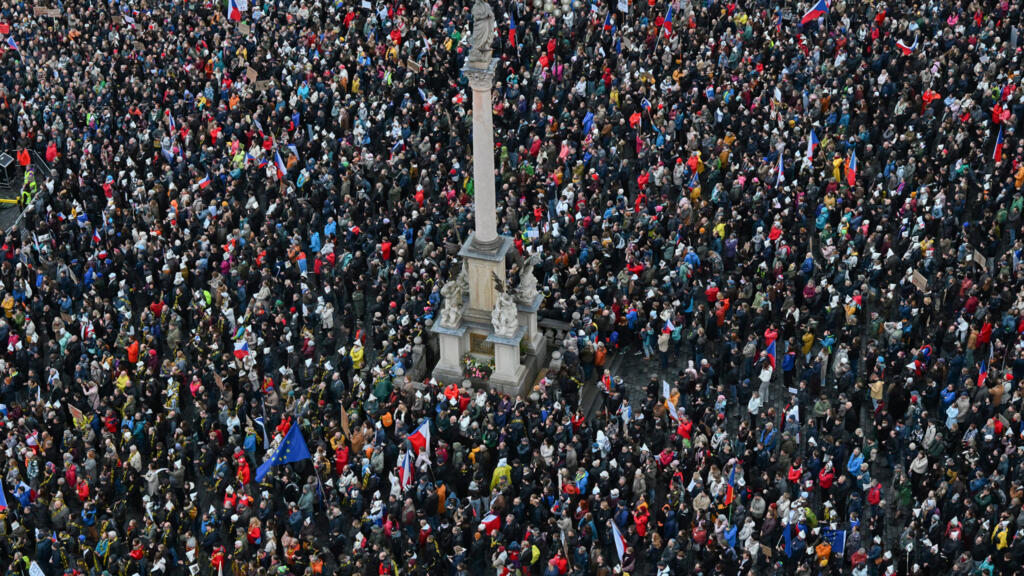
On a recent Sunday, hundreds of thousands of Czechs gathered in Prague to express their opposition to government proposals aimed at replacing the current public media funding model. The government is planning to substitute the existing fees that Czech citizens pay for public media with direct state funding. Critics argue that this change poses a significant threat to the independence and integrity of public broadcasters, a concern that resonates deeply within the populace.
The rally, organized by various civic groups, was characterized by a turnout believed to surpass a previous protest held in March, which drew over 200,000 participants. According to organizers, the Sunday demonstration has the potential to be the largest since the Velvet Revolution in 1989, a pivotal moment in Czech history that led to the overthrow of the communist regime. This growing civic engagement reflects escalating discontent among citizens regarding government policies and their implications for democratic institutions.
Demonstrators voiced their concerns and highlighted the importance of maintaining a free and independent media landscape. The presence of banners and chants emphasized the collective belief that public media serves as a crucial watchdog entity within democracy. Many attendees expressed their fears that government control over funding could undermine journalistic independence, censor opinions, and diminish the role of public broadcasters as impartial sources of information.
The proposed funding change has sparked discussions on social media and within political circles, with advocates for public media arguing that financial independence is vital to journalistic integrity. Opponents of the government’s plan assert that state funding could lead to editorial influence, limiting the media’s role as an independent entity that holds power to account. According to commentators and analysts, the issue has emerged as a litmus test for the government’s commitment to democratic principles and freedom of the press.
Several prominent figures in Czech politics and society, including former leaders and activists from the Velvet Revolution era, joined the protests to lend their support. They underscored the historical context of the current situation, reminding the public of the struggles faced to secure media freedoms in the past. Their participation added weight to the arguments being made, reflecting a broad coalition of concerns about the implications of the proposed policy change.
The atmosphere at the rally was charged with a sense of urgency and solidarity, as participants shared their views on the importance of safeguarding democratic values. Many highlighted the need to protect not only public broadcasters but also the wider media landscape in the face of emerging challenges. The rally serves as a reminder of the public’s role in holding their government accountable and ensuring that democratic institutions are defended robustly.
As the protest unfolded, the government faced increasing pressure to reconsider its plans for media funding. In response to the overwhelming turnout, officials are likely to need to engage with the public and address the widespread apprehensions regarding the future of public media in the Czech Republic. This grassroots mobilization illustrates a significant moment in contemporary Czech history, reflecting the ongoing dialogue between citizens and their government regarding crucial democratic issues.