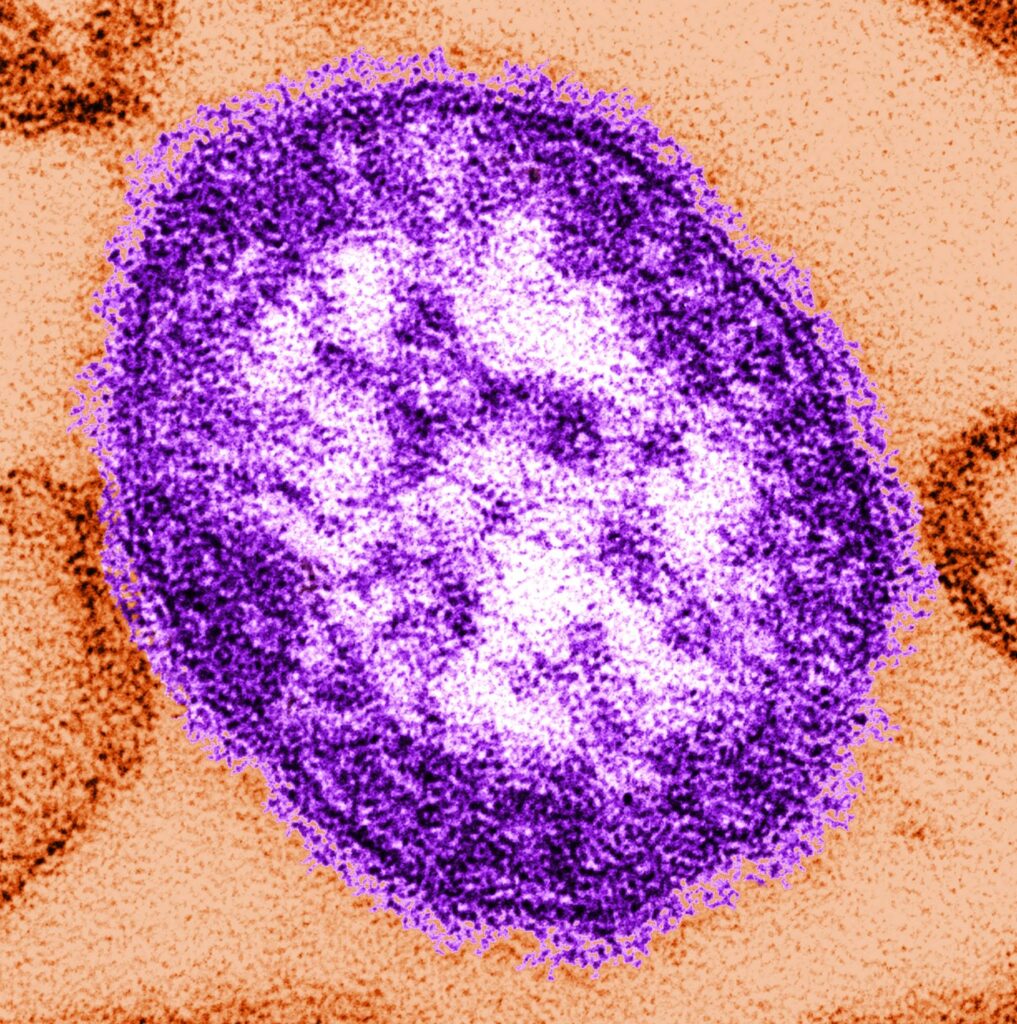
For the first time in decades, U.S. doctors are raising concerns about the emergence of congenital measles, a condition that occurs when a pregnant woman transmits the measles virus to her fetus in utero. This condition can result in severe complications or even be fatal for newborns. Between January 2025 and the end of September 2025, the U.S. Centers for Disease Control and Prevention (CDC) reported 13 congenital measles cases during significant measles outbreaks, as outlined in preliminary figures released in a medical journal.
Michael Osterholm, director of the University of Minnesota’s Center for Infectious Disease Research and Policy, emphasized the alarming nature of this development, stating, “This is a brand new phenomenon.” The rise in congenital measles cases is largely driven by declining vaccination rates, which have allowed the virus to spread more extensively. The Pan American Health Organization is anticipated to announce that the U.S. has officially lost its measles-free status, which it had maintained since 2000. The CDC reports over 7,500 measles cases within the past two years, indicating a serious resurgence of the disease.
Dr. Adam Ratner, a member of the American Academy of Pediatrics’ infectious diseases committee, expressed concern that the levels of measles being observed have not been seen in 30 years. He explained that when measles is under control through high vaccination rates, cases of congenital measles do not occur. According to the public health alert published by NEJM Evidence in collaboration with Osterholm's center, 112 confirmed cases of measles during pregnancy were reported, the majority involving women who either did not receive the vaccine or whose vaccination status was unknown. The alert stresses the importance of pre-pregnancy vaccination and maintaining high community vaccination rates to prevent measles and related complications.
Guidance on congenital measles is being disseminated to healthcare providers, with Pennsylvania's health department issuing an advisory for schools, childcare centers, and other entities amidst the state's ongoing measles outbreak, which is the largest in the nation. This resurgence can be attributed to a generation of women of childbearing age who have not been vaccinated against measles and have never been exposed to the virus due to its control over the past 25 years. Osterholm highlights the heightened vulnerability of this group, stating, “Now, this group is highly susceptible to measles.”
Healthcare professionals recommend that women receive the measles, mumps, and rubella vaccine (MMR) before pregnancy, as the antibodies from the mother can protect the fetus and last for several months post-birth. However, the MMR vaccine cannot be administered during pregnancy. Unvaccinated women who are exposed to the virus while pregnant may receive antibodies within six days to mitigate the risk of infection and related complications.
Congenital measles poses serious threats to newborns, particularly if the mother contracts measles late in pregnancy. The American Academy of Pediatrics indicates that 25% to 30% of babies born to mothers infected shortly before delivery may become infected themselves. Symptoms involve fever, jaundice, and a measles rash, with severe complications including pneumonia, encephalitis, and subacute sclerosing panencephalitis (SSPE), a rare and typically fatal brain disorder that can develop years after a measles infection. Dr. Ratner points out that children with congenital measles may be at a higher risk for quicker onset of SSPE.
As vaccination rates continue to decline, healthcare providers are increasingly worried about the possibility of worsening outbreaks. Measles outbreaks are considered unlikely if a community achieves a 95% MMR vaccination threshold, yet many areas have fallen below this benchmark. Nationally, the CDC has reported that only 92.4% of U.S. kindergarteners for the 2025-26 school year received the mandatory MMR shots, which puts numerous vulnerable populations, including infants too young for vaccination, at substantial risk. The first dose of the MMR vaccine is generally administered to infants between 12 and 15 months, with the earliest suitable administration in outbreak regions being at six months.
Dr. Ratner concluded that there is an urgent need to restore vaccination levels to the point where every eligible individual receives their vaccinations, stating, “That’s going to take some doing.” The road to increasing vaccination rates may require significant efforts from pediatricians, public health institutions, and numerous community stakeholders.