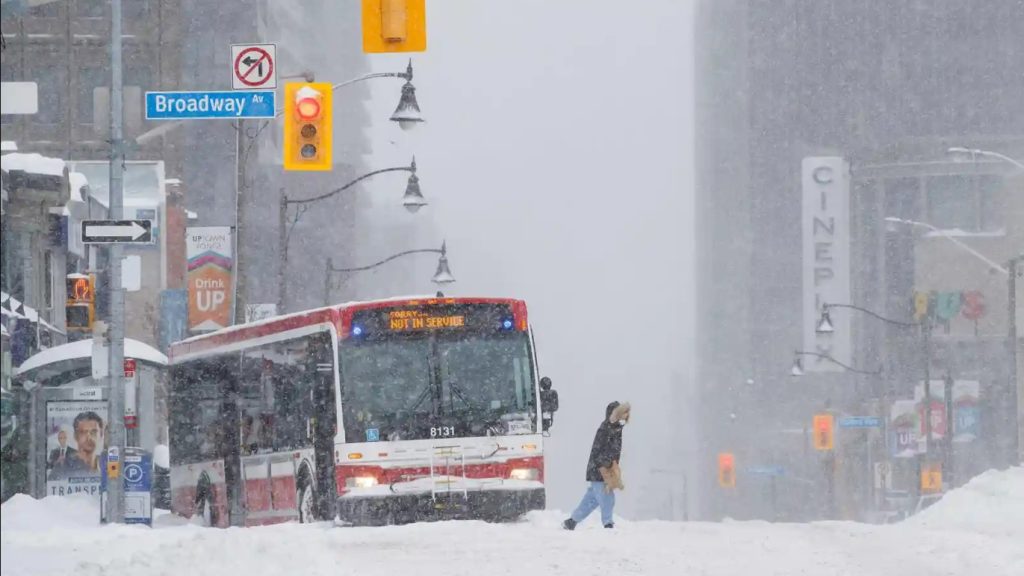
A cold and snowy winter is anticipated in Southern Ontario, with predictions indicating a shift to milder and wetter conditions starting in January. This forecast is derived from insights shared by meteorologist Natasha Ramsahai, who highlights the significant impact of La Niña—the cooling of surface temperatures in the Pacific Ocean—on North American winters.
The ongoing La Niña advisory is expected to influence the jet stream and the overall winter patterns. Ramsahai emphasizes that the winter's characteristics will differ markedly between the first and second halves. As the polar vortex, a mass of cold air typically found at the poles, becomes more prominent, it may lead to extreme cold spells affecting southern Canada, especially when combined with the current warmer-than-average temperatures of all five Great Lakes.
According to Ramsahai, the dynamics between the warm waters of the Great Lakes and the cold air from the polar vortex could result in significant snow squalls in Southern Ontario, particularly in heavily populated areas like Toronto. The expectation is for considerable snowfall during the early winter months, especially from November through January, before a potential transition to less severe conditions in the spring.
As winter progresses from January to March, forecasts suggest that the cold air may retreat northwards, affecting the western provinces—Alberta, Saskatchewan, and Manitoba. In contrast, Southern Ontario is projected to experience milder and rainier weather, with mixed precipitation likely becoming a persistent issue during the early months of 2026.
Ramsahai stresses that the winter outlook is subject to change, particularly in Canada, where numerous factors can influence weather patterns. Teleconnections between the atmosphere and ocean, which impact North American weather, can fluctuate significantly and make long-range predictions challenging. She points out that the vast size of Canada also means that weather conditions can vary greatly between its eastern, western, and central regions.
Regarding the possibility of a white Christmas, Ramsahai mentions that it is too soon to provide a definitive answer. However, she expresses concern about the declining trend in the likelihood of a snowy Christmas due to climate change. Over the past few decades, the situation has worsened, with Toronto experiencing a 30% reduction in the chances of a white Christmas compared to the 1960s, 70s, and 80s. Ramsahai concludes that while the probability of snow on Christmas Day is diminishing, further updates will be provided as the holiday approaches.