BRUSSELS (AP) – Belgian authorities are grappling with the mystery of a bold theft that occurred over the weekend, involving an icon of infant Jesus Christ from a Christmas Nativity scene in the historic Grand Place of Brussels. The figure was stolen from its crib late Friday night or early Saturday morning, amidst a backdrop of online scorn directed at this particular representation of the infant Jesus.
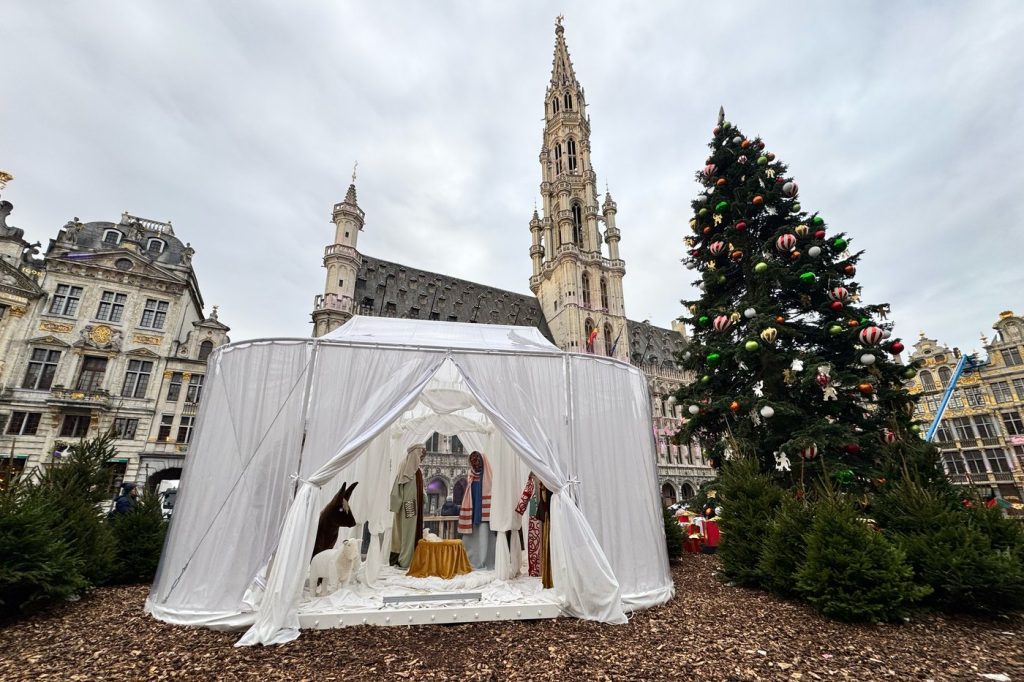
The Nativity scene was created by artist Victoria-Maria Geyer, who designed the figures with cloth faces intentionally devoid of eyes, noses, and mouths. Geyer’s objective was to allow a diverse audience, spanning from Japan to Namibia, to see themselves reflected in the soft, featureless materials. She remarked that this representation was aimed at ensuring that "every Catholic, regardless of their background or origins, can identify themselves" in the biblical story of Christ’s birth.
Prominent political figures have weighed in on the controversy, with Georges-Louis Bouchez, the leader of the center-right MR party, criticizing the artistic approach. He took to social media platform X to express that the representation of Geyer’s cloth Christ "in no way represents the spirit of Christmas,” likening the figures to “zombie-like” people seen at train stations. This critique highlights the polarizing reception of Geyer’s work.
Despite the negative reaction online, which initially overwhelmed the discourse surrounding the Nativity scene, Geyer noted an interesting reversal. An early wave of criticism has increasingly turned into supportive comments from the public. The Nativity scene, which draws substantial crowds, had received over 4 million visitors during the previous year's Christmas market in Brussels’ historic center, where attendees enjoyed mulled wine, hot chocolate, and browsed stalls of 238 vendors featuring toys, clothes, and ornaments.
The Nativity scene itself is located in the heart of the Grand Place under a significant Christmas tree, complemented by a simple white tent housing the artistic display crafted by Geyer, who identifies as a devout Catholic. The local Catholic Church and the City of Brussels selected her artwork for this annual event, according to Delphine Romanus, the deputy director of Brussels Major Events, which oversees the market and the Nativity scene's management.
While initial concerns circulated that the infant Jesus had been beheaded, those reports were rapidly deemed false. Romanus pointed out that in previous years, other baby Jesus figures from the Nativity had been either damaged or stolen. In response to this incident, authorities have replaced the stolen figure. Organizers and security personnel are monitoring the scene more closely but have indicated that no additional safety measures have been implemented at this time.
Brussels resident Francis De Laveleye expressed his dismay while observing the new baby Jesus figure, asserting that discussions about artistic merit should not devolve into a petty controversy that undermines the reputation of Brussels. His comments reflect the underlying tension between artistic expression and public perception.
This incident highlights the intersection of art, religion, and societal values in contemporary contexts, raising questions about the role of artistic freedom and community standards during festive celebrations.