CAIRO (AP) - Israel announced on Wednesday that it intends to reopen the Rafah border crossing in the coming days, which would allow Palestinians to leave Gaza. This development offers hope for thousands of residents who have found it nearly impossible to leave the devastated territory throughout most of the ongoing war. The Rafah crossing could be crucial for sick and wounded individuals in Gaza who are in dire need of medical attention, as the local health system has been severely compromised by the two-year conflict.
However, complications abound. Israel has stated that Palestinians wishing to exit Gaza must receive security approval from both Israeli and Egyptian authorities, although details on the specific criteria for this approval remain unclear. Additionally, Israel has insisted that no Palestinians will be allowed to return to Gaza until all hostages taken during the October 7, 2023, attack—which initiated the war—are released.
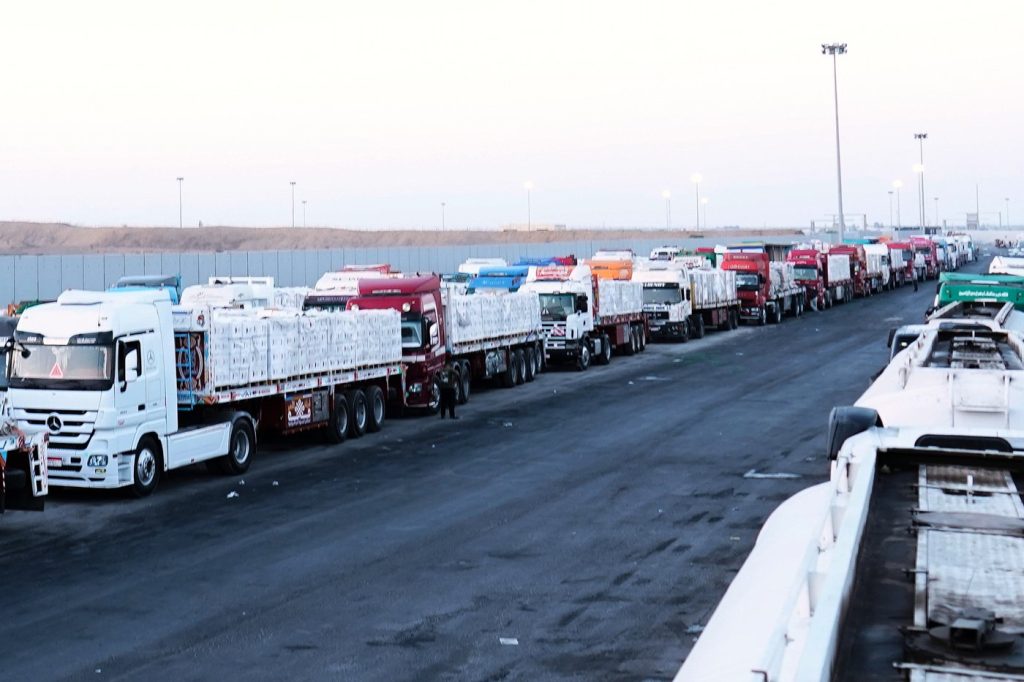
On the other hand, Egypt is advocating for the reopening of the crossing in both directions, allowing Palestinians currently in Egypt to re-enter Gaza. This position stems from Egypt's strong opposition to the permanent resettlement of Palestinian refugees within its borders. Prior to the war, the Rafah crossing was a bustling point of movement for goods and people between Gaza and Egypt, serving as the only link between Gaza and another country, unlike the other border crossings which connect primarily with Israel.
Following the attack in October, which reportedly resulted in the deaths of approximately 1,200 people and the abduction of 251 hostages, Egypt tightened its restrictions on the Rafah crossing. When Israel took control of the Gaza side of the crossing in May 2024, it limited access primarily to occasional medical evacuations, blocking most movement in and out of Gaza.
The Gaza Health Ministry has estimated that over 70,100 Palestinians have died during the conflict, with around half reported to be women and children. The ministry, operating under Hamas governance, maintains reliable records acknowledged by the international community, though it does not differentiate between militants and civilians in its casualty figures.
A reopened Rafah crossing would significantly improve conditions for those in Gaza seeking medical treatment, international travel, or family visits in Egypt. The World Health Organization has indicated that there are more than 16,500 individuals in need of medical care who must leave Gaza. In addition to humanitarian benefits, reopening the crossing could revitalize Gaza's battered economy by enabling local merchants to market their goods outside the region.
Despite Israel's announcement about reopening the crossing soon, there are several last-minute hurdles that could delay this process. An Israeli official, who chose to remain anonymous while discussing operational plans, noted that logistics must be finalized by the European Union mission overseeing the crossing. Moreover, repairs may be needed due to substantial damage sustained during the war, and disputes between Israel and Egypt about the terms of Palestinian entry and exit could further postpone the reopening.
According to Egypt's State Information Service, if an agreement is reached, the Rafah crossing may be utilized for travel in both directions as part of a ceasefire plan once proposed by former U.S. President Donald Trump. However, Egyptian President Abdel Fattah el-Sissi has expressed concerns regarding the security implications that the relocation of large numbers of Palestinians to Egypt's Sinai Peninsula might produce. Egypt already hosts tens of thousands of Palestinians in addition to a substantial migrant population, and there are fears that permanent resettlement could undermine prospects for a Palestinian state comprising the occupied West Bank, Gaza, and East Jerusalem.
Despite these complexities, an Israeli government spokesperson, Shosh Bedrosian, confirmed that entry into Gaza would not be allowed until all hostages are returned. Before the recent exchanges of remains, there were believed to be two deceased hostages in Gaza—one Israeli and one Thai national. The identities of those remains returned on Wednesday have yet to be established.