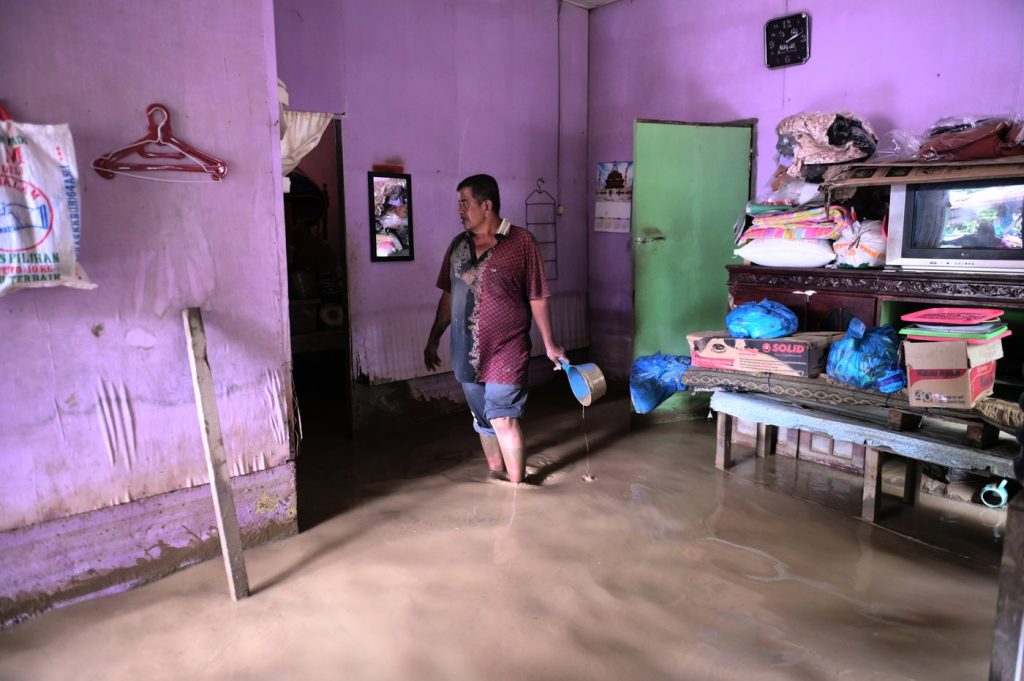
BATANG TORU, Indonesia (AP) — Rescue teams are urgently working to reach communities isolated by the catastrophic floods and landslides that struck Indonesia, Sri Lanka, and Thailand last week. Over 900 individuals remain missing as the true extent of the economic damage caused by these disasters becomes increasingly evident.
So far, the death toll has surpassed 1,400, including at least 780 in Indonesia, 465 in Sri Lanka, and 185 in Thailand, with additional fatalities reported in Malaysia. Many villages are still buried under mud and debris, leaving power and telecommunications services severely disrupted.
Both Indonesia and Thailand, which are classified as middle-income economies, have managed to mobilize extensive rescue operations. They have deployed military assets and channeled emergency funds effectively. In stark contrast, Sri Lanka is responding under much more strained conditions, still grappling with the aftermath of a severe economic crisis that has led to resource limitations, foreign exchange shortages, and weakened public services.
Sri Lanka's Prime Minister Harini Amarasuriya convened with diplomats last week, seeking their support for the government's relief and reconstruction efforts. Countries such as India, Pakistan, and the United Arab Emirates have already initiated relief efforts to assist those affected.
In Indonesia, which has been the hardest-hit nation, washed-out roads and collapsed bridges are hindering rescue operations in North Sumatra, West Sumatra, and Aceh provinces, according to the National Disaster Management Agency. Concerns have been raised that illegal logging may have exacerbated the situation. Residents and emergency workers in Padang, the capital of West Sumatra, reported discovering large piles of neatly cut timber among the debris.
According to Neviana, a clean-up crew member, the timber appeared to have been deliberately cut rather than uprooted by the flood. Ria Wati, a 38-year-old resident from the outskirts of Padang, echoed these sentiments, stating that the logs carried by the floods did not resemble those typically dislodged by flash floods. She noted that if old trees were uprooted, remnants of roots and fragile bark would be visible, but the logs found appeared clean and neatly cut, indicative of illegal logging activities.
While local authorities have yet to confirm the source of the timber, environmental groups contend that the extent of the damage suggests that weakened hillsides and degraded forests played a significant role in the disaster's severity. In response to the allegations of illegal logging operations, Cabinet Secretary Minister Teddy Indra Wijaya stated that the government is actively investigating the matter. He emphasized that environmental degradation has compounded the impact of the flooding, beyond just the extreme weather.
In Thailand, government spokesperson Rachada Dhnadirek reported on Wednesday that recovery efforts in the affected southern regions are progressing well. Water and electricity have been restored to nearly all affected areas. The Thai government has allocated over 1 billion baht (approximately $31.3 million) in compensation to assist more than 120,000 households impacted by the floods.
Overall, the recent floods and landslides have had devastating effects across Indonesia, Sri Lanka, and Thailand, revealing the vulnerabilities related to environmental degradation and resource management in the region. Comprehensive rescue and recovery efforts remain crucial as affected communities continue to face challenges in regaining stability.