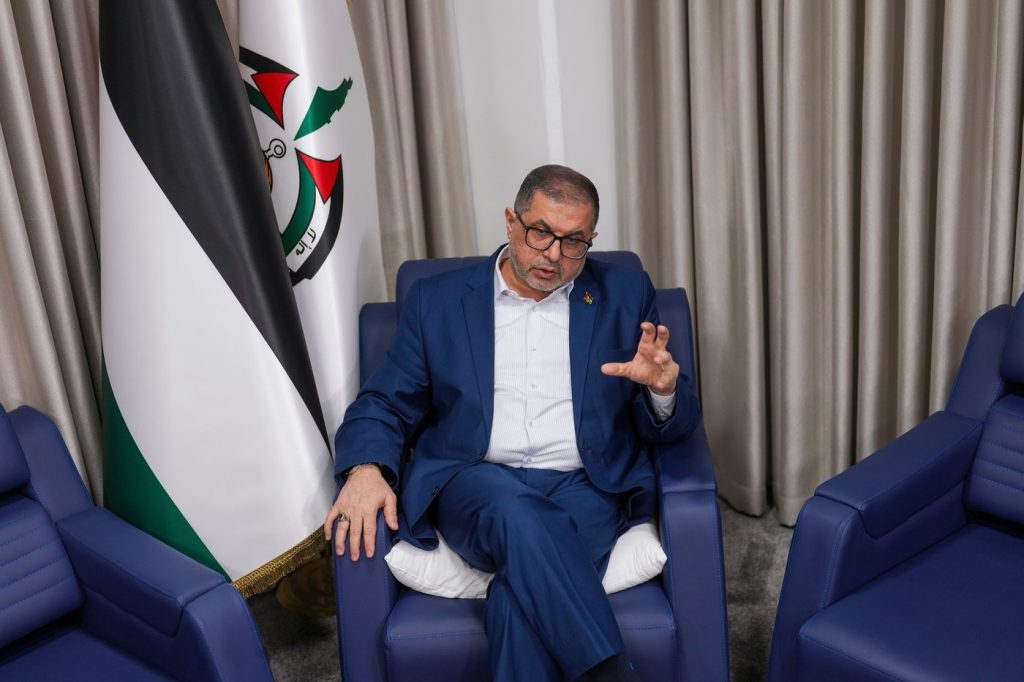
In Doha, Qatar, a senior Hamas official, Bassem Naim, announced that the group is open to discussing a "freezing or storing" of its arsenal of weapons as part of a ceasefire agreement with Israel. This declaration comes as both sides prepare to enter the more complex second phase of the U.S.-brokered agreement, following the cessation of hostilities that began after the October 7, 2023 attack by Hamas.
Naim emphasized the need for a comprehensive approach to prevent further escalations and violence. He characterized Hamas's October 7 actions as a defensive response rather than a mistake. The ongoing negotiations have resulted in exchanges of hostages, with only one Israeli hostage remaining in Gaza, a situation that underscores the stakes involved as both parties approach the new phase of discussions.
The second phase of the agreement aims to create a future vision for Gaza, addressing critical issues such as the deployment of an international security force, the establishment of a technocratic Palestinian committee to govern Gaza, the withdrawal of Israeli troops, and the disarmament of Hamas. The implementation of these plans will be overseen by an international board led by former U.S. President Donald Trump.
One significant hurdle remains: Israel is demanding Hamas's full disarmament, a point that poses a challenge given the organization's ideological commitment to armed resistance. Although Naim affirmed Hamas's right to resist, he suggested the group might consider laying down arms if successful discussions lead toward the establishment of a Palestinian state. He proposed a long-term truce of five to ten years during which negotiations could unfold, hinting at a willingness to "freeze" or "store" weapons under Palestinian guarantees for peace during the ceasefire.
While Hamas's offer reflects a potential willingness to compromise, it is uncertain whether this will align with Israel's expectations for complete disarmament. The ceasefire is built upon a vaguely defined 20-point plan, necessitating thorough negotiations involving the U.S., Qatar, Egypt, and Turkey, among others. Naim pointed out the plan's ambiguity, indicating that extensive clarifications are still necessary.
One immediate concern raised by Naim is the deployment of an international stabilization force. Several nations, including Indonesia, have shown interest in contributing troops; however, the specifics regarding their roles and command structure remain undefined. U.S. officials anticipate that these forces may be operational by early next year. Naim has made it clear that Hamas would reject any mandate allowing this force to take on disarmament responsibilities, preferring instead that they focus on monitoring the ceasefire agreement and preventing violations.
Naim also mentioned progress with the rival Palestinian Authority in establishing a new technocratic committee to manage Gaza's affairs. While he did not disclose specific names, sources suggest that Health Minister Majed Abu Ramadan, from Gaza but currently living in the West Bank, has been proposed as a leader for this committee.
Throughout the initial phase of the ceasefire, both Israel and Hamas have accused each other of violations. Israel claims that Hamas has delayed the return of hostages, while Palestinian health officials report that over 370 Palestinians have died from Israeli strikes since the truce took effect. Conflicts have continued between Israeli soldiers and armed Hamas militants in contested areas, further complicating the ceasefire's effectiveness.
The backdrop to these negotiations is the catastrophic humanitarian situation in Gaza, with immense loss of life and widespread destruction following the conflict ignited by the October 7 attack, which resulted in over 1,200 deaths and numerous hostages taken. In retaliation, Israeli military actions have reportedly killed over 70,000 Palestinians. The devastation in Gaza has displaced nearly the entire population, creating a dire need for rebuilding and humanitarian aid, the logistics of which remain unresolved.
As discussions progress, Naim reiterated that while the Palestinians have absorbed a heavy toll, the actions taken on October 7 should be understood in the context of ongoing Israeli policies and historical grievances. He emphasized that for Hamas, the event was framed as a necessary act of defense, asserting that the Palestinian narrative extends far beyond recent violence, highlighting a longstanding struggle.