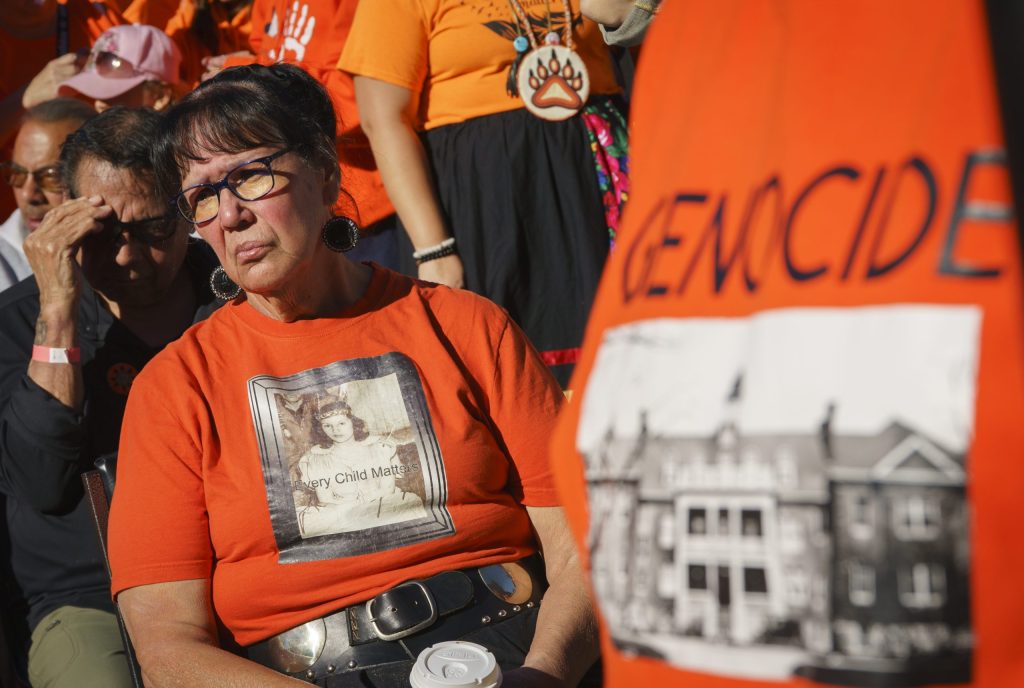
The Permanent Peoples’ Tribunal (PPT) is set to hold an opinion tribunal in Montreal from May 25 to 29, 2026, to investigate Canada’s involvement in the deaths and disappearances of Indigenous children. The event is being organized by the Native Women’s Shelter of Montreal and will feature testimonies aimed at determining whether Canada has committed acts of genocide and crimes against humanity. This tribunal is expected to be supported by around 2,000 pieces of evidence gathered by the organizers.
Kwetiio, a member of the Mohawk Mothers, also known as Kanien’keha:ka Ka’nistensera, emphasized the importance of healing through this initiative. She pointed out that in her culture, the word “sorry” holds little meaning, as the focus should be on rectifying wrongs committed. Kwetiio shared troubling memories of her community, recounting the story of a child sent to a hospital for care, only to return forever changed. This story serves as a poignant reminder of the trauma faced by Indigenous peoples.
“This man came back and he was a shell. They lobotomized him,” Kwetiio recalled, describing the visible impact of such trauma on the man, who wandered the streets with his head down and no visible response to his surroundings. This illustrates the severe consequences of the systemic abuse inflicted upon Indigenous children.
Canadian Senator Michèle Audette, a recognized leader in Indigenous affairs, stated that the tribunal represents a significant opportunity for many voices to be heard, some for the first time. Audette contrasted the grassroots nature of this tribunal with formal inquiries, expressing admiration for the initiative’s ability to capture the essence of community experiences and trauma. She indicated that the testimonies gathered during the tribunal would be beneficial not only to the Canadian government but to society as a whole, emphasizing their importance in acknowledging past wrongs.
Audette remarked, “To say we heard that during those tribunals is powerful,” equating the impact of the grassroots tribunal with that of formal academic or court processes. She articulated the necessity for voices from the Indigenous community to be amplified, stating, “We don’t wait for government to speak out; we don’t wait for any system to remind the system is failing us.” This underscores the urgent need for acknowledgment and action regarding the historical injustices experienced by Indigenous peoples.
The PPT, founded in Bologna, Italy in 1979, is an international human rights organization aimed at condemning oppressive regimes, particularly in Latin America. Since its inception, the PPT has conducted over 50 sessions globally, showcasing its commitment to addressing human rights violations. The organization originated as an offshoot of the Russell Tribunal, which investigated the actions of the United States during the Vietnam War, an effort led by the esteemed British philosopher and Nobel laureate Bertrand Russell.
The upcoming hearings at the daphne art centre will feature a combination of testimonies, legal arguments, and deliberative processes leading to the Tribunal’s final ruling. This initiative aims not only to investigate and document the truth but also to foster healing and recognition for the experiences of Indigenous peoples in Canada.