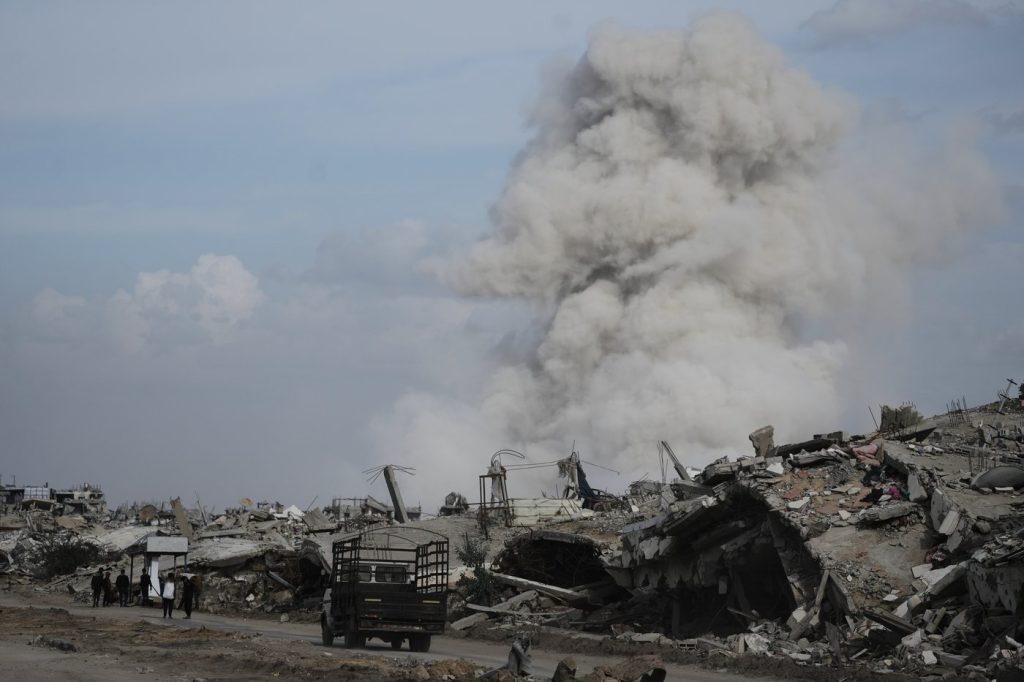
Hamas has called for increased international pressure on Israel before progressing to the next phase of the ceasefire in Gaza, which has been under severe strain due to ongoing conflict. A member of Hamas' political wing, Husam Badran, emphasized the importance of implementing all terms from the first phase of the ceasefire, which includes ceasing Israeli airstrikes and allowing vital aid into the region. Specifically, Hamas is seeking the opening of a crucial border crossing and an end to the demolition of Palestinian homes in areas controlled by Israel.
Recent reports indicate that Israeli airstrikes and shootings have resulted in at least 376 Palestinian deaths since the ceasefire began on October 10, according to Palestinian health officials. Badran's statements reflect a hardened stance from Hamas, suggesting that without significant concessions from Israel, particularly concerning humanitarian conditions, they see little possibility of entering the next, more complex phase of negotiations.
In addition to Hamas's demands, Israel's government indicates readiness to transition into the next phase of U.S. President Donald Trump's 20-point ceasefire agreement. However, Israel is also pressing Hamas to return the remains of the last Israeli hostage held in Gaza, as part of the deal's stipulations. Israel asserts that its military actions in Gaza are responses to ongoing attacks by Hamas militants, characterizing those killed as threats to its troops, although reports suggest that some of those casualties include civilians, women, and children.
The humanitarian situation in Gaza remains dire, with the United Nations and other bodies reporting significant shortfalls in aid delivery. Under the terms of the ceasefire agreement, the daily number of aid trucks was expected to increase to at least 600, yet recent averages fall around 120 trucks. Although the Israeli military coordination body, COGAT, claims that 600-800 trucks are entering daily, the U.N. has noted that many goods remain unaffordable for Palestinians, with severe shortages of essential medical supplies persisting.
Israel has recently agreed to facilitate aid through a crossing on the Jordan-Israel border while also indicating its willingness to open the Rafah crossing between Gaza and Egypt for outgoing traffic. Ongoing discussions among the involved parties suggest a significant movement towards negotiating further terms, which are expected to include the disarmament of Hamas. Israeli Prime Minister Benjamin Netanyahu has reported that both sides are likely to advance to the second phase of the ceasefire soon, contingent upon Hamas's actions concerning the returns of hostages.
Moreover, plans for an international governing body for Gaza are anticipated to be announced by the year’s end, adding another layer to the complex situation. Since the beginning of the two-year-long Israeli campaign in Gaza, over 70,300 Palestinians have reportedly died, with about half of these casualties being women and children. This ongoing conflict was triggered by a Hamas-led offensive on southern Israel on October 7, 2023, which resulted in approximately 1,200 Israeli fatalities and the abduction of 251 hostages. Most hostages or their remains have since been returned in various ceasefires or agreements. The international community is closely monitoring these developments as they transpire.