In a significant move that is likely to provoke strong reactions from China, the Trump administration has announced a substantial arms sales package to Taiwan, worth over $10 billion. This package includes advanced weaponry such as medium-range missiles, howitzers, and drones.
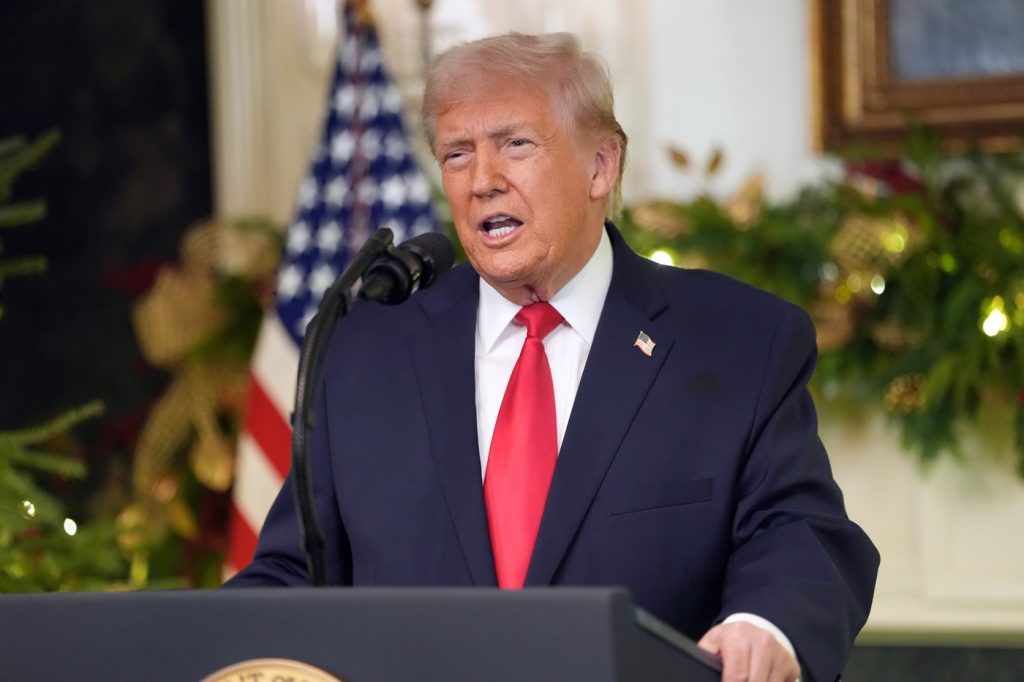
The State Department disclosed the arms sales on Wednesday, coinciding with a nationally televised address by President Donald Trump. Notably, Trump made only brief references to foreign policy during his speech and did not address the situations involving China or Taiwan. U.S.-Chinese tensions have fluctuated during Trump's second term, primarily driven by trade issues, tariffs, and China's increasing assertiveness toward Taiwan, which it considers a breakaway province.
The arms sales package consists of eight agreements, which feature 82 high-mobility artillery rocket systems (HIMARS) and 420 Army Tactical Missile Systems (ATACMS) valued at over $4 billion. These systems are similar to those provided to Ukraine during the Biden administration for its defense against Russian aggression. Additionally, the agreement includes 60 self-propelled howitzer systems and related equipment, also worth more than $4 billion, along with drones valued at over $1 billion.
Other components of the arms package include military software exceeding $1 billion in value, Javelin and TOW missiles worth over $700 million, helicopter spare parts at $96 million, and refurbishment kits for Harpoon missiles totaling $91 million. In statements issued by the State Department, the sales are described as serving "U.S. national, economic, and security interests" by aiding Taiwan in modernizing its military capabilities and maintaining a robust defensive stance.
Under U.S. federal law, the United States is committed to assisting Taiwan with its self-defense, a legally mandated obligation that has grown more contentious amid China's threats to forcibly reunite Taiwan with the mainland. In response to the arms package, Taiwan's Defense Ministry expressed gratitude, stating that the sales will bolster the island's “sufficient self-defense capabilities” and enhance deterrent abilities, emphasizing that strengthening its defense is vital for regional peace and stability.
Taiwan's Foreign Minister Lin Chia-lung echoed this sentiment, thanking the U.S. for its ongoing support, which he argued is crucial for deterring potential conflict in the Taiwan Strait, the body of water that separates Taiwan from mainland China.
In tandem with these arms sales, Taiwan's government is set to increase defense spending to 3.3% of its GDP in the coming year, with a target to reach 5% by 2030. This decision follows recommendations from Trump and Pentagon officials for Taiwan to allocate as much as 10% of its GDP for defense—a figure considerably higher than current U.S. and most allied nations' defense spending rates. This push for increased defense funding has encountered resistance from Taiwan's opposition Kuomintang (KMT) party and segments of the populace.
Additionally, Taiwanese President Lai Ching-te recently announced a special $40 billion budget for arms purchases, including the development of a high-level air defense system called Taiwan Dome, designed for improved detection and interception capabilities. This budget is projected to be spread over eight years, from 2026 to 2033.
The increased military support for Taiwan was anticipated following legislative actions in Congress, which Trump is expected to sign. Last week, the Chinese Embassy in Washington condemned this legislative package, known as the National Defense Authorization Act, arguing that it unfairly portrays China as an aggressor.
China's embassy characterized the bill as exacerbating the “China threat” narrative and criticized it for promoting military support to Taiwan while undermining China's sovereignty and security. The Chinese government expressed strong disapproval of the actions taken by the U.S., describing them as detrimental to U.S.-China relations.