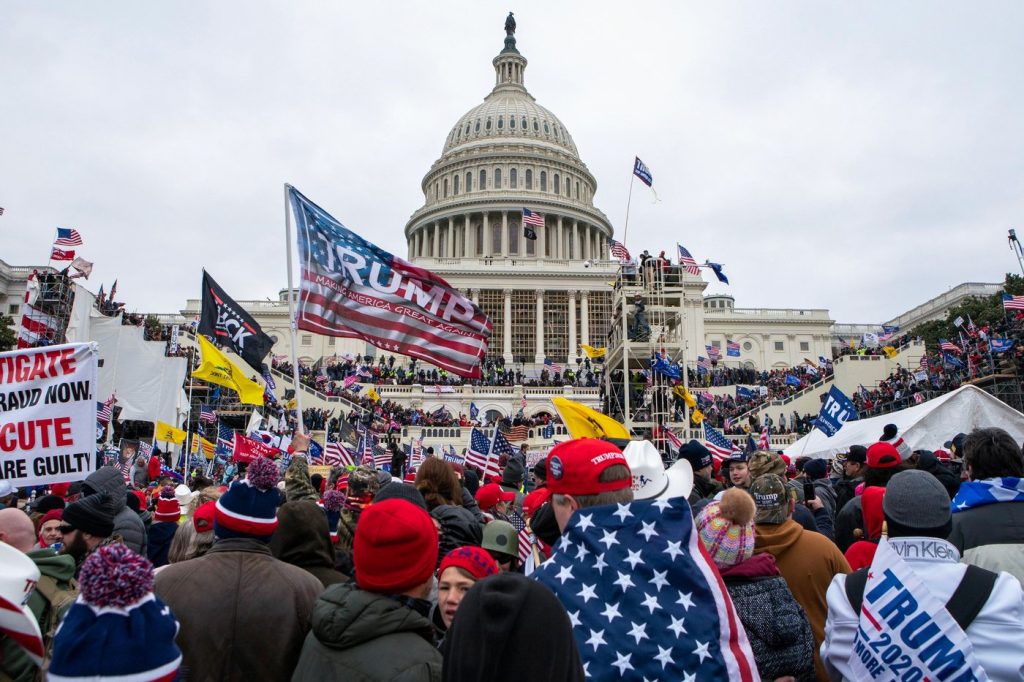
In a recent court hearing, attorneys representing former President Donald Trump petitioned a federal judge for a ruling on whether he is entitled to presidential immunity regarding civil claims related to the January 6, 2021, attack on the U.S. Capitol. The request comes as Democratic members of Congress have filed lawsuits against Trump, alleging that he incited the violence to disrupt Congress's certification of President Joe Biden's electoral victory.
U.S. District Judge Amit Mehta listened to arguments from Trump's legal team and from the plaintiffs' attorneys but did not make an immediate ruling. Trump addressed a rally crowd of supporters at the "Stop the Steal" event near the White House on the day in question, just before the mob's assault on the Capitol.
Trump's attorneys asserted that the actions he took leading up to January 6, as well as his conduct on the day of the riot, should be protected under presidential immunity, claiming he was operating within his official capacity as the President of the United States. Attorney Joshua Halpern emphasized that immunity is crucial for a president to be bold and assertive while in office.
In contrast, the plaintiffs’ legal representatives argued that Trump cannot demonstrate that he was acting solely in his official capacity at the time, suggesting that he also acted as a private citizen seeking office. They referenced prior U.S. Supreme Court decisions that indicate office-seeking behaviors do not fall under presidential immunity.
Joseph Sellers, representing the lawmakers, stated that the burden of proof lies with Trump, asserting that he has not met this burden. He stressed that the context and circumstances surrounding Trump's statements on January 6 must be considered in determining his immunity from liability.
Rep. Bennie Thompson, a Mississippi Democrat, initiated the lawsuit against Trump, his lawyer Rudolph Giuliani, and members of extremist groups such as the Proud Boys and Oath Keepers over the Capitol incident. Other Democratic lawmakers later joined this litigation, which continues to exist despite Trump's extensive clemency actions on his first day of his second term, where he issued pardons and dismissed over 1,500 related criminal cases.
During the hearing, Halpern reiterated that the purpose of immunity is to uphold the president's prerogatives, allowing for decisive action without fear of legal repercussions. Meanwhile, the plaintiffs' legal team maintained that the assessment of Trump's remarks leading up to and on January 6 is crucial in establishing whether he is shielded from responsibility in this civil matter.
Judge Mehta, at the conclusion of the hearing, acknowledged the significance of the arguments presented and stated that he would provide a ruling "as soon as we can." The legal debates surrounding presidential immunity in this high-profile case continue to capture national attention, focusing on the responsibilities and limits of presidential power.