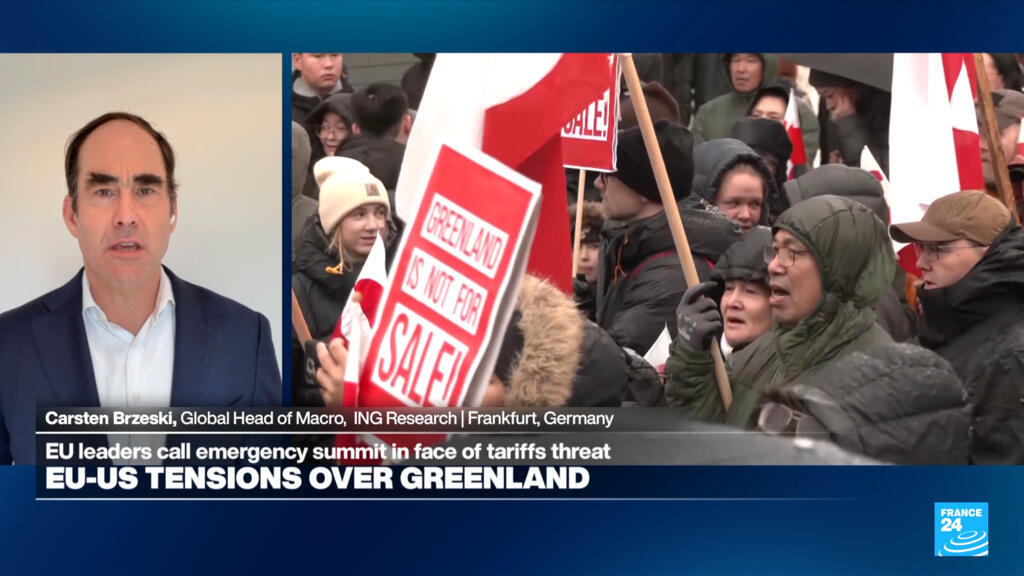
The diplomatic landscape between the European Union (EU) and the United States is currently under significant strain due to the provocative tariff threats made by former US President Donald Trump regarding Greenland. Trump's interest in acquiring the territory has been met with strong opposition from Denmark and the EU, prompting member states to consider countermeasures to address the escalating tensions. This situation represents a critical juncture in transatlantic relations, highlighting the fragility of alliances and the potential consequences of unilateral actions in international trade.
Carsten Brzeski, the Global Head of Macro for ING Research, emphasized the broader implications of this dispute, stating, "This is not only about trade; it is putting enormous, unexpected stress on the transatlantic relationship." His remarks underscore the gravity of the situation, suggesting that the current tensions may pose the most significant challenge for transatlantic relations since the conclusion of World War II. As both sides grapple with this crisis, the risk of miscalculations or escalations becomes increasingly apparent.
In this context, the EU is exploring various options to respond effectively to the tariff threats. Member states are deliberating on potential retaliatory measures that could mitigate the adverse effects of US policies. The trade war rhetoric could provoke a chain reaction, impacting not only the affected parties but also global trade dynamics. Brzeski further cautioned that "There are no winners in trade wars," indicating that both the US and EU stands to suffer economically and politically if hostilities escalate.
The heightened dialogue surrounding Greenland acquisition attempts serves as a reminder of the complexities involved in international diplomacy and economic relations. The historical ties between the US and Denmark, as well as the broader EU framework, are being tested as these entities navigate the implications of Trump's controversial proposition. The situation is more than a mere trade dispute; it represents a critical intersection of national interests, historical grievances, and geopolitical strategy.
As discussions among EU member states continue, the focus remains on finding a unified response to Trump's provocations while preserving the integrity of the transatlantic alliance. The stakes are high, and the path forward requires careful consideration of the ramifications associated with any retaliatory measures. In an interconnected global economy, the actions taken in response to these tariff threats may set important precedents for future trade relations and international diplomacy.