The Trump administration's approach to international relations showcased a clear deviation from the established postwar global order, emphasizing a posture that was unapologetically assertive regarding territorial expansion and resource acquisition. This stance was characterized by a discernible disdain for European countries, which were often perceived as experiencing a state of civilizational decline. The implications of such an approach echoed historical precedents, drawing parallels to an era defined by colonial land grabs and intense great-power rivalries, elements that historically contributed to devastating wars.
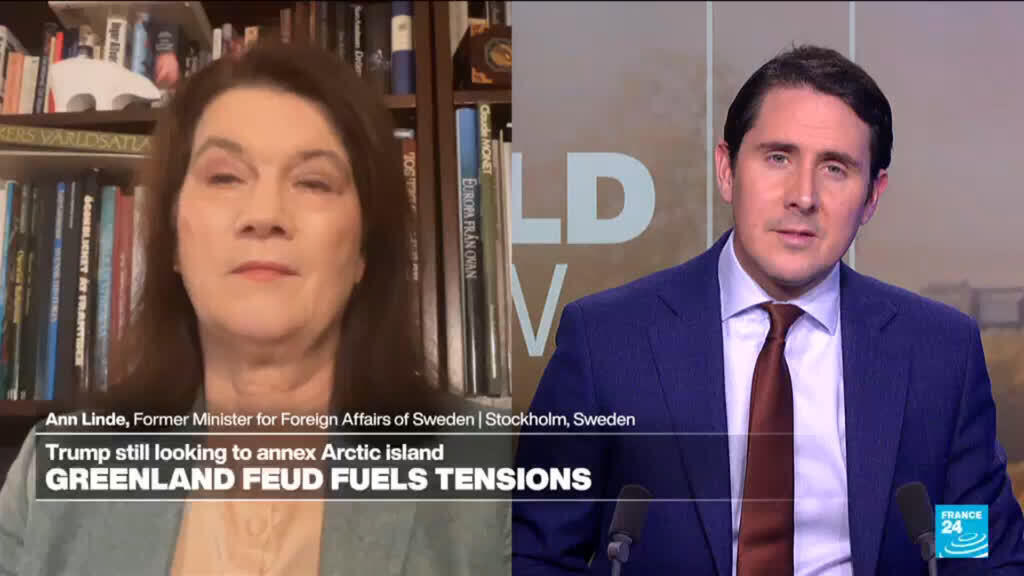
In the context of these dynamics, Ann Linde, Sweden's former Minister for Foreign Affairs, has been vocal about Europe’s response to these geopolitical challenges. Linde highlights the importance of a unified European front in countering the aggressive tactics displayed by the United States under Trump. Her insights reflect a concern not only for European stability but also for the preservation of a rule-based international system that has been the backbone of global diplomacy since the conclusion of World War II.
According to Linde, the Trump administration's policies have exacerbated divisions within Europe, leading to differing responses among member states. Some nations, eager to maintain ties with the U.S. for security and economic reasons, have been reluctant to challenge its confrontational policies. In contrast, others view the administration's approach as a wake-up call that necessitates a reevaluation of European autonomy and unity in foreign affairs. This divergence underscores the complexities of Europe’s political landscape, particularly in an era marked by rising global tensions and shifting power dynamics.
Linde advocates for a more assertive European Union that stands collectively against unilateral actions that threaten to undermine international norms. She posits that Europe must reinforce its commitment to multilateralism and the rule of law, asserting that these principles are essential in framing a cohesive response to any external aggression. The former minister emphasizes that European states should engage in strategic dialogues to foster stronger alliances, both among themselves and with other global players who share similar values. This approach is not merely about opposing U.S. policies, but rather about protecting the integrity of a global order that promotes peace and stability.
The resurgence of great-power rivalry—often reminiscent of old colonial conflicts—compels Europe to take a more proactive stance in international relations. Linde warns that the dangers of complacency are real. As nations like China seek to expand their influence, often at the expense of established norms, Europe must navigate carefully to ensure that it does not find itself sidelined in global affairs. The challenge lies in balancing relations with the U.S. while simultaneously asserting its own interests and values on the world stage.
Moreover, Linde points to the necessity for robust discussions within European institutions regarding defense, trade, and foreign policy. Only through a coordinated and collaborative approach can Europe hope to address the multifaceted threats posed by both non-state actors and state-led aggression. She argues that the future of Europe’s global positioning hinges on its ability to present a united front—one capable of engaging with adversaries while also pursuing diplomatic solutions to conflicts.
In conclusion, Ann Linde's perspective sheds light on the intricacies of Europe’s geopolitical standing amidst the tumultuous backdrop of the Trump administration's policies. Her call for unity and assertiveness resonates deeply in a world where the specters of colonialism and power disputes are re-emerging, reminding European states of the lessons history imparts about the consequences of division and inaction in the face of aggression.